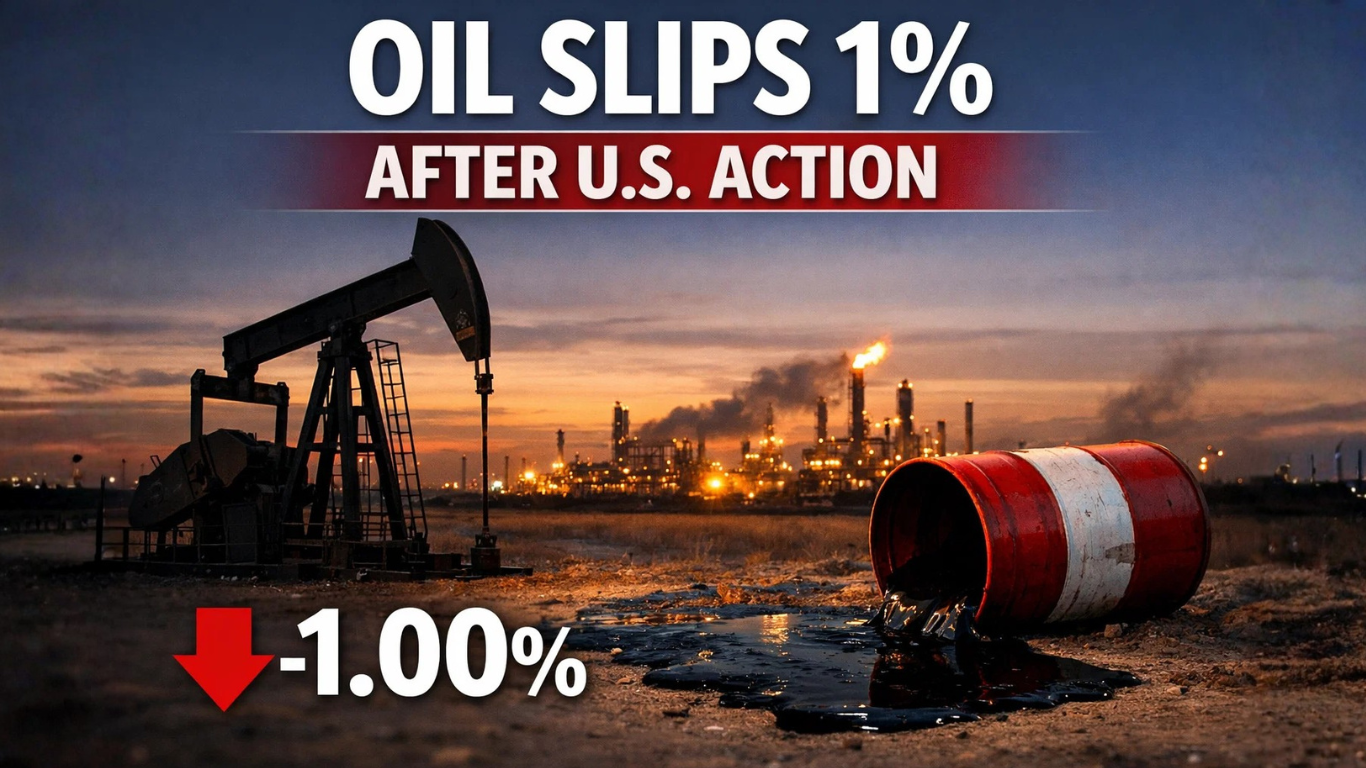
Oil prices fell in European trading on Monday as markets recalibrated after the United States captured Venezuelan President Nicolas Maduro and signaled plans to take operational control of the country. The news reversed early gains and reinforced bearish sentiment that has dominated crude markets since last year’s steep selloff.
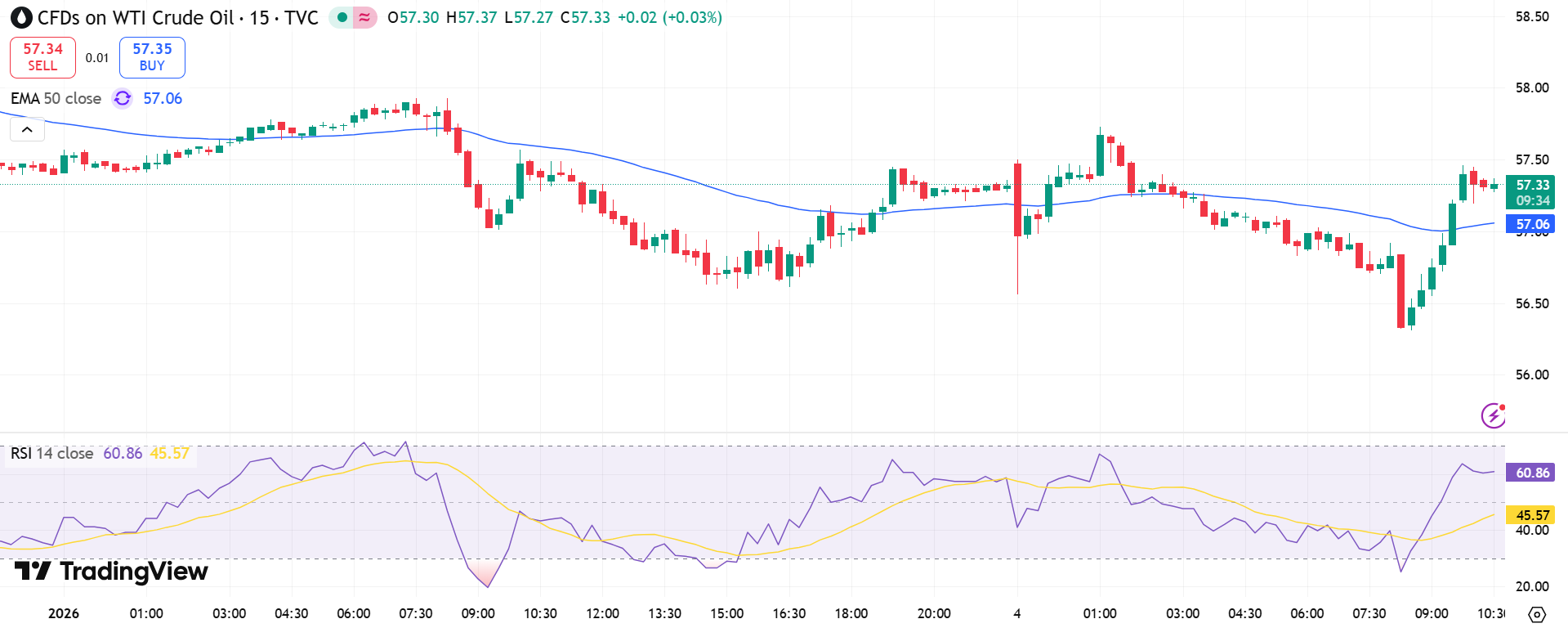
Brent crude slipped 0.9% to $60.20 a barrel, while U.S. West Texas Intermediate declined 1.0% to $56.77. Prices had briefly risen earlier in the session, but traders quickly pivoted as the implications of a U.S.-led transition in Venezuela came into focus. Oil ended 2025 down more than 18%, its worst annual performance in five years, as oversupply concerns overwhelmed geopolitical risk premiums.
The immediate reaction reflected a familiar dynamic: when markets anticipate future supply increases, crude prices adjust lower, even amid political shock.
Venezuela’s Oil Outlook Shifts Sharply
Washington confirmed that Maduro will face drug-trafficking charges in New York, while President Donald Trump said the U.S. would oversee Venezuela’s administration until elections are held. Trump also indicated that major U.S. oil companies would be permitted to manage much of the country’s energy production.
Venezuela holds the largest proven oil reserves globally, yet years of sanctions, underinvestment, and deteriorating infrastructure have throttled output. Analysts broadly agree that U.S. involvement could eventually lift production, but the timeline remains uncertain.
Ben Emons, chief investment officer at Fed Watch Advisors, said the dominant market takeaway is future supply growth, particularly if Venezuelan barrels return to global markets. He noted that expanded production could pressure oil and gasoline prices, a political tailwind for U.S. consumers ahead of the 2026 midterm elections.
However, rebuilding capacity will take time. Upgrading fields, pipelines, and refineries could delay meaningful supply increases well into 2026 or beyond.
Key scenarios traders are weighing:
- A smooth transition lifts sanctions and adds supply
- A disorderly handover disrupts up to 900,000 bpd
- Gradual infrastructure rebuild delays output growth
- Near-term prices stay capped in a well-supplied market
OPEC+ and Oversupply Cap the Upside
The Venezuela shock landed just as markets absorbed another bearish signal: OPEC+ opted to keep production unchanged following a brief weekend meeting. The group avoided addressing rising internal tensions, including renewed friction between Saudi Arabia and the UAE linked to the conflict in Yemen.
OPEC+ steadily increased output through 2025, adding to fears of a persistent supply glut. ING’s Head of Commodities Strategy Warren Patterson said conciliatory comments from Venezuelan officials suggest a cooperative path with Washington, increasing the odds that U.S. tanker restrictions are lifted. That outcome, he warned, would add near-term downside pressure.
Even in a messier transition, Patterson argued that any supply disruption would likely provide only limited upside in a market already awash with crude. ING forecasts Brent averaging $57 per barrel this year, underscoring how firmly fundamentals—not geopolitics—are setting the tone.
Sources & Methodology
Primary-source standard: Market-moving facts should link to original data releases, regulator notices, company filings or official project announcements whenever available. Secondary reporting is used for additional context, not as a substitute for original evidence.
Page last reviewed: