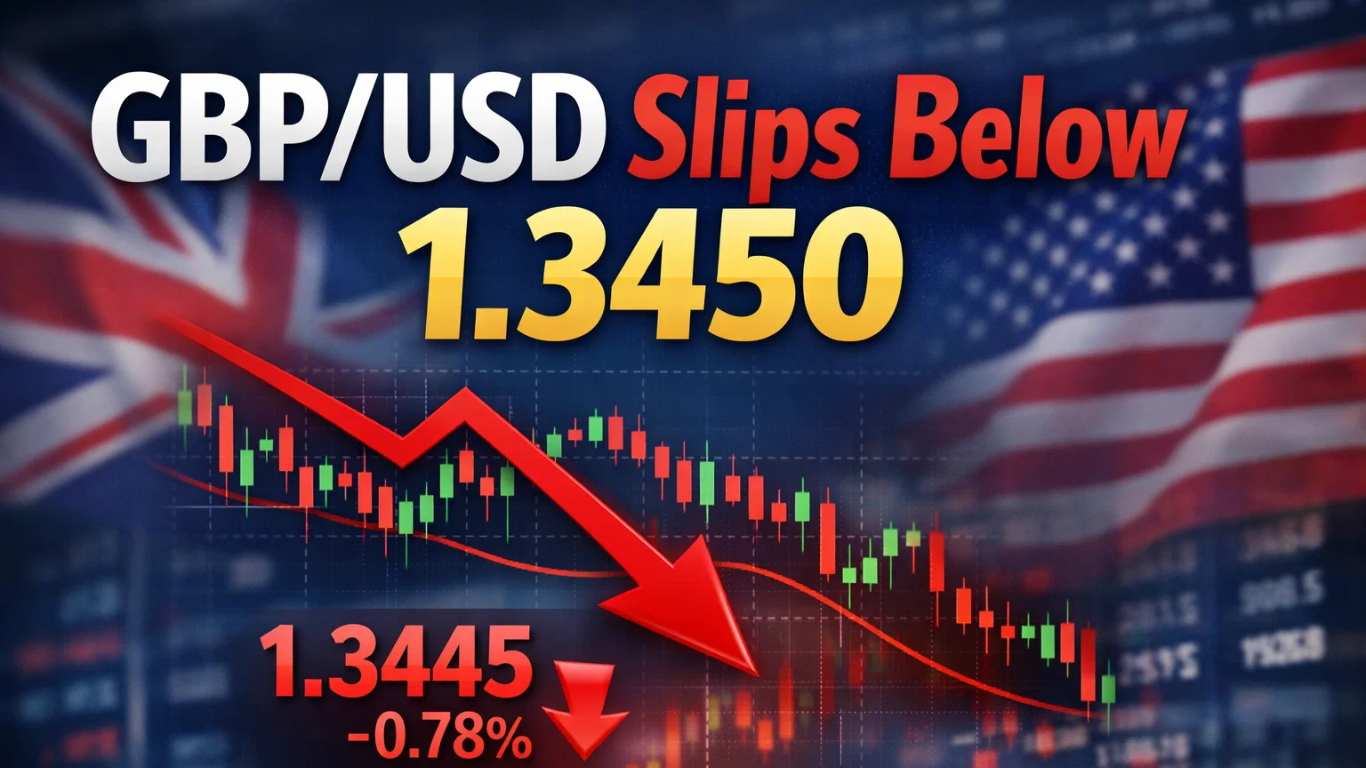
The British pound remained under pressure against the U.S. dollar at the start of the week, with GBP/USD trading below 1.3450 during European hours. Heightened geopolitical tension following U.S. actions in Venezuela has reinforced demand for safe-haven assets, keeping the dollar supported and limiting upside for risk-sensitive currencies.
Market participants are also cautious ahead of key U.S. data, with the ISM Manufacturing PMI expected to provide fresh direction. Until then, sentiment remains tilted toward the dollar, leaving sterling vulnerable to near-term consolidation or further pullbacks.
Technical Levels Shape GBP/USD Outlook
From a technical perspective, recent price action still reflects constructive underlying momentum despite Monday’s losses. The pair’s earlier breakout above the 1.3275–1.3280 zone, which combines the 200-day simple moving average and the 38.2% Fibonacci retracement of the September–November decline, is viewed as a critical medium-term signal for bullish traders.
Daily momentum indicators remain in positive territory, suggesting dips could attract buyers. A sustained move beyond 1.3365, aligned with the 50% retracement level, would likely open the door for a retest of 1.3400. Beyond that, attention turns to the 1.3455–1.3460 region, the 61.8% retracement, before a potential push toward the 1.3500 psychological threshold.
Key technical markers traders are watching include:
- Resistance: 1.3365, 1.3455–1.3460, 1.3500
- Support: 1.3300, 1.3225, 1.3200
A decisive break below 1.3200 would undermine the bullish structure and could accelerate losses toward 1.3145 and potentially sub-1.3100 levels.
Fed Expectations Favor the Dollar
Monetary policy expectations continue to play a central role in driving the pair. Markets are pricing in nearly a 90% probability that the Federal Reserve will deliver a 25-basis-point rate cut at the conclusion of its two-day meeting on Wednesday. If implemented, the move would lower the federal funds target range to 3.50%–3.75%, marking the third cut this year.
However, investors largely expect a “hawkish cut,” with policymakers signaling caution about further easing in early 2026. Persistent inflation risks and a resilient U.S. labor market could prompt the Fed to pause, a scenario that would likely underpin the dollar and cap GBP/USD gains.
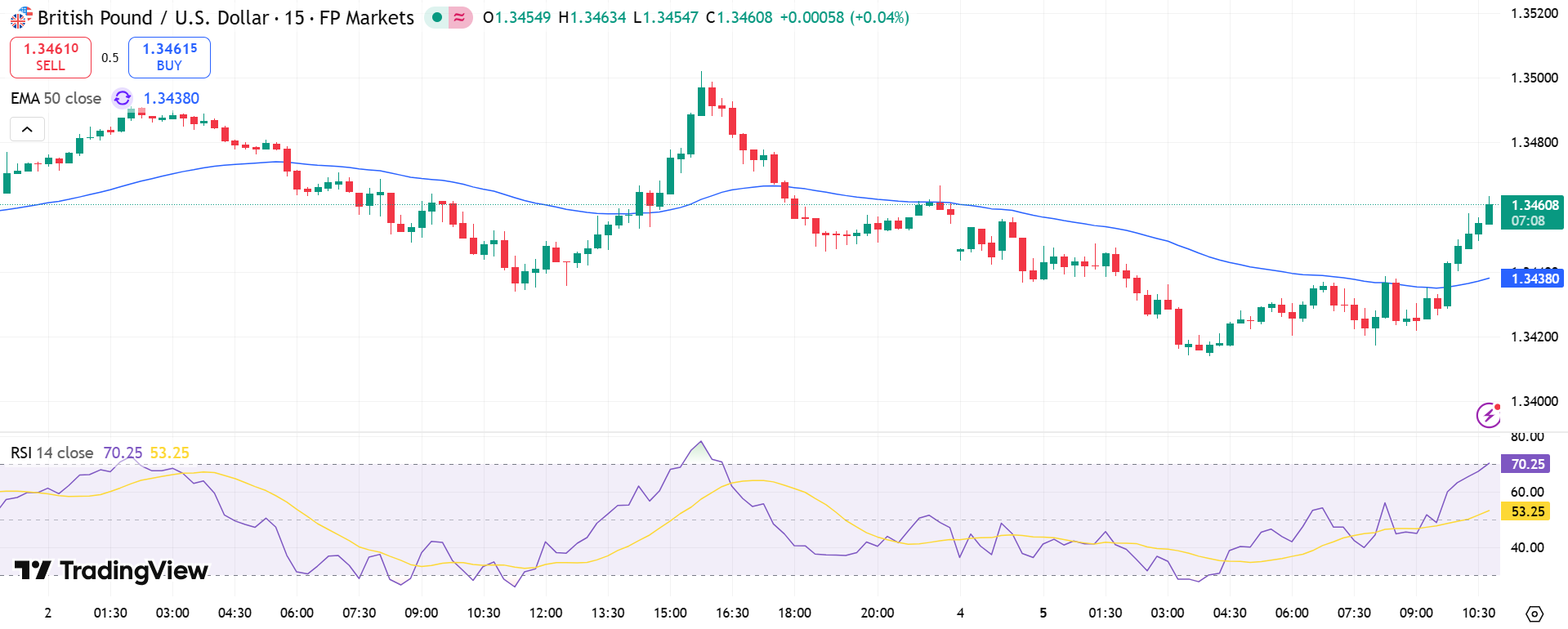
UK Policy Uncertainty Weighs on Sterling
On the UK side, domestic fundamentals remain fragile. Concerns around higher taxation following the autumn budget, alongside cooling inflation and labor market data, have strengthened expectations of further easing by the Bank of England. Markets are currently assigning an around 88% probability to a quarter-point BoE rate cut at the upcoming December meeting.
With both central banks leaning toward easing—but the Fed maintaining a firmer tone—GBP/USD faces near-term headwinds, leaving the pair sensitive to incoming data and shifts in risk sentiment.
Sources & Methodology
Primary-source standard: Market-moving facts should link to original data releases, regulator notices, company filings or official project announcements whenever available. Secondary reporting is used for additional context, not as a substitute for original evidence.
Page last reviewed: