
Global oil markets are unlikely to see major disruption from recent U.S. action in Venezuela, as deep structural damage to the country’s energy sector limits its ability to boost supply meaningfully, according to analysts at Australia and New Zealand Banking Group (ANZ). While geopolitical risk has returned to headlines, the bank argues the fundamentals point to only modest price implications.
U.S. forces’ capture of Venezuelan President Nicolás Maduro has renewed attention on the nation’s vast crude reserves, once among the largest sources of supply in the Western Hemisphere. Yet years of mismanagement, chronic underinvestment, and international sanctions have hollowed out the industry, sharply reducing its relevance to today’s global oil balance.
Venezuela’s Supply Constraints Limit Impact
ANZ notes that even in the most optimistic scenario—a smooth political transition followed by a rapid easing of U.S. sanctions—Venezuela’s export recovery would be limited. The bank estimates that exports could rise by just over 200,000 barrels per day, lifting shipments toward pre-embargo levels of roughly 900,000 bpd.
Such an increase would be modest in a global market consuming more than 100 million bpd, suggesting little sustained downward pressure on prices. Analysts emphasize that Venezuela’s production decline has been severe, with output falling from around 2.3 million bpd in 2015 to a fraction of that level today.
Key structural challenges include:
- Ageing infrastructure and deteriorating oil fields
- Years of underinvestment well below maintenance needs
- Loss of technical expertise and operational capacity
Political Risk Outweighs Supply Upside
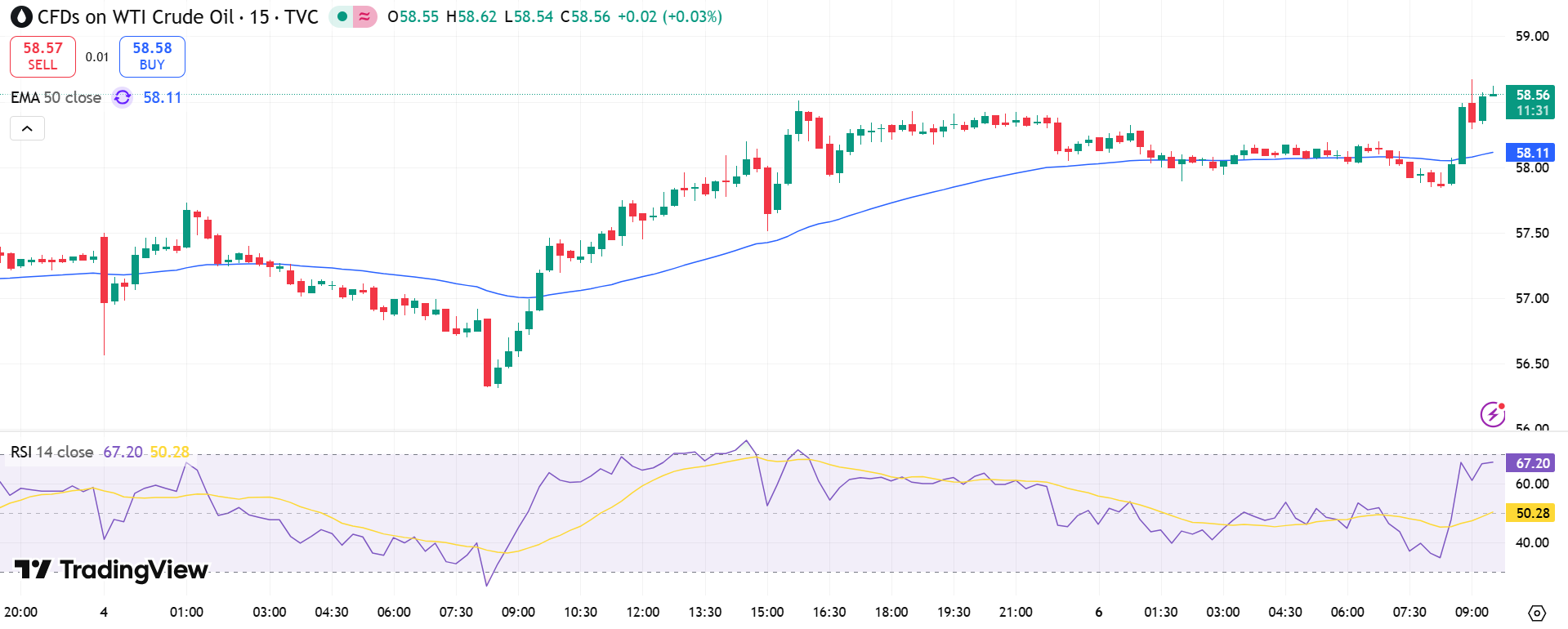
ANZ views heightened political instability as the more likely outcome in the near term. Rather than unlocking new barrels, ongoing uncertainty could keep the risk of temporary supply disruptions elevated, adding a short-term geopolitical premium to oil prices.
The bank also points to historical precedent. Past U.S. interventions in oil-producing nations have more often resulted in short-lived outages than in rapid production recoveries. Restoring output typically requires stability, time, and substantial capital—conditions that remain absent in Venezuela.
Long Timelines for Any Meaningful Recovery
Even under favorable political conditions, ANZ argues that a meaningful rebound in Venezuelan production would take years. Significant capital injections and long development timelines would be required, making higher output unlikely before the end of the decade.
For oil markets, this means Venezuela is unlikely to alter global supply dynamics in a lasting way. Instead, its situation is expected to:
- Support a short-term geopolitical risk premium
- Leave long-term supply-demand balances largely unchanged
In sum, while Venezuela’s turmoil adds another layer of uncertainty to energy markets, ANZ concludes it is far more likely to influence sentiment than to materially reshape global oil supply.
Sources & Methodology
Primary-source standard: Market-moving facts should link to original data releases, regulator notices, company filings or official project announcements whenever available. Secondary reporting is used for additional context, not as a substitute for original evidence.
Page last reviewed: