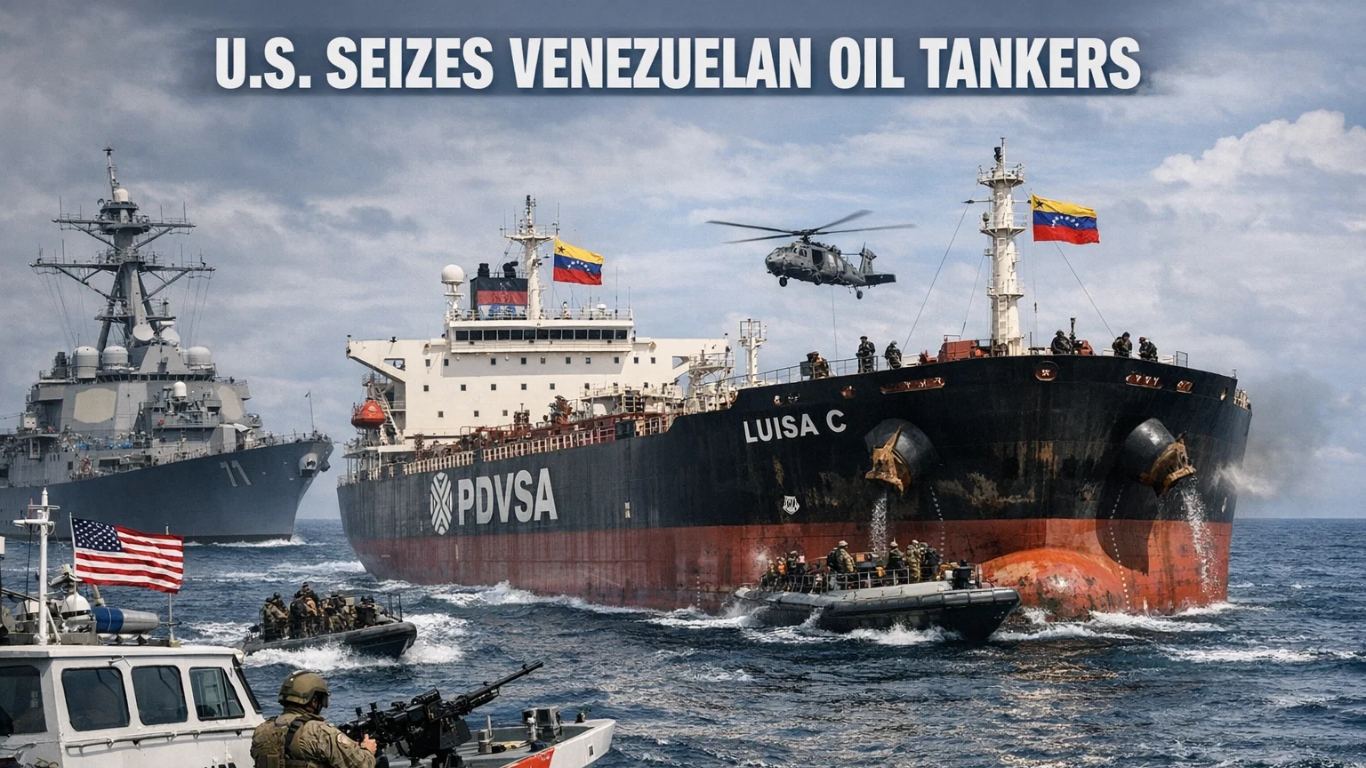
The United States escalated its enforcement of oil sanctions on Wednesday by seizing two Venezuela-linked crude tankers in the Atlantic Ocean, including one operating under a Russian flag, signaling a sharp expansion of Washington’s control over Western Hemisphere energy flows.
U.S. officials said the seizures are part of President Donald Trump’s strategy to dismantle what the administration calls a “shadow fleet” moving sanctioned oil from Venezuela. The action follows last weekend’s dramatic military capture of Venezuelan President Nicolás Maduro in Caracas, a move that has sent shockwaves through global energy and diplomatic circles.
One of the vessels, the Marinera, was intercepted after a weeks-long pursuit. U.S. authorities said the tanker had previously refused boarding and changed its registration to Russia in an attempt to evade sanctions. Although the ship was empty at the time, officials described it as a key logistics asset in Venezuela’s oil export network.
Shadow Fleet Crackdown Raises Tensions
The second vessel, the Panama-flagged M Sophia, was intercepted near South America’s northeast coast while fully loaded with Venezuelan crude, according to records from state oil company PDVSA. It marked the fourth tanker seizure in recent weeks, underscoring Washington’s determination to choke off unauthorized oil flows.
U.S. officials argue the seizures are legal and essential for national security. Vice President JD Vance said the Russian-flagged tanker was falsely posing as a legitimate Russian vessel to bypass restrictions.
Key elements of the U.S. strategy include:
- Targeting vessels linked to sanctioned Venezuelan and Iranian oil
- Enforcing maritime law with judicial seizure warrants
- Pressuring buyers, including China, to divert supplies
- Using oil access as leverage in broader diplomatic negotiations
The move has heightened tensions with Russia and China, both of which condemned U.S. actions. Beijing labeled the seizures “economic bullying,” while Moscow accused Washington of violating international norms.
US Plans to Sell Venezuelan Crude
Alongside the seizures, Trump announced plans to refine and sell up to 50 million barrels of Venezuelan crude currently stranded under sanctions. The White House confirmed it is selectively rolling back oil restrictions to facilitate strictly controlled commercial transactions.
Administration officials say the initiative could revive Venezuela’s long-declining energy sector while redirecting proceeds toward U.S. goods, including agricultural products and medicine. Venezuelan officials signaled cautious openness, describing talks with Washington as “legal and transparent.”
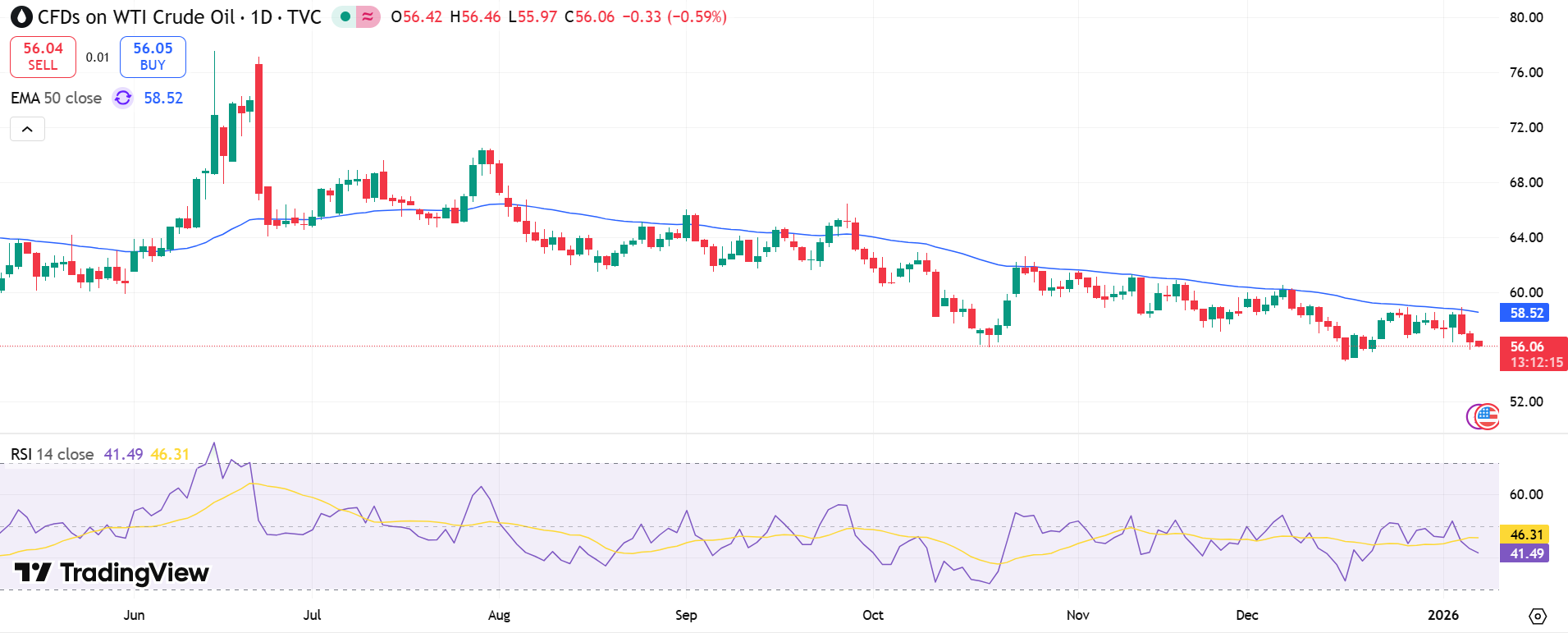
Still, uncertainty remains. Major U.S. oil companies have expressed concern about policy volatility and are reportedly seeking firm guarantees before committing capital. Meanwhile, global crude prices dipped on expectations of increased supply entering the market.
As Washington tightens its grip on Venezuelan oil, allies and adversaries alike are watching closely, aware that the precedent set in the Atlantic could reshape global energy governance well beyond Latin America.
Sources & Methodology
Primary-source standard: Market-moving facts should link to original data releases, regulator notices, company filings or official project announcements whenever available. Secondary reporting is used for additional context, not as a substitute for original evidence.
Page last reviewed: