Bitcoin pushed briefly above the $95,000 mark on Wednesday, buoyed by a sizable corporate purchase that underscored institutional conviction. Yet the rally lost steam as indicators pointed to lingering weakness in U.S. retail demand, highlighting a market still searching for durable support.
Bitcoin Rises on Strategy’s $1.3B Buy
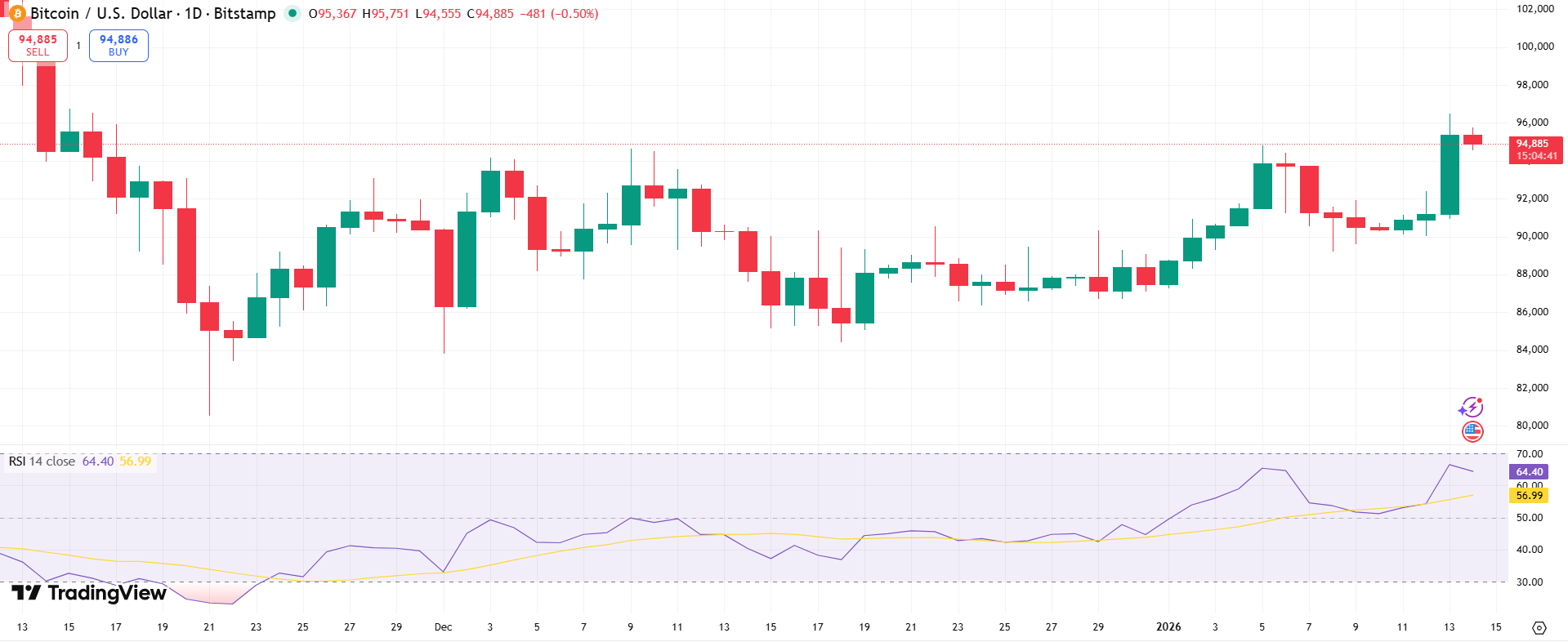
The world’s largest cryptocurrency rose 3.4% to $95,001 in early trading, after touching a near two-month high of $96,033 the prior evening. The move followed a disclosure by Strategy Inc., led by long-time Bitcoin advocate Michael Saylor, that it had added 13,627 coins at an average price of $91,519.
The $1.25 billion purchase—the company’s largest since July—lifted Strategy’s total Bitcoin holdings to 687,410 coins, cementing its position as the biggest corporate owner of the asset. The acquisition was financed through the sale of common shares and preferred equity, easing concerns that the company had slowed its buying pace after relatively small additions since mid-December.
Still, the announcement did little to erase broader doubts surrounding Strategy’s balance sheet. The firm’s shares are down nearly 50% in 2025, pressured by Bitcoin’s earlier pullback and fears that sustained weakness could eventually force asset sales to service debt.
Weak U.S. Retail Signals Cap Gains
Despite the headline-grabbing purchase, underlying demand signals remained soft. Bitcoin’s price on Coinbase Global—widely viewed as a proxy for U.S. retail sentiment—continued to trade at a discount to global averages, according to Coinglass data.
That discount has persisted since mid-December, a period during which Bitcoin’s average price drifted lower, suggesting cautious participation from U.S. individual investors. Analysts note that without renewed retail inflows, rallies driven primarily by institutions may struggle to extend.
Key indicators shaping sentiment include:
- Coinbase price discount, signaling subdued U.S. retail demand
- Lower average trading prices since mid-December
- Limited reaction to macro data, including U.S. inflation prints
Together, these factors point to a market that remains selective rather than broadly risk-seeking.
Altcoins Outpace Bitcoin as CPI Steadies
While Bitcoin consolidated, alternative cryptocurrencies posted stronger gains. A largely in-line U.S. consumer price index report for December—core CPI rose slightly below expectations but matched November’s pace—offered modest relief, though it did not alter expectations that the Federal Reserve will keep rates unchanged later this month.
Ether climbed 6.1% to $3,325, outperforming Bitcoin, while XRP advanced nearly 4%. Solana and BNB gained between 2.5% and 3%, and Cardano jumped 7.3%. Memecoins also drew interest, with Dogecoin rising almost 6% and the $TRUMP token adding 5.3%.
The divergence underscores a familiar crypto pattern: when Bitcoin hesitates, speculative appetite often rotates into higher-beta tokens. For now, Bitcoin’s path appears tied to whether institutional buying can reignite broader participation—or whether weak retail demand continues to cap upside near the $95,000 level.