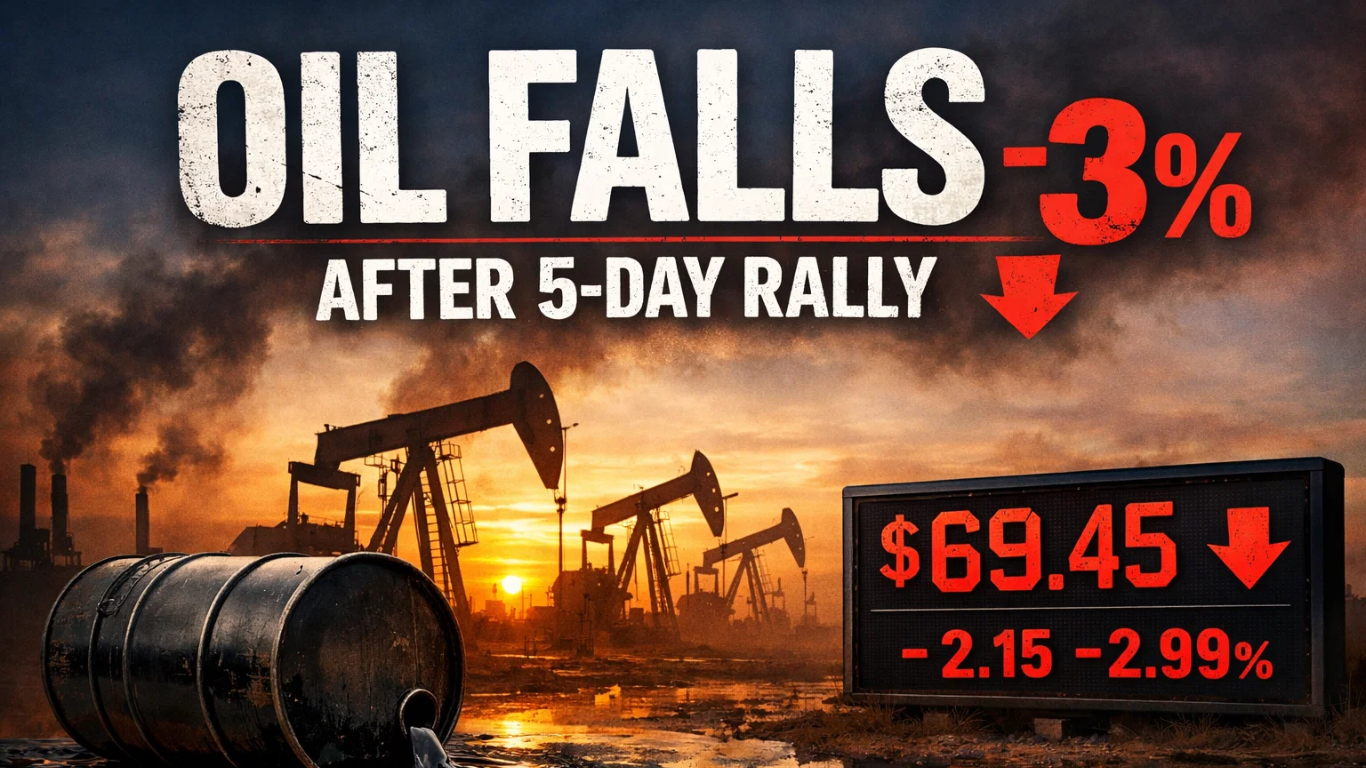
Oil markets reversed a recent upswing Thursday as both Brent and WTI crude gave back gains following comments from U.S. President Donald Trump that appeared to dial back the risk of imminent military conflict with Iran. The move underlines how quickly geopolitical risk premiums can evaporate and reset energy market sentiment.
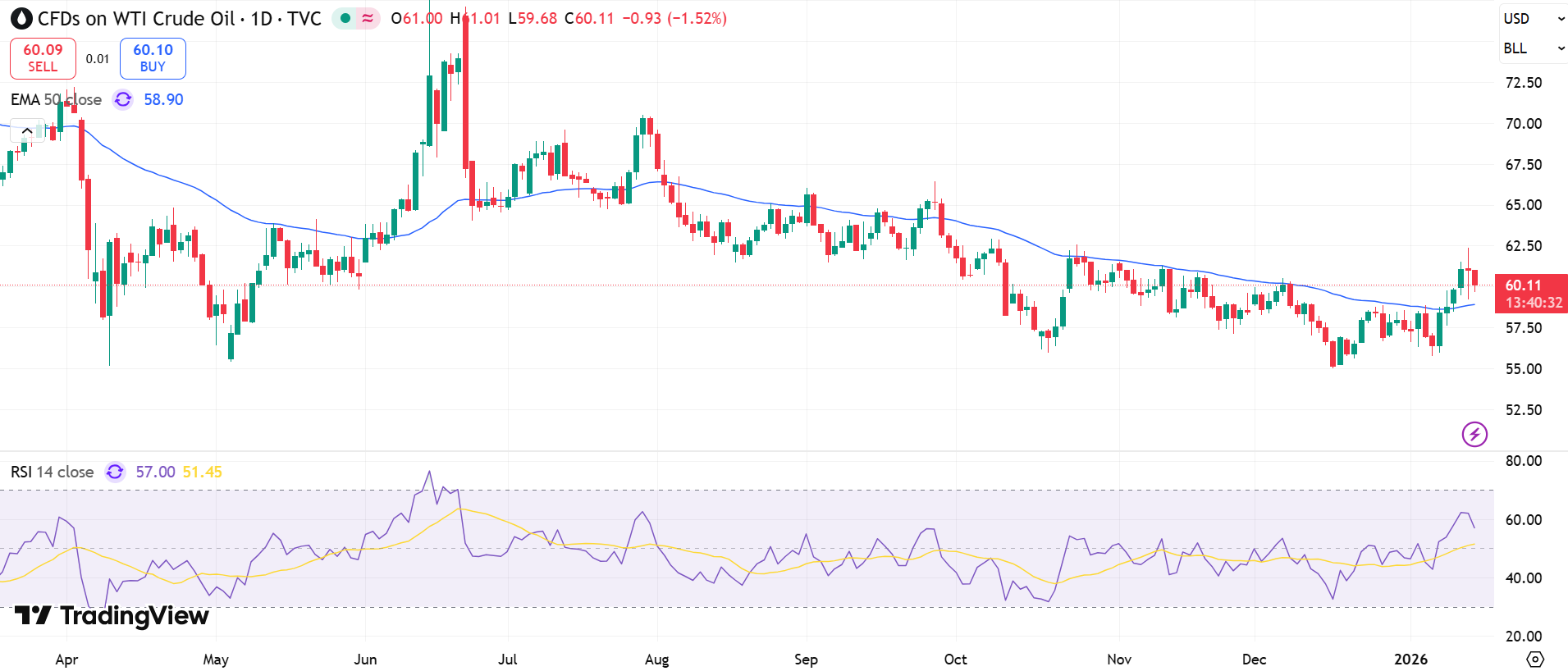
Brent crude slipped toward $64–$65 per barrel, while U.S. West Texas Intermediate (WTI) traded near $60–$60.50, dropping nearly 3% from earlier highs. The slide snapped a five-day winning streak that had pushed prices up more than 10% amid concerns about potential supply disruptions linked to unrest in Iran.
Prices Drop After Risk Premium Eases
Oil’s recent advance had been rooted in fears that intensifying unrest in Iran — a major OPEC producer — could lead to U.S. military action and disrupt crude output or shipping through the Strait of Hormuz. That geopolitical risk premium was a key driver lifting crude towards multi-month highs.
However, markets reacted sharply when Trump said killings of protesters in Iran were reportedly subsiding and that the likelihood of immediate U.S. military intervention had diminished. Traders interpreted this as a reduction in supply-disruption risk, applying downward pressure on prices.
The rapid reassessment highlights how oil prices remain sensitive to geopolitical narratives — not just fundamentals — with even tentative signs of de-escalation triggering significant shifts in trader positioning.
US Policy, Venezuela Moves Add Pressure
In addition to Iran developments, shifts in U.S. engagement with other oil producers weighed on sentiment. Trump indicated more positive talks with Venezuela, another significant crude exporter under sanctions, suggesting potential increases in Venezuelan export flows over time. That prospect contributed to easing supply concerns.
At the same time, data showed larger-than-expected builds in U.S. crude inventories, dampening near-term bullish sentiment and reinforcing the idea that ample supply in the world’s largest oil consumer could temper price gains.
Market Outlook: Volatility with Direction
Oil prices now face a backdrop of mixed signals: geopolitical risk has softened but underlying structural uncertainty persists. Traders are watching:
- Inventory levels rising in major consuming nations
- Resumption of Venezuelan exports under evolving policy
- Ongoing Iran unrest with potential to reignite premium
In this environment, analysts see WTI likely trading within a broad range unless a clear catalyst — geopolitical or economic — shifts supply-demand expectations sharply.
Sources & Methodology
Primary-source standard: Market-moving facts should link to original data releases, regulator notices, company filings or official project announcements whenever available. Secondary reporting is used for additional context, not as a substitute for original evidence.
Page last reviewed: