
The Japanese yen retained a firm tone at the start of the week, even after giving back part of its early advance against a broadly weaker U.S. dollar. The currency recently touched its strongest level in more than a week before drifting closer to session lows as European trading began. Despite the pullback, the yen continues to benefit from a powerful mix of policy expectations, intervention warnings, and renewed demand for safe-haven assets.
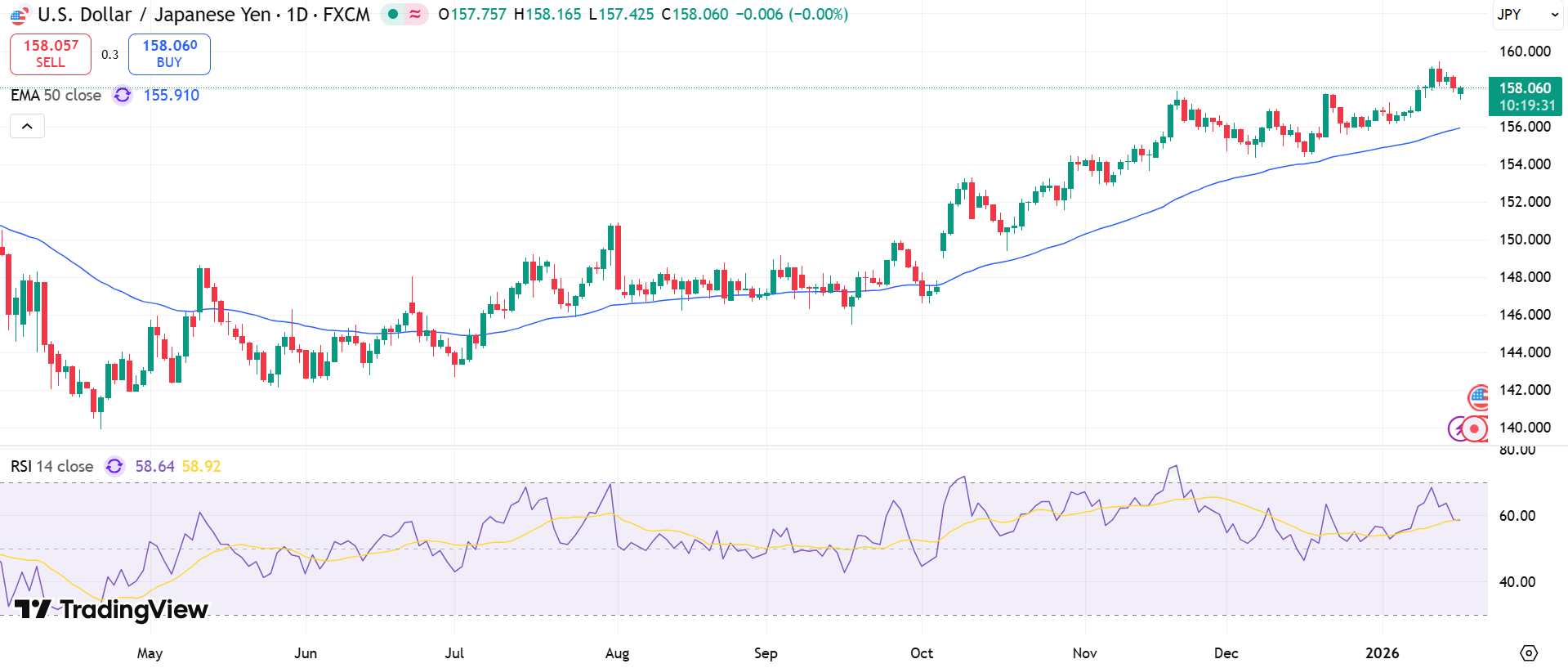
USD/JPY stabilized near key technical levels after retreating from an 18-month high set last week. The pair found support around the 61.8% Fibonacci retracement of its latest upswing, suggesting sellers remain active but cautious. Market participants are weighing whether the recent correction marks a pause or the start of a deeper pullback, particularly as political and monetary signals from Japan grow more complex.
BoJ Hike Bets Offset Political Uncertainty
Support for the yen has been reinforced by mounting expectations that the Bank of Japan could raise interest rates earlier than markets had anticipated, possibly as soon as April. Sources familiar with BoJ thinking suggest policymakers see room to tighten policy as inflation dynamics improve, a shift that would mark a significant departure from years of ultra-loose monetary conditions.
At the same time, Japanese officials have stepped up verbal warnings on currency weakness. Finance Minister Satsuki Katayama said authorities are prepared to consider all options, including coordinated intervention with the United States, to counter excessive yen declines. Such comments have historically acted as a deterrent against aggressive speculative selling.
Political developments, however, complicate the outlook. Reports indicate Prime Minister Sanae Takaichi may call a snap election in February to strengthen support for her expansionary fiscal agenda. While a stronger mandate could stabilize governance, expectations of increased government spending may limit enthusiasm for the yen over the medium term.
Key forces shaping the yen outlook include:
- Potential BoJ rate hike as early as April
- Heightened risk of direct FX intervention
- Fiscal expansion concerns tied to a snap election
- Shifting global risk sentiment
Safe-Haven Demand Clashes With Dollar Pressure
Global risk aversion has added another layer of support for the yen. Fresh trade tensions emerged after U.S. President Donald Trump threatened 10% tariffs on eight European countries from February 1, escalating to 25% by June if disputes linked to Greenland are not resolved. The move revived fears of a broader trade conflict, pushing investors toward defensive assets.
Geopolitical strains, including the prolonged Russia-Ukraine war and lingering concerns over Iran, have further bolstered demand for traditional havens such as the yen. Meanwhile, the U.S. dollar has retreated from its strongest level since early December as confidence in U.S. assets softens amid trade uncertainty, even as expectations for aggressive Federal Reserve rate cuts fade.
Technical indicators reflect the market’s hesitation. Momentum gauges remain neutral-to-bearish, and USD/JPY continues to trade below its 100-hour simple moving average near 158.55, a level that may cap near-term rebounds. Investors are now turning cautious ahead of two key catalysts: the U.S. PCE inflation report on Thursday and the BoJ policy decision on Friday.
Sources & Methodology
Primary-source standard: Market-moving facts should link to original data releases, regulator notices, company filings or official project announcements whenever available. Secondary reporting is used for additional context, not as a substitute for original evidence.
Page last reviewed: