

Oil prices rose sharply in Asian trading on Wednesday, extending a rebound that has been powered by rising geopolitical risk and signs that global supply is far tighter than many investors had priced in at the start of the year. The move highlights how quickly crude can shift from macro-driven trading to crisis mode when events in the Middle East flare up.
Brent futures for April gained 1.2% to $68.15 a barrel, while West Texas Intermediate climbed 1.4% to $63.69 by 02:01 GMT. Both benchmarks have now advanced in four of the last five sessions, recovering much of the ground lost during January’s equity-driven selloff.
Tensions intensified overnight after U.S. forces intercepted what officials described as an Iranian surveillance drone approaching an American aircraft carrier in the Arabian Sea. In a separate incident, Iranian fast boats were reported to have closed in on a U.S.-flagged tanker moving through the Strait of Hormuz, a strategic chokepoint that handles roughly one-fifth of the world’s seaborne oil trade.
The timing unnerved traders because Washington and Tehran are scheduled to meet later this week to discuss nuclear issues. Iranian officials have insisted the talks be limited strictly to nuclear matters, raising doubts over whether negotiations will proceed smoothly. Meanwhile, former President Donald Trump reiterated warnings that the U.S. would respond forcefully if Iran did not curb its nuclear program, while Tehran vowed retaliation against any new pressure.
Even the risk of disruption has been enough to lift prices, as hedge funds and refiners added a geopolitical premium to every barrel moving through the Gulf.
U.S. stockpiles plunge in cold snap
Oil’s rally was reinforced by industry data showing a surprisingly steep drop in U.S. crude inventories. The American Petroleum Institute reported that stocks fell by 11.1 million barrels in the week ending January 30, compared with expectations for a 0.7-million-barrel build.
Although API figures are unofficial, they often foreshadow trends later confirmed by the Energy Information Administration. The scale of the draw suggested that extreme winter weather across Texas, North Dakota, and the Gulf Coast disrupted production far more than analysts initially assumed.
Freezing temperatures forced shale producers to shut wells temporarily, reduced pipeline flows, and delayed tanker loadings from major export hubs such as Houston and Corpus Christi. Refiners also operated at lower rates, complicating normal inventory patterns and amplifying the apparent tightness in supply.
At the same time, OPEC+ continues to keep millions of barrels off the market through coordinated output cuts, meaning the U.S. weather shock arrived just as spare supply was already limited.
What traders are watching next
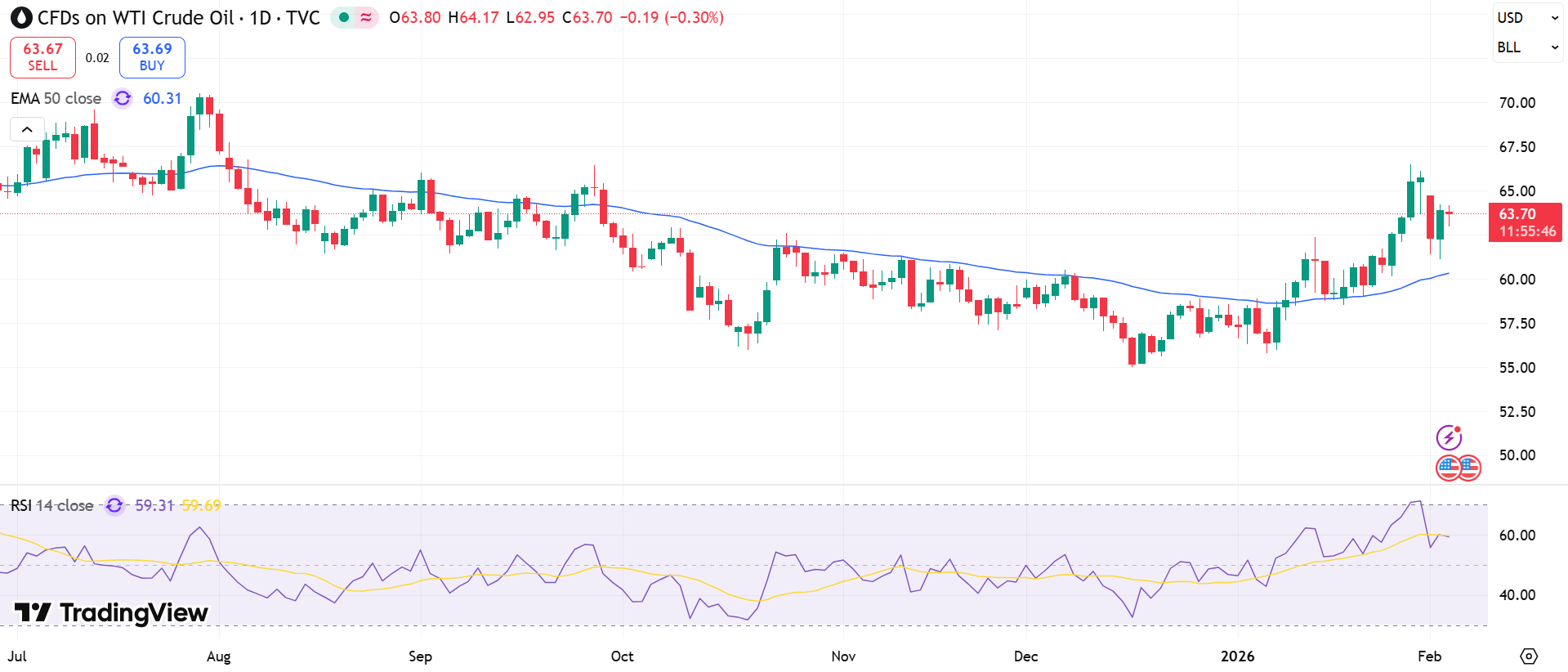
Market participants say the near-term direction of oil will depend on three main forces: whether U.S.–Iran talks proceed, how quickly American production recovers from the cold snap, and whether global demand strengthens as China returns to normal activity after the Lunar New Year.
Key indicators this week include:
- Official EIA inventory and production data
- Any further military incidents near the Strait of Hormuz
- Signals from OPEC+ about future supply policy
- Movements in the U.S. dollar and Treasury yields
- Chinese travel and fuel consumption trends
If diplomatic tensions escalate or U.S. output remains constrained, several banks see Brent testing the low-$70s per barrel. Conversely, a calm outcome in talks and a rapid rebound in shale drilling could pull prices back toward the mid-$60s.
For now, crude markets are trading on edge, balancing the very real risk of Middle East disruption against an uncertain global demand outlook that still hinges on China’s economic recovery and U.S. energy policy.

