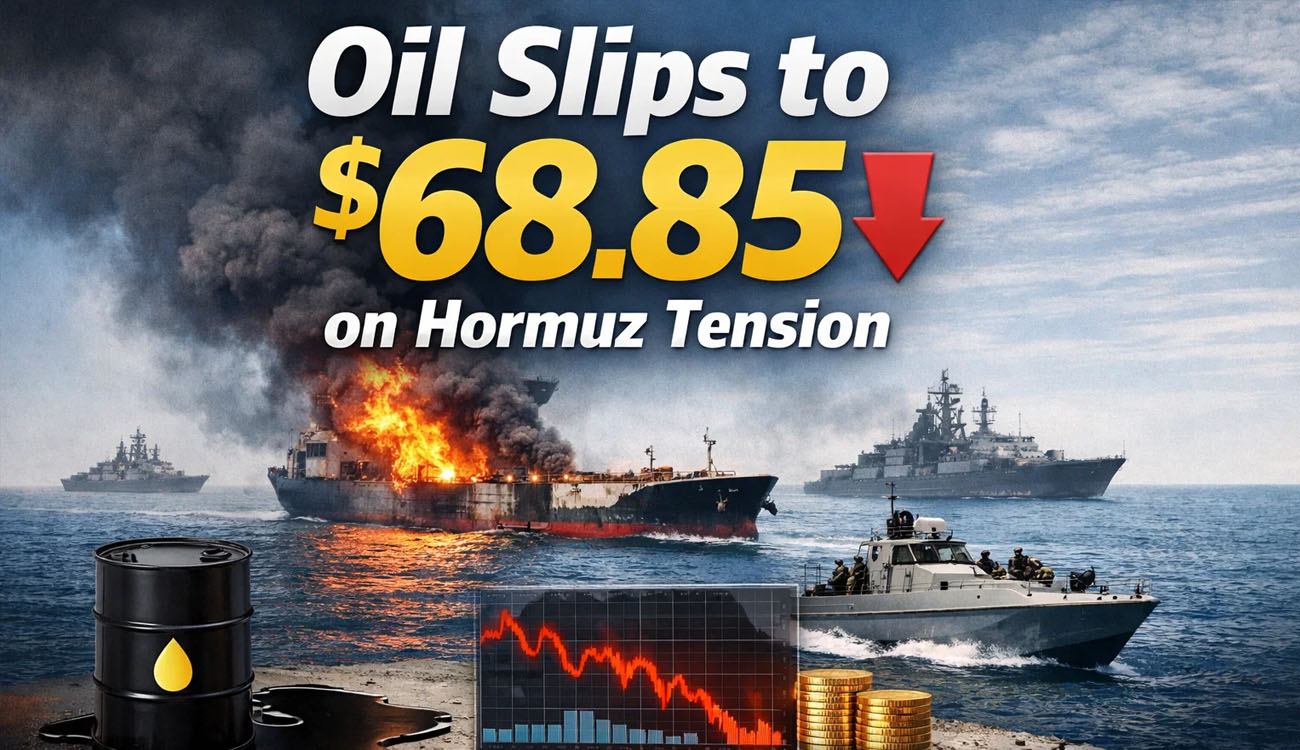
Global oil prices edged lower on Tuesday as traders balanced calmer trading with the threat of possible supply disruptions in one of the world’s most sensitive shipping lanes.
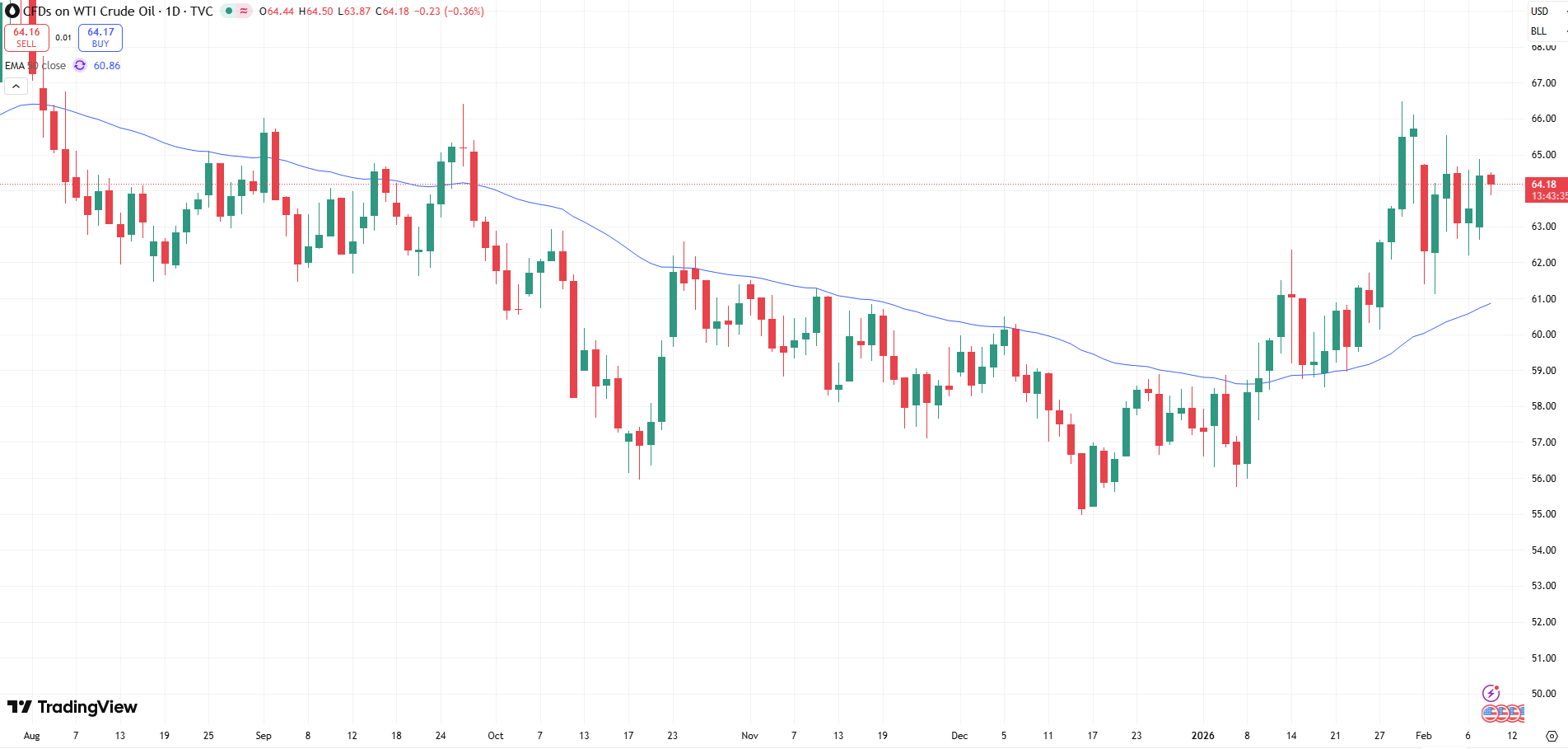
Brent crude fell 18 cents (0.26%) to $68.85 a barrel, while U.S. West Texas Intermediate (WTI) dropped 21 cents (0.33%) to $64.15 by 03:53 GMT. The decline followed a stronger session on Monday, when prices jumped more than 1% after a warning from U.S. authorities raised fresh concerns about Middle East security.
The U.S. Maritime Administration told American-flagged commercial ships to keep as far away as possible from Iran’s territorial waters in the Strait of Hormuz and to verbally refuse boarding if Iranian forces asked to inspect them. That guidance reignited fears that a confrontation could choke off oil flows.
The Strait of Hormuz is critical because about 20% — one-fifth — of all oil consumed in the world moves through this narrow waterway between Oman and Iran. Any escalation there would ripple through energy markets, shipping insurance, and fuel prices worldwide.
Why Hormuz still matters
Most crude exported by key OPEC producers — Iran, Saudi Arabia, the United Arab Emirates, Kuwait, and Iraq — passes through the strait, primarily heading to Asian buyers such as China, India, South Korea, and Japan.
The timing of the U.S. warning was notable because Iran’s foreign minister said last week that Oman-mediated nuclear talks with Washington had started well and would continue. Despite that, markets remain uneasy.
Tony Sycamore of IG summed up trader sentiment: negotiations sounded “cautiously positive,” but uncertainty about possible conflict, tighter sanctions, or shipping disruptions has kept a modest risk premium — a small fear-based cost — embedded in prices.
In simple terms, investors are saying: talks may be good, but the situation is still fragile.
Sanctions, Russia, and India’s move
Geopolitics beyond the Middle East is also shaping the market. The European Union proposed expanding sanctions on Russian oil to include ports in Georgia and Indonesia — the first time the bloc would target facilities in third countries that handle Russian crude. The aim is to squeeze Moscow’s energy revenues over the war in Ukraine.
At the same time, buying patterns in Asia are shifting:
- Indian Oil Corp purchased 6 million barrels of crude from West Africa and the Middle East.
- Traders said India avoided Russian oil in this deal as New Delhi seeks closer trade ties with Washington.
These moves show how politics, not just supply and demand, is increasingly steering global oil flows.
What this means for markets
For now, prices are drifting rather than crashing or surging. But the combination of Hormuz tensions, sanctions on Russia, and shifting Asian demand keeps the market on edge.
If shipping risks rise, prices could jump quickly. If diplomacy improves and sanctions bite harder, oil could slide further. Traders are betting neither story is finished yet — which is why even a quiet day still carries big stakes for the world’s most important energy market.
Sources & Methodology
Primary-source standard: Market-moving facts should link to original data releases, regulator notices, company filings or official project announcements whenever available. Secondary reporting is used for additional context, not as a substitute for original evidence.
Page last reviewed: