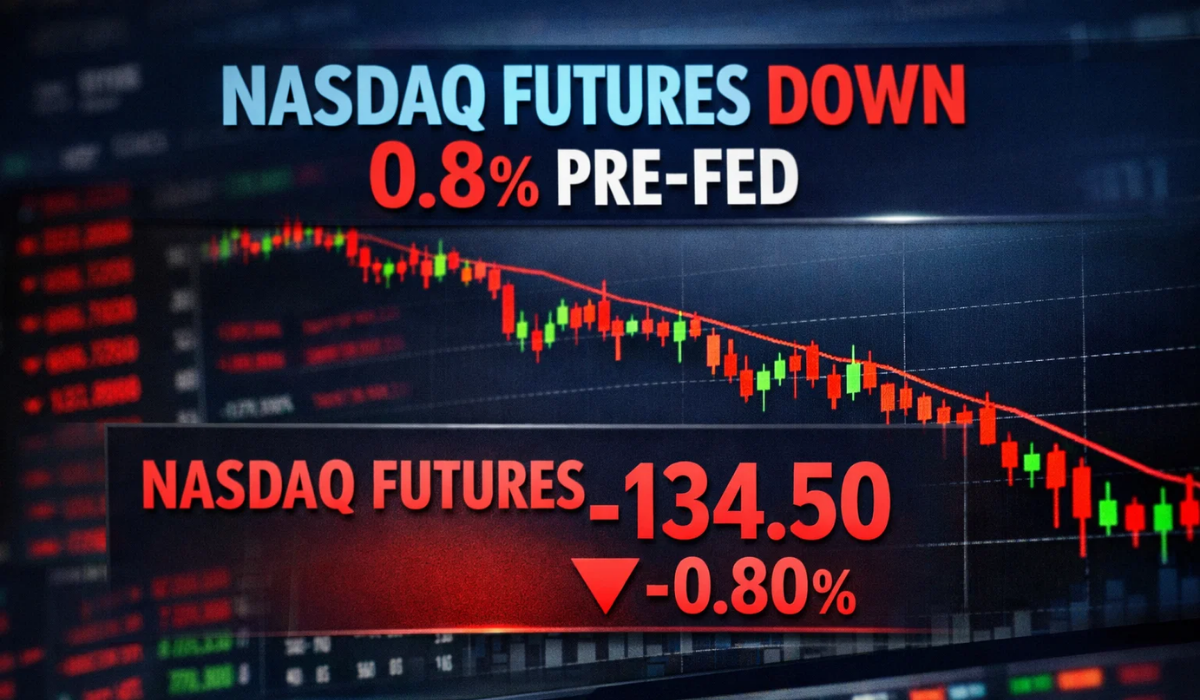
U.S. stock futures moved lower Monday night as investors stayed cautious in a holiday-thinned session. Concerns about technology stocks and the rapid impact of artificial intelligence continued to weigh on sentiment, while traders prepared for a busy week of economic data and Federal Reserve updates.
By 22:53 ET (03:53 GMT), Nasdaq 100 futures had fallen 0.8% to 24,604.0, leading declines. S&P 500 futures slipped 0.5% to 6,820.0, while Dow Jones futures eased 0.3% to 49,417.0.
Trading volumes were muted because U.S. markets were closed earlier for a holiday. With fewer participants active, price moves appeared more pronounced. Investors were also digesting last week’s mixed consumer inflation report, which showed only modest progress in cooling price pressures.
For many market participants, the message was simple: inflation is slowing, but not fast enough to clearly signal lower interest rates.
Fed Minutes and Key Data Ahead
This week’s calendar is packed with reports that could shape expectations for interest rates. The minutes from the Federal Reserve’s January meeting are scheduled for release Wednesday. At that meeting, the central bank left rates unchanged, reinforcing its wait-and-see approach.
Investors will also hear from several Fed officials in the coming days, adding more insight into policy thinking.
Major economic releases include:
- Industrial production data on Wednesday
- Durable goods orders on Wednesday
- December trade data on Thursday
- PCE price index on Friday, the Fed’s preferred inflation measure
The PCE price index is especially important because it helps guide Fed policy decisions. If inflation remains elevated, the central bank may keep rates higher for longer. Higher rates tend to weigh on growth-oriented sectors like technology.
Markets currently expect interest rates to remain unchanged in the near term. Any surprise in Friday’s data could quickly shift those expectations.
Tech Weakness Weighs on Wall Street
Wall Street ended mostly flat on Friday, but the broader tone was cautious. While headline consumer price index (CPI) inflation for January showed mild cooling, the data did not offer clear proof that inflation is under control. Core CPI, which excludes food and energy, eased slightly and largely met expectations.
Technology shares remained under pressure, driven by concerns that rapid developments in artificial intelligence could disrupt existing business models. Software stocks initially led the selloff, but weakness eventually spread to other sectors.
Last week’s performance reflected that uncertainty:
- S&P 500: down 1.4%
- Nasdaq Composite: down 2.1%
- Dow Jones Industrial Average: down 1.2%
For new investors, the takeaway is straightforward. When inflation is uncertain and interest rates are high, markets often move carefully. Technology stocks, which depend heavily on future growth, can be especially sensitive.
With futures already lower and critical data ahead, this week could determine whether markets stabilize—or extend recent losses.
Sources & Methodology
Primary-source standard: Market-moving facts should link to original data releases, regulator notices, company filings or official project announcements whenever available. Secondary reporting is used for additional context, not as a substitute for original evidence.
Page last reviewed: