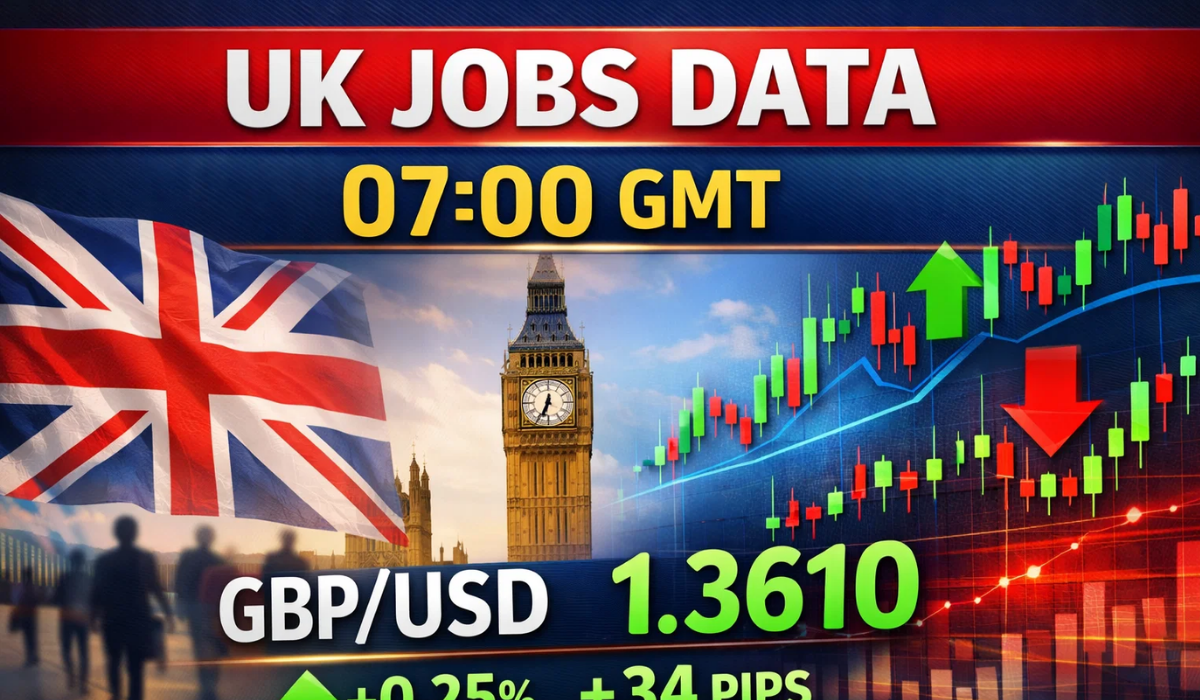
The United Kingdom will release labor market data for the three months ending December at 07:00 GMT today. Currency traders are watching closely because jobs data often move the British Pound.
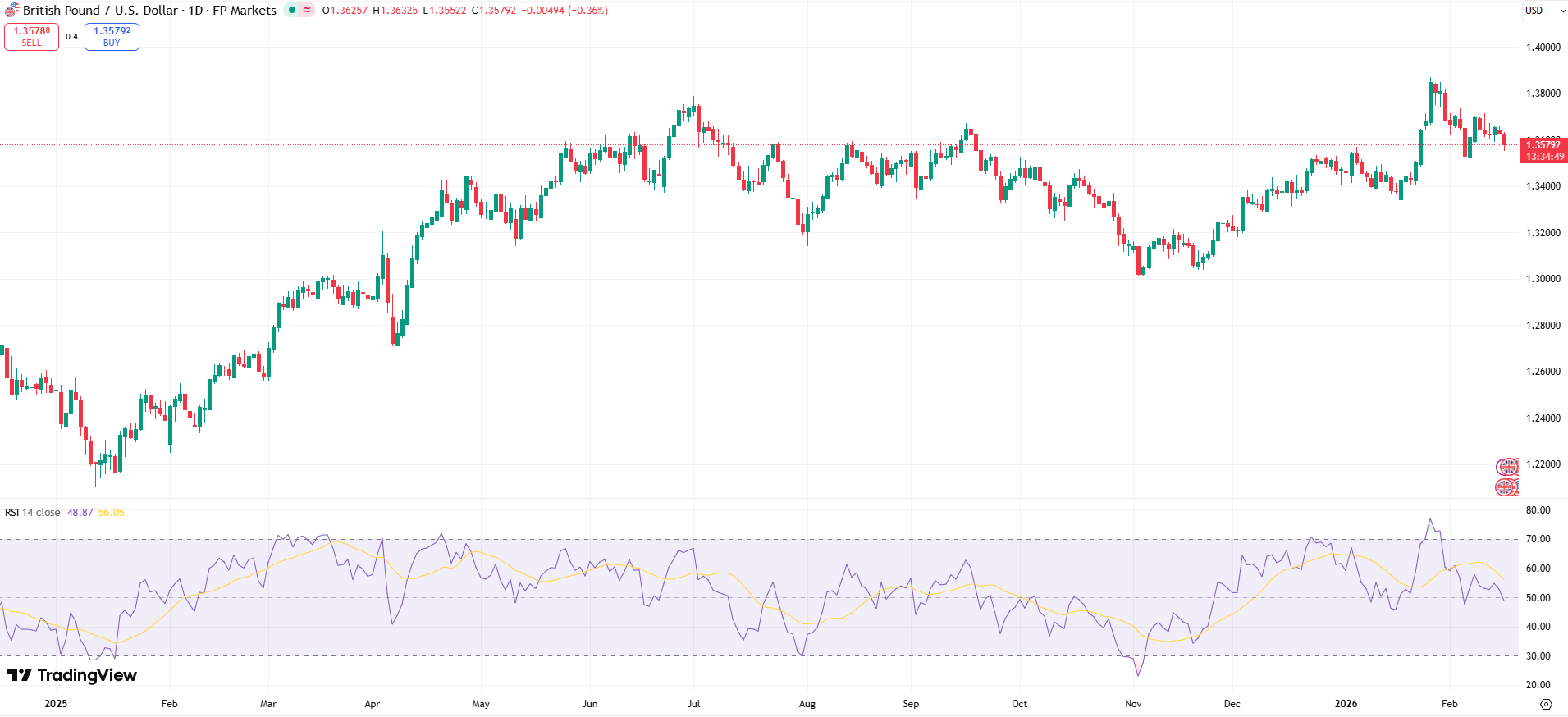
At the time of writing, GBP/USD trades 0.16% lower near 1.3610. The pair has pulled back from the 1.3700 level reached earlier this week. Technical indicators show mixed but generally steady momentum.
The 20-period Exponential Moving Average (EMA) stands at 1.3631 and is acting as short-term resistance. The nine-day EMA remains above the 50-day EMA at 1.3518, keeping the near-term bias positive as long as price holds above these levels. Meanwhile, the 14-day Relative Strength Index (RSI) reads 55.94, above the 50 mid-line. That suggests bullish momentum without being overbought.
If the jobs report shows strong hiring and wage growth, the Pound could rise. If employment weakens, it may fall.
BoE Policy and Political Pressure
The broader trend for the Pound is being shaped by monetary policy and politics. The Bank of England (BoE) kept interest rates unchanged at its February meeting, as expected. However, the 5–4 vote split among policymakers was more dovish than markets anticipated.
BoE Governor Andrew Bailey said inflation could reach the target sooner than expected. As a result, investors are now pricing in a 50 basis points (bps) rate cut this year. Lower interest rates typically weaken a currency because investors earn less return holding it.
Political uncertainty has added pressure. Concerns grew around Prime Minister Keir Starmer’s leadership after his chief aide, Morgan McSweeney, resigned amid controversy over a U.S. ambassador appointment. The leader of the Scottish Labour Party also called for Starmer’s resignation. Although senior officials publicly backed the Prime Minister, the episode created short-term uncertainty for the Pound.
Key pressure points for GBP:
- 50 bps BoE rate cut priced this year
- 5–4 dovish vote split at February meeting
- Political leadership concerns in the UK
Dollar Weakness Offers Support
Despite domestic challenges, the Pound is receiving some support from a softer U.S. Dollar. The U.S. Dollar Index (DXY) trades near a one-week low as investors expect the Federal Reserve to cut rates two more times this year. A weaker dollar often helps GBP/USD rise.
Market participants are also watching U.S. data closely. Retail Sales figures are due later today, followed by the Nonfarm Payrolls (NFP) report on Wednesday and U.S. consumer inflation data on Friday. These releases will shape expectations for Fed policy and influence dollar demand.
From a technical perspective, resistance levels for GBP/USD stand at:
- 1.3869 (January 27 high, highest since September 2021)
- 1.4110 (upper ascending channel boundary)
- 1.4248 (highest since April 2018)
Support levels include:
- 1.3652 (nine-day EMA)
- 1.3570 (lower channel boundary)
- 1.3518 (50-day EMA)
- 1.3350 (support reversal zone)
In simple terms, today’s UK jobs report could decide whether GBP/USD breaks higher or slips further. Strong employment may push the pair toward 1.3869, while weak data could drag it back toward 1.3518 or lower.
Sources & Methodology
Primary-source standard: Market-moving facts should link to original data releases, regulator notices, company filings or official project announcements whenever available. Secondary reporting is used for additional context, not as a substitute for original evidence.
Page last reviewed: