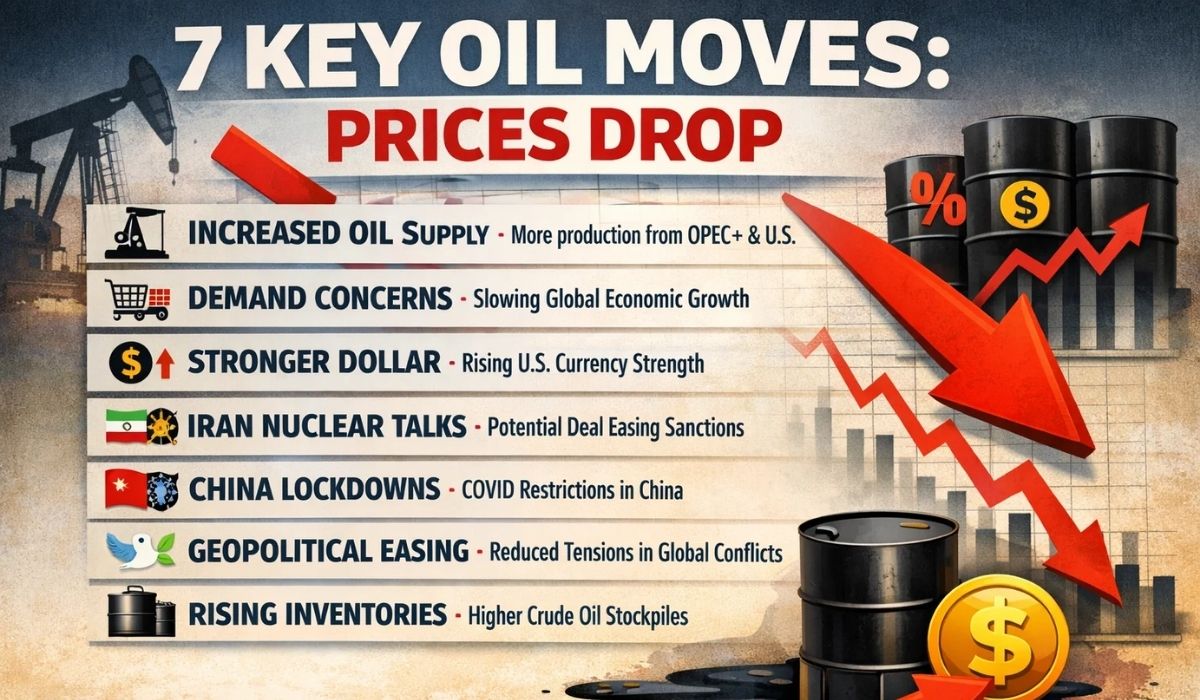
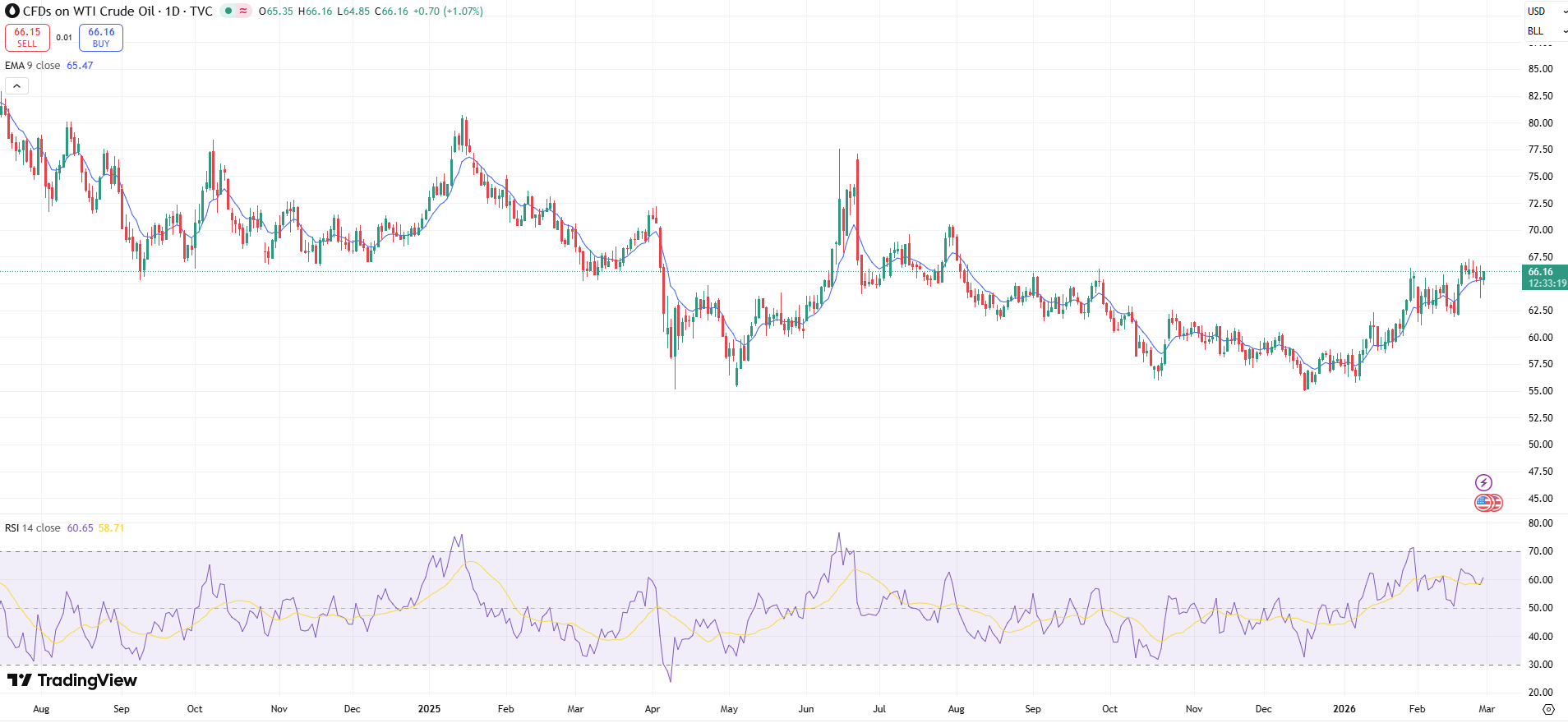
Oil prices eased this week as talks between the United States and Iran over Tehran’s nuclear program continued without a breakthrough agreement. Benchmark Brent crude dipped below $71 per barrel, and U.S. West Texas Intermediate (WTI) was roughly $65 per barrel, reversing earlier gains for the week.
Diplomatic engagement in Geneva, followed by planned technical discussions in Vienna next week, has reduced immediate fears that conflict could disrupt Middle Eastern oil supply. This has encouraged traders to scale back risk premiums in crude markets. Analysts had noted that while tensions remain, the likelihood of a major supply interruption is lower for now, putting downward pressure on prices.
However, oil remains sensitive to future developments because Iran sits near the Strait of Hormuz, the passageway for roughly 20%–30% of world oil shipments. A sudden escalation there would quickly tighten supply and push crude prices higher.
Rising Global Supply and Inventory Signals
Market indicators show rising crude supply in several key areas:
- U.S. crude inventories jumped by ~16 million barrels last week, the largest surge in three years, according to official data.
- Traders see less of a threat to oil flows from the Middle East as diplomatic talks continue, which weakens the geopolitical supply risk premium.
These larger inventories, combined with signs of rising global output, have helped dampen price pressure. Even though crude briefly approached seven-month highs earlier this month due to geopolitical concerns, renewed optimism around negotiations has tempered market fears.
Venezuela Oil’s $2 Billion Return
A major new factor shaping supply is Venezuela’s return to global oil markets under a U.S.-supervised deal. Officials say oil sales between the U.S. and Venezuela are expected to reach about $2 billion by the end of February, with roughly 40 million barrels likely sold by that time.
Key points on Venezuela’s market comeback:
- Global trading firms like Vitol and Trafigura are marketing much of the Venezuelan oil.
- Partners of Venezuela’s state company, including Chevron, have boosted production and exports.
- Markets in Asia, Europe, and the U.S. Gulf Coast are lined up to receive this crude.
Bullet Points: Venezuela Oil Impact
- $2B in oil sales expected by end of February.
- ~40 million barrels of Venezuelan crude poised for export.
- Markets in Asia and Europe poised as key buyers.
Oil markets today reflect a balancing act: diplomacy cooling geopolitical risk, stockpiles rising, and new supply entering from Venezuela. All these forces are shaping crude price trends as traders watch for clearer direction in both global politics and energy demand.
Sources & Methodology
Primary-source standard: Market-moving facts should link to original data releases, regulator notices, company filings or official project announcements whenever available. Secondary reporting is used for additional context, not as a substitute for original evidence.
Page last reviewed: