
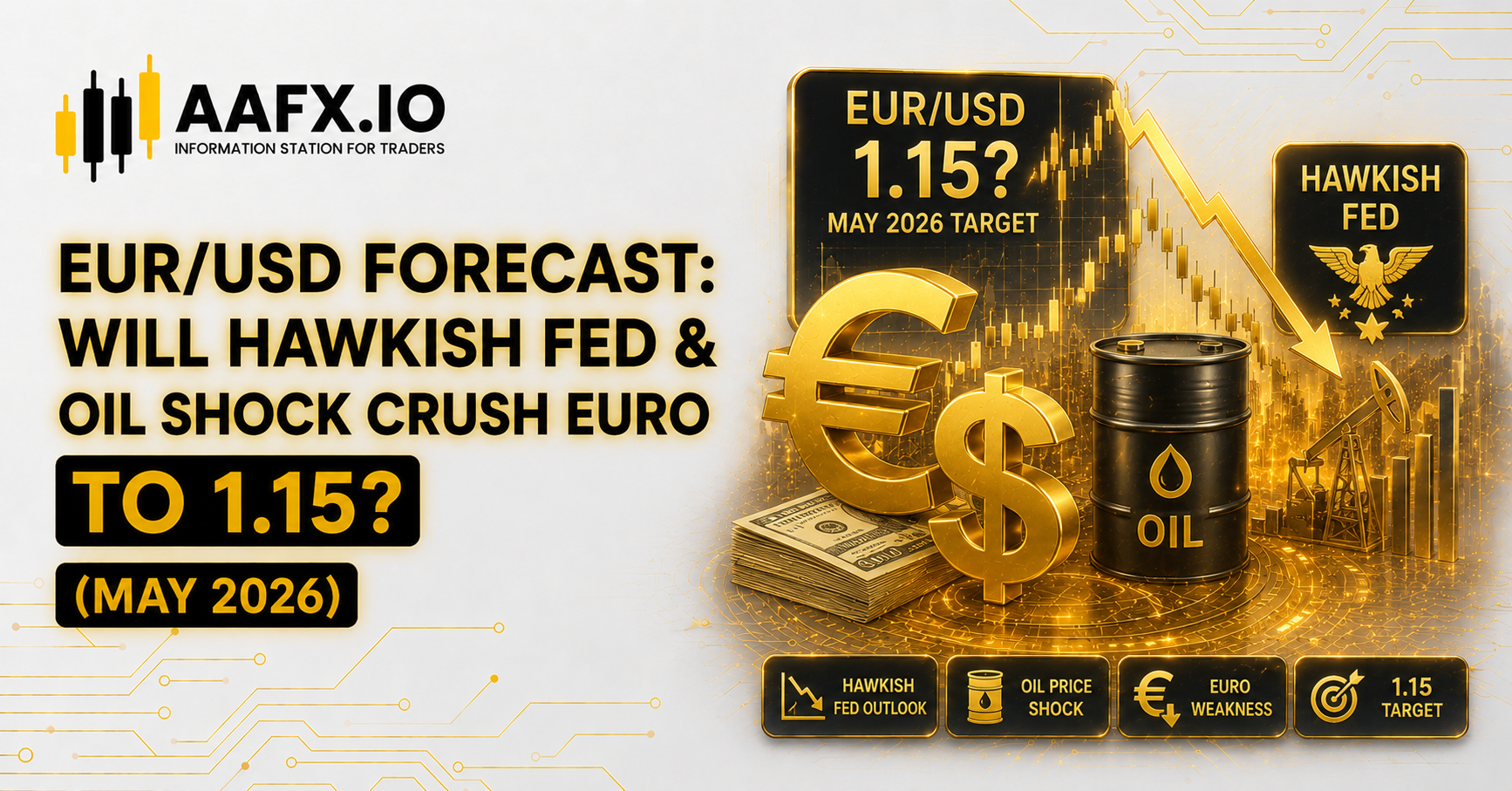
As of May 15, 2026, EUR/USD is trading in a narrow range between 1.167 and 1.175, struggling to find clear direction. After some volatile moves, the pair is holding near 1.168 to 1.172, slightly lower for the week but still above key support levels.
Macro Drivers: US Strength vs ECB Caution
US inflation for April came in higher than expected at about 3.8%, mainly because oil prices jumped to $101–$107 due to ongoing US-Iran tensions and risks in the Strait of Hormuz. As a result, markets have reduced expectations for Fed rate cuts in 2026, which has strengthened the dollar under new Chair Kevin Warsh’s more aggressive approach.
The ECB remains focused on economic data, balancing concerns about rising energy prices with worries about eurozone growth. Because the Fed is taking a more aggressive stance while the ECB is cautious, EUR/USD has limited room to rise. Geopolitical tensions and updates from Trump and Xi add to the volatility, while risks in the Middle East continue to support the dollar as a safe haven.
Technical Outlook
- Resistance: 1.1800–1.1870 (multiple rejections).
- Support: 1.1660–1.1670 and 50/200-day SMAs. Break below 1.1660 eyes 1.1590–1.1440.
- The short-term outlook is slightly bearish due to the strong dollar, but the pair is still recovering from the March lows near 1.1435 and remains in an upward channel. The RSI is neutral, and the MACD indicates weak momentum.
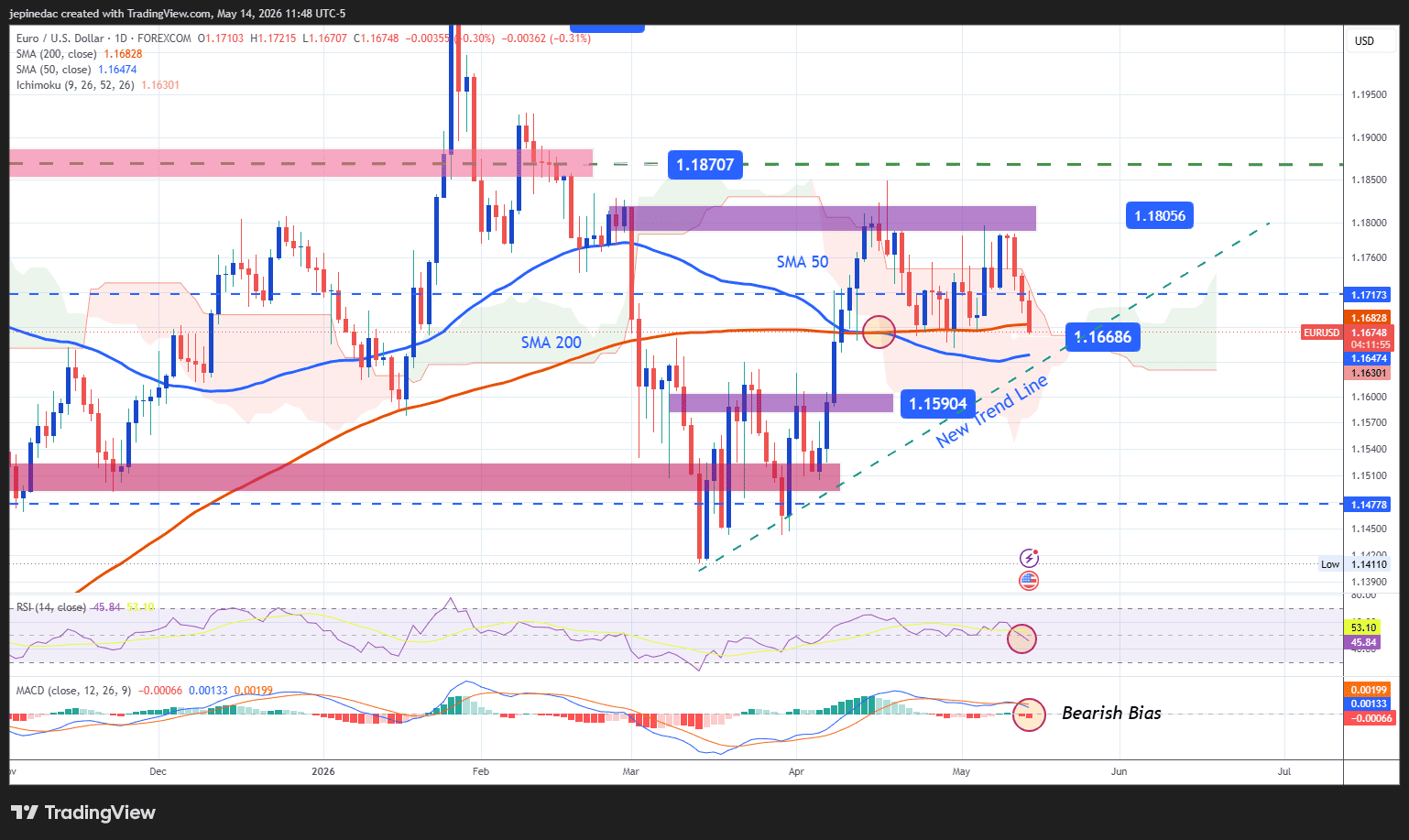
Analysts expect 1.15–1.20 trading through 2026, with near-term downside bias unless ECB turns hawkish or US data cools**.**
Risks & Key Triggers
Upside: Stronger ECB tone, oil pullback, or USD-softening diplomacy.
Downside: Hotter US PPI/jobs data, Warsh rhetoric, or fresh geopolitical shocks.
In the near term, targets are around 1.15 to 1.16 if the dollar stays strong. A longer-term rebound to 1.19 or 1.20 is possible if the gap between US and eurozone policies narrows. EUR/USD reflects the 2026 macro environment, with strong US inflation and a cautious eurozone. Expect range-bound trading, with sharp moves likely on new data or major headlines. Keep an eye on US PPI, ECB announcements, and oil prices for signs of the next breakout.
