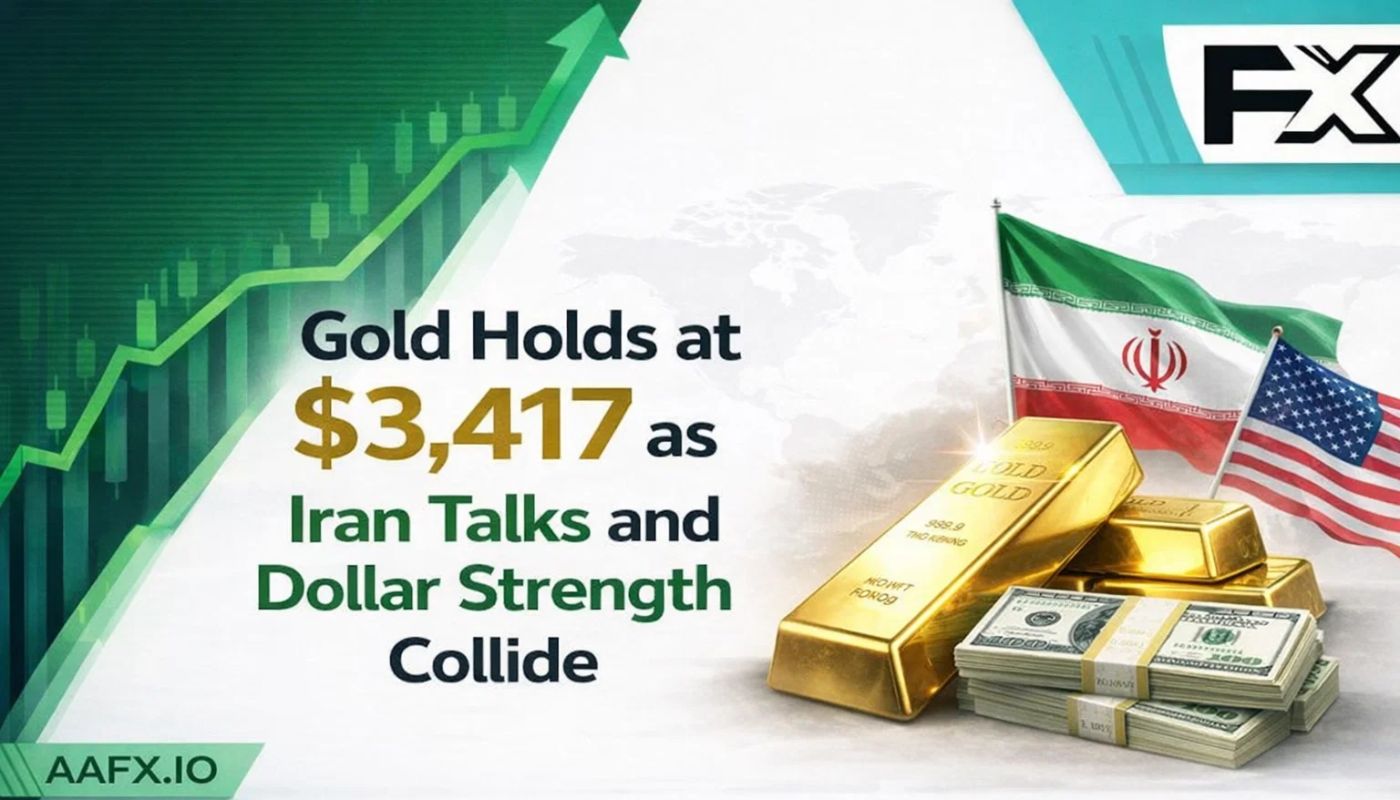
Gold had a promising start to Friday but could not hold its ground. Spot gold climbed nearly 2% during Asian trading hours before pulling back to a gain of just 0.9%, settling at $3,417.72 per ounce as of 6:42 a.m. ET. Gold futures followed a similar path, rising 0.8% to $3,442.90 an ounce. Despite Friday’s partial recovery, spot gold remains on track for a weekly loss of roughly 1.7% — a reminder that short-term bounces do not always signal a lasting trend reversal.
To understand why gold is moving this way, it helps to know what gold actually does. Investors tend to buy gold when they are scared — during wars, financial crises, or periods of deep uncertainty. When fear eases even slightly, gold often gives back some of those gains. That is precisely what happened Friday morning as markets began weighing the possibility of diplomatic progress between the United States and Iran.
Trump Extends Iran Deadline to April 6
The central event rattling markets this week is a standoff between the U.S. and Iran over the Strait of Hormuz — a narrow waterway in the Middle East through which roughly one-fifth of the world’s oil passes every single day. President Trump issued an ultimatum last weekend, threatening to strike Iranian energy facilities if Iran did not reopen the strait. On Thursday, he extended that deadline to April 6, saying via Truth Social that the delay came at Iran’s request and that talks were “going very well.”
Iran’s government publicly denied that any negotiations with Washington are currently taking place, leaving markets in an uncomfortable gray zone — neither a clear path to peace nor an imminent military confrontation.
Key factors shaping the gold and oil outlook right now:
- Iran’s deadline: Extended to April 6, buying markets roughly 10 more days of uncertainty
- Strait of Hormuz: Controls approximately 20% of global daily oil flow
- Oil price spike: Supply fears have already driven prices sharply higher, stoking inflation concerns
- Central bank response: Higher inflation expectations are pushing rate-cut hopes further out
Dollar Strength Dims Gold’s Appeal
As the geopolitical picture remained murky, investors pivoted toward another traditional safe haven — the U.S. dollar. The U.S. Dollar Index, which measures the greenback against six major currencies, edged up 0.1% to 99.99 on Friday. That may sound like a small move, but it matters a great deal for gold. Because gold is priced in dollars globally, a stronger dollar makes gold more expensive for buyers using other currencies, which reduces demand and pushes prices lower.
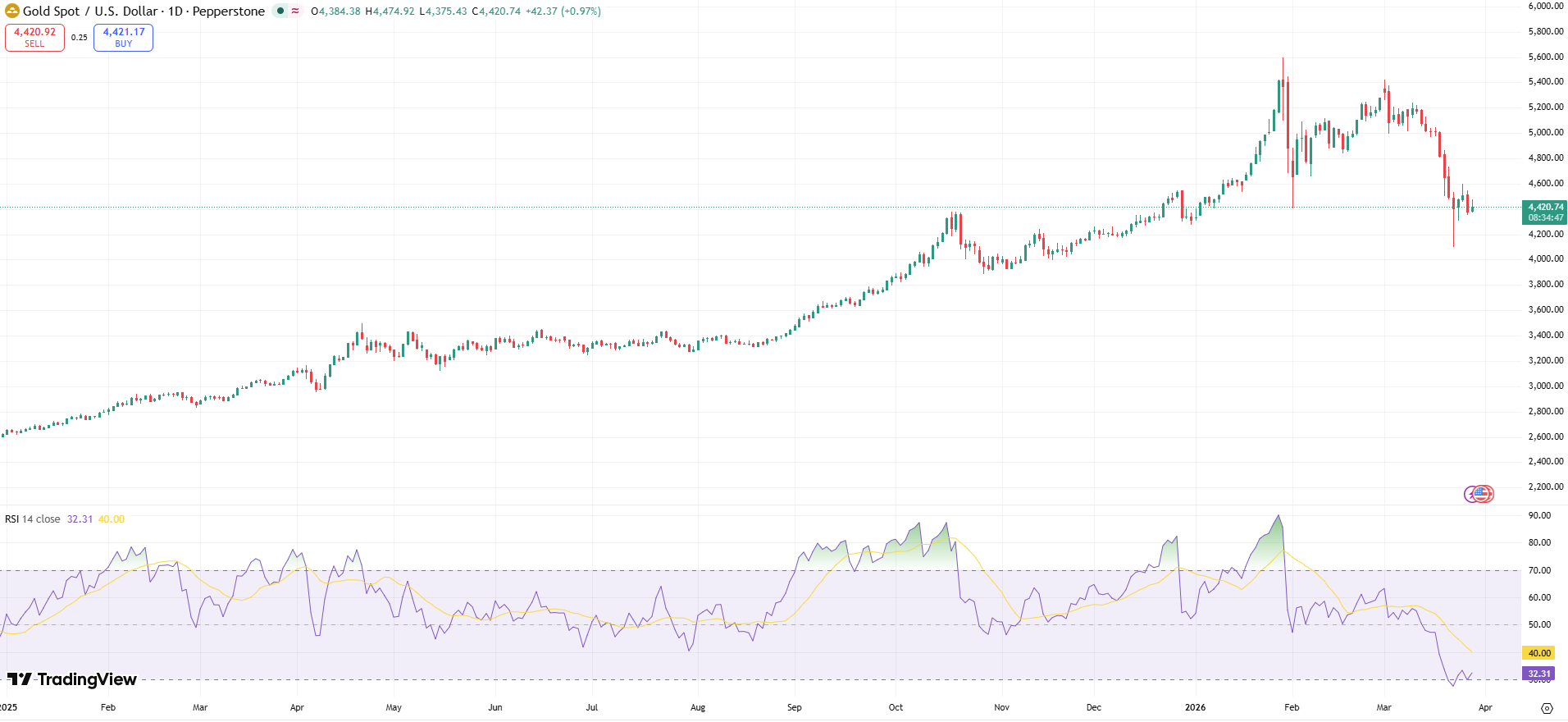
Analysts have also noted that gold’s recent struggles are partly a hangover from its own success. The metal surged to record highs in January, and since then it has slid approximately 20% from those peaks. That kind of correction is not unusual after a historic rally, but it has clearly dented investor enthusiasm. Adding to the pressure, the oil price spike triggered by Hormuz supply fears is feeding global inflation concerns, which in turn reinforces the view that central banks — including the U.S. Federal Reserve — will keep interest rates elevated for longer. Gold historically underperforms when interest rates stay high, because higher rates make bonds and savings accounts more attractive by comparison, pulling money away from non-yielding assets like gold.
Sources & Methodology
Primary-source standard: Market-moving facts should link to original data releases, regulator notices, company filings or official project announcements whenever available. Secondary reporting is used for additional context, not as a substitute for original evidence.
Page last reviewed: