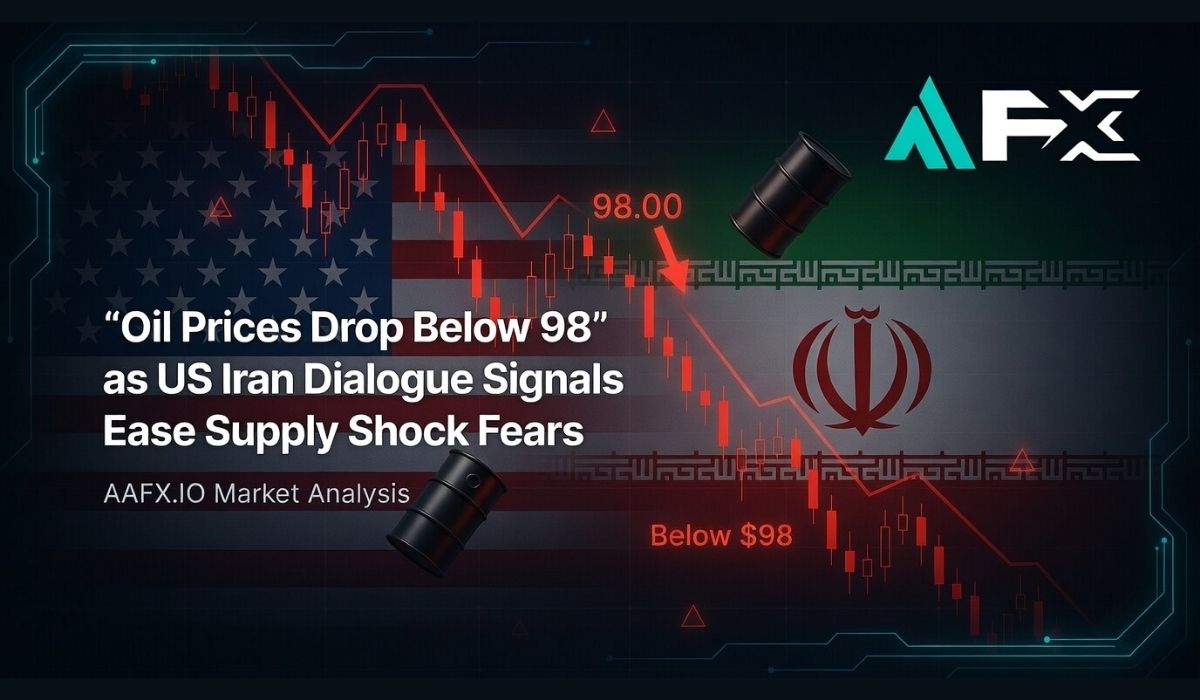
Global oil prices pulled back sharply in early Tuesday trading as renewed prospects of dialogue between the United States and Iran eased fears of a prolonged supply disruption. Brent crude fell to 97.50 while West Texas Intermediate crude declined to 96.83, reversing part of the previous session’s rally driven by geopolitical escalation in the Strait of Hormuz.
The decline reflects a key market dynamic as traders rapidly price in shifts in geopolitical risk. While supply concerns had pushed oil higher, the possibility of diplomatic progress is now capping upside momentum.
Strait of Hormuz Tensions Remain Central to Price Action
The recent volatility stems from the strategic importance of the Strait of Hormuz, a vital artery for global crude shipments. The United States expanded its naval blockade toward the Gulf of Oman and the Arabian Sea, disrupting tanker routes and forcing vessels to reroute.
At its peak impact, analysts estimated that nearly 10 million barrels per day of supply were effectively removed from global markets. Additional risks suggested a further 3 to 4 million barrels per day could be affected if tensions escalated.
However, the latest signals of ongoing communication between Washington and Tehran have tempered worst case fears. Diplomatic efforts, including mediation attempts supported by Shehbaz Sharif, are being closely monitored by energy traders.
Market Balances Tight Despite Diplomatic Signals
Despite the pullback, underlying oil market fundamentals remain tight. Analysts note that even without escalation, current supply demand dynamics support elevated price levels.
Key market drivers include
• Reduced supply flows due to partial shipping disruptions
• Limited spare capacity among major producers
• Continued resilience in global energy demand
• Strategic positioning by institutional traders
The International Energy Agency has indicated readiness to intervene if conditions worsen, although it has not yet recommended coordinated strategic reserve releases. Similarly, the International Monetary Fund and the World Bank have warned against export restrictions that could intensify volatility.
OPEC Demand Outlook and Short Term Price Expectations
Adding another layer to the outlook, the Organization of the Petroleum Exporting Countries revised its second quarter demand forecast lower by 500000 barrels per day. This adjustment reflects concerns about slower global growth and tighter financial conditions.
Meanwhile, US officials suggest that oil prices could peak in the coming weeks if shipping routes normalize and tensions ease. Still, the market remains highly sensitive to headlines, with any disruption or escalation capable of triggering rapid price swings.
For traders and investors, the current environment underscores the importance of monitoring both macroeconomic signals and geopolitical developments. While diplomatic progress may limit immediate upside, structurally tight supply conditions continue to provide a floor for oil prices near recent levels.
Sources & Methodology
Primary-source standard: Market-moving facts should link to original data releases, regulator notices, company filings or official project announcements whenever available. Secondary reporting is used for additional context, not as a substitute for original evidence.
Page last reviewed: