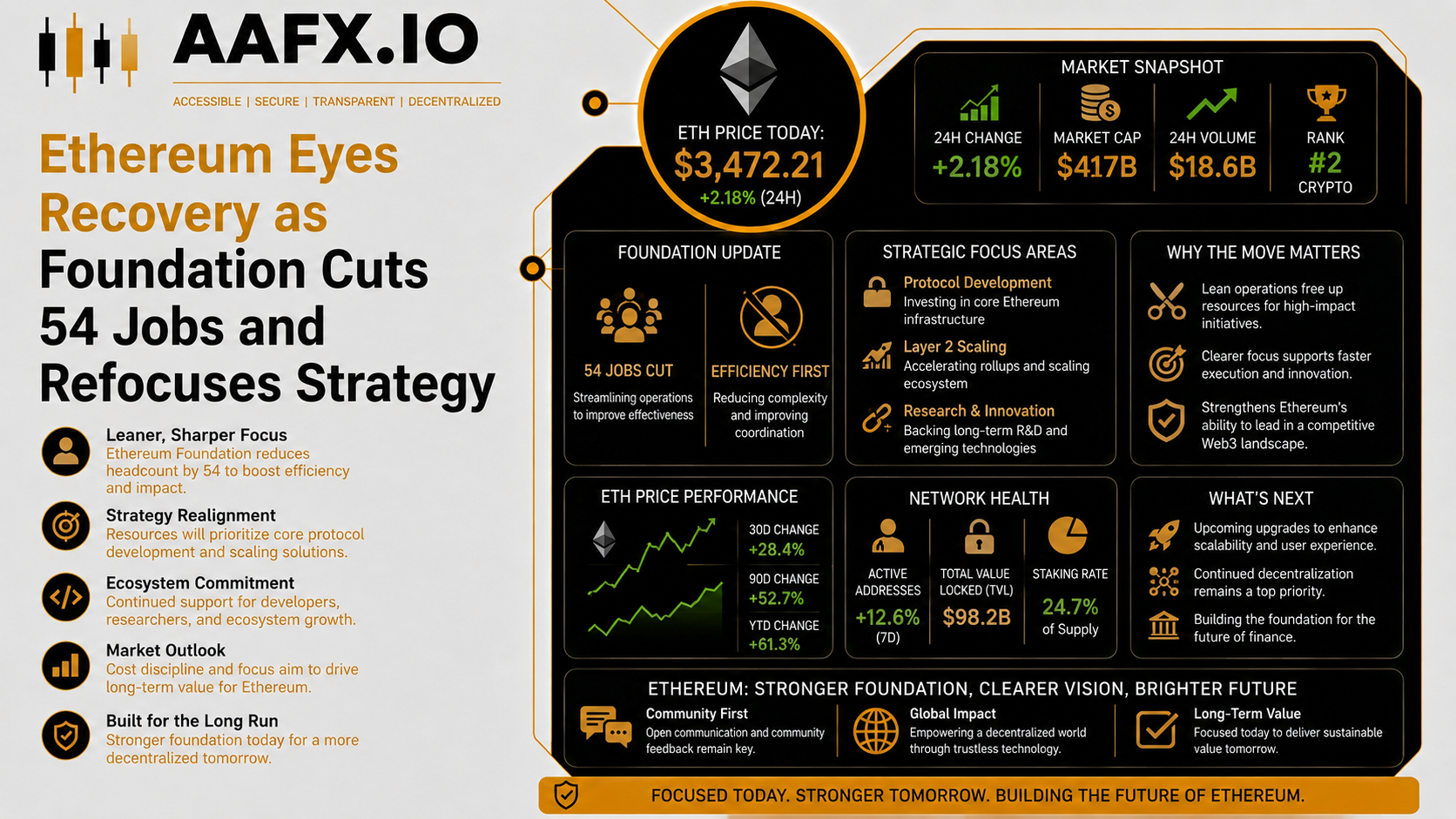
Ethereum is navigating one of its most important transition periods in recent years. While ETH continues to trade well below previous highs, recent developments within the Ethereum Foundation have sparked a debate about whether operational discipline could ultimately strengthen the network’s long-term outlook.
The Ethereum Foundation recently announced a significant restructuring effort that includes 54 staff reductions and a 40% budget cut. Although such measures are often viewed negatively by investors, some influential figures in the cryptocurrency industry see the move as a necessary step toward improving efficiency and accelerating development.
Adding another layer to the story, investor Robert Kiyosaki remains publicly optimistic on Ethereum’s future, while Solana co-founder Anatoly Yakovenko has described the Foundation’s leaner structure as a potentially bullish development.
Foundation Restructures Operations
The Ethereum Foundation’s overhaul reflects a deliberate shift toward a more focused organizational model. Co-founder Vitalik Buterin acknowledged that the changes involve difficult trade-offs, including a smaller Devcon conference, reduced funding for experimental initiatives, and a stronger emphasis on Ethereum’s core protocol development.
Under the new framework, the Foundation will operate through seven specialized clusters dedicated to critical priorities such as:
- Protocol security and network resilience
- Privacy-focused innovation
- Censorship resistance initiatives
- Long-term infrastructure development
Financial sustainability is also a central part of the strategy. The Foundation has adopted a treasury policy that limits annual spending to 15% of its holdings while maintaining approximately 2.5 years of operational runway. Over time, leadership intends to reduce reliance on ETH sales and generate funding through staking rewards and decentralized finance yields.
Supporters argue that a leaner organization could improve execution speed and reduce bureaucratic friction, enabling developers to deliver upgrades more efficiently.
ETH Price Levels to Watch
Despite the strategic changes, Ethereum’s price action remains the market’s primary focus.
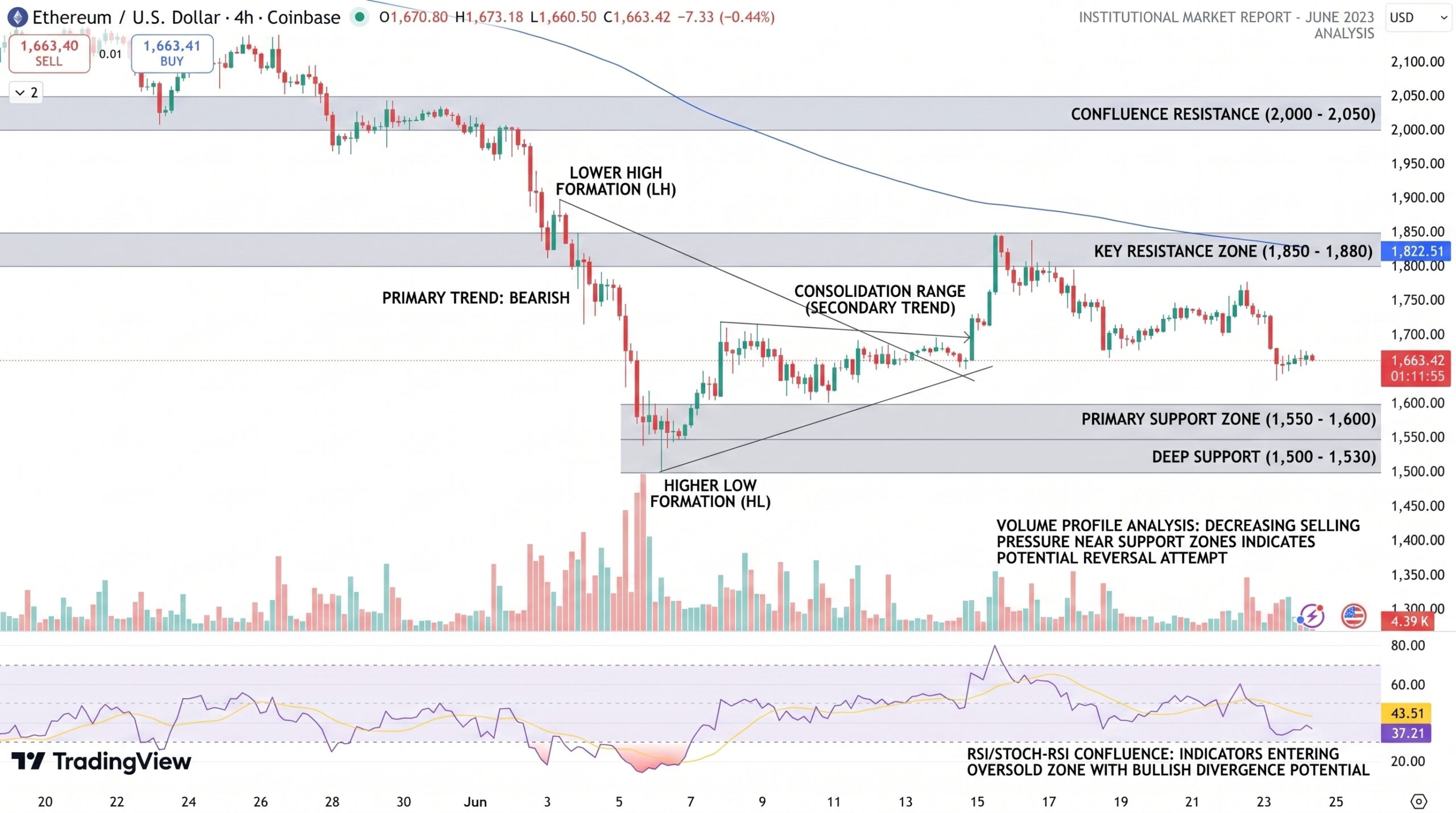
ETH is currently trading near $1,660, placing it between major technical support and resistance zones. Analysts identify the $1,300 area as a significant support level based on Fibonacci retracement analysis, while the region around $1,900 represents a major resistance barrier.
For bullish momentum to strengthen, Ethereum may need to reclaim the $1,800 range and establish consistent buying pressure above that level.
Several factors are supporting optimistic forecasts:
- Increased focus on protocol execution following the restructuring
- Public support from prominent industry leaders
- Continued accumulation narratives from high-profile investors
- Growing institutional interest in Ethereum-based infrastructure
Some market forecasts project ETH could revisit $2,000 in the near term if momentum improves.
Can Ethereum Reach $4,500?
The bullish thesis centers on execution, adoption, and network utility rather than speculation alone. Supporters believe a streamlined Ethereum Foundation could accelerate upgrades that enhance scalability, improve user experience, and strengthen developer activity.
Robert Kiyosaki continues to frame Ethereum as a long-term accumulation asset, while broader institutional forecasts for 2026 remain considerably above current price levels. Some projections from major market analysts extend into the $5,000 to $15,000 range under favorable market conditions.
However, risks remain substantial. A decisive break below $1,500 accompanied by heavy selling volume could weaken investor confidence and reopen lower trading ranges.
Ultimately, Ethereum’s next major move will depend on whether the Foundation’s restructuring translates into measurable network growth. If protocol improvements drive higher transaction activity, stronger fee generation, and increased adoption, the current reset could become a turning point for ETH’s long-term valuation rather than a temporary cost-cutting exercise.
Sources & Methodology
Primary-source standard: Market-moving facts should link to original data releases, regulator notices, company filings or official project announcements whenever available. Secondary reporting is used for additional context, not as a substitute for original evidence.
Page last reviewed: