Solana’s second quarter showed mixed results. Trading in tokenized assets more than doubled to a record $5.8 billion, but overall exchange activity, lending, and network revenue all went down. This gap suggests Solana’s capital-markets ecosystem is growing faster than the fees it brings in.
Tokenized Stocks Drive the Surge
Tokenized-asset volume grew by 114% from the previous quarter, setting a sixth straight record, according to Blockworks Advisory’s Q2 2026 Solana Tokenholder Report for the Solana Foundation. Tokenized equities made up $4.8 billion, or 84% of the total, about four times more than in the first quarter. Solana now handles about 97% of all tokenized-equity trading across blockchains. In June alone, $3.3 billion came after SpaceX’s tokenized listing followed its public offering. Private credit added $803 million. Growth continued after the quarter ended, with tokenized exposure to SK Hynix launching on July 10 through several issuers.
- Tokenized-asset volume: $5.8B, up 114%
- Tokenized equities: $4.8B, or 84% of total volume
- Solana’s share of tokenized-equity trading: ~97%
Revenue and Lending Both Slipped
Even with this growth, Solana’s decentralized exchanges handled $160.8 billion in spot volume, which is down 44% from $288.5 billion last quarter. The network still made up about 32% of measured spot DEX volume, ahead of Ethereum’s 25%. Application revenue dropped 31% to $228.4 million. The memecoin launchpad Pumpfun was still the biggest contributor, bringing in $90.1 million, or 39% of the total.
Network revenue, measured as Real Economic Value, was $51 million, down 43% from the previous quarter. This put Solana in fourth place among blockchains with a 12% share, behind Hyperliquid’s 33%. Lending also declined: deposits on major Solana lending platforms fell 8.3% to $4.1 billion, and deposits linked to real-world assets dropped 48%, from $1.23 billion to $640 million.
Investors Kept Buying Despite the Slowdown
Staking rewards still relied mostly on inflation instead of fees. SOL’s nominal staking yield dropped to about 5.5%, and over 98% of the $487 million paid to stakers came from new token issuance, not network activity.
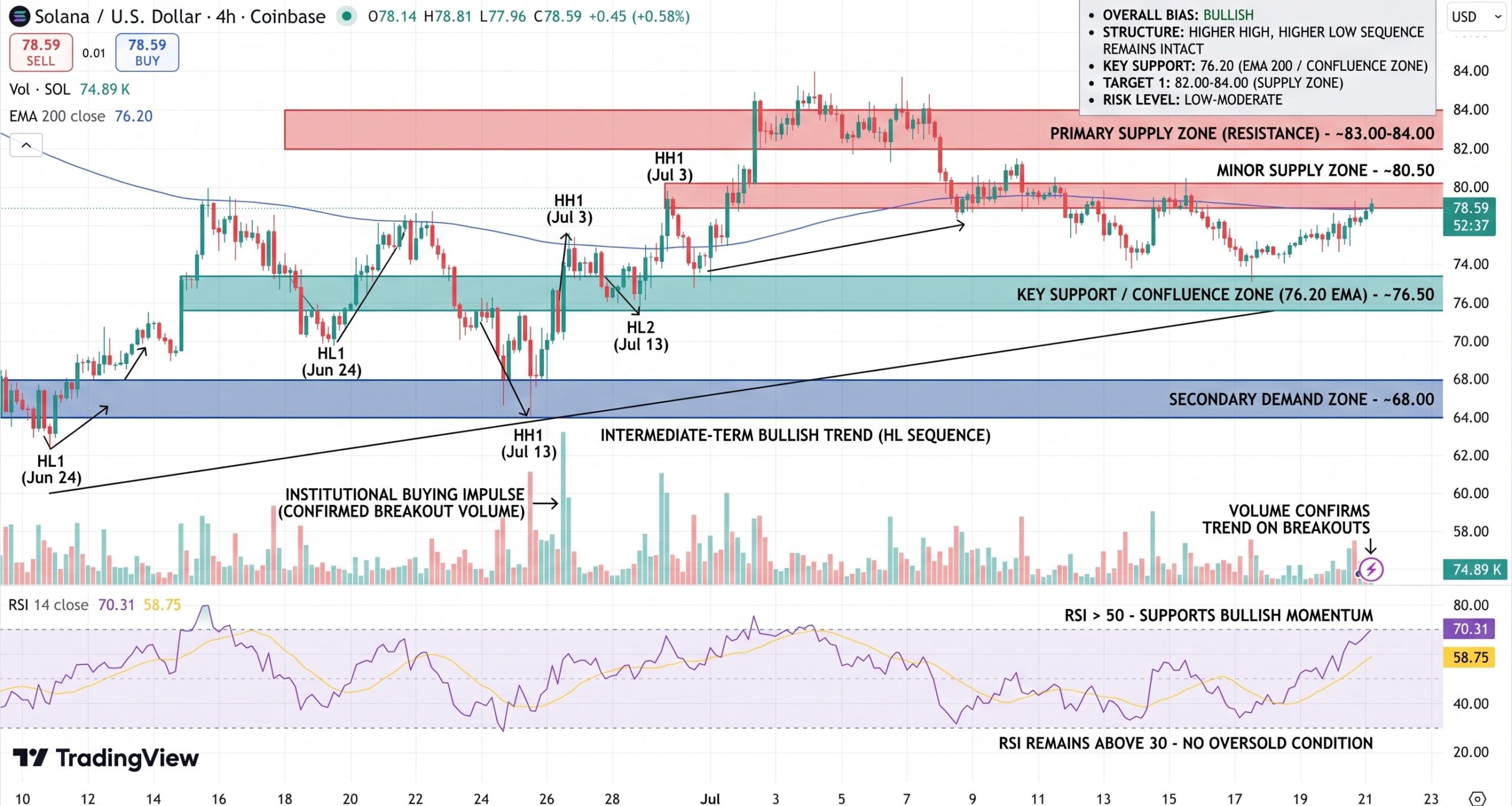
A proposed change called SIMD-553 could increase SOL’s daily burn by about ten times if it is adopted, but it has not been implemented yet.
Investment products showed a more positive trend. SOL spot products attracted about $120 million in net inflows, marking a third straight positive quarter. In contrast, Bitcoin and Ethereum products saw billions in outflows during the same time. Regulatory filings also show that more Solana ETFs are planned by major asset managers.
Overall, the results are mixed. Solana grew stronger in tokenized markets and kept its lead in DEX activity, but revenue, lending, and active users all went down. The network’s core economics are still trying to keep up with its growth among institutions.
Sources & Methodology
Primary-source standard: Market-moving facts should link to original data releases, regulator notices, company filings or official project announcements whenever available. Secondary reporting is used for additional context, not as a substitute for original evidence.
Page last reviewed: