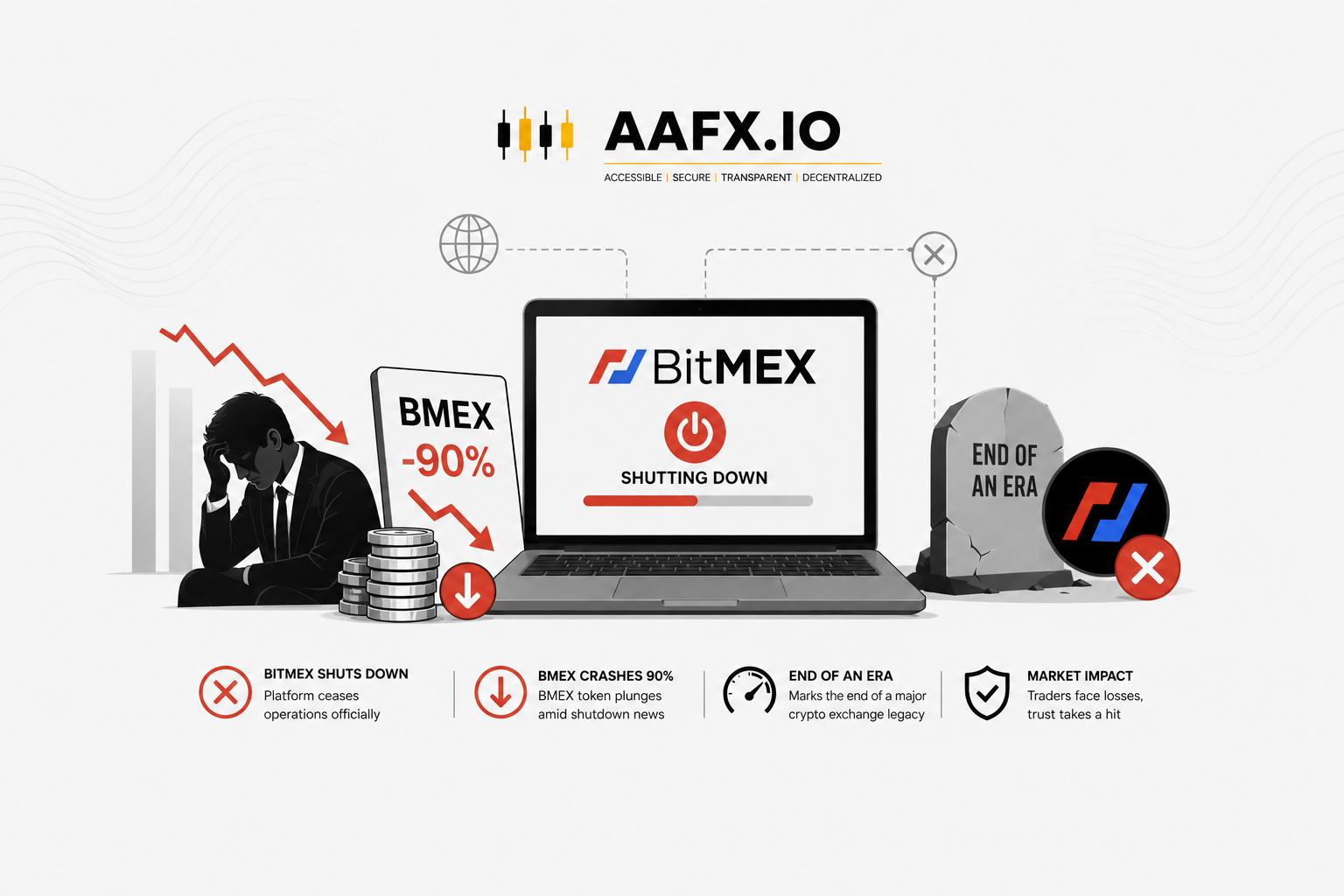
BitMEX will shut down on Sept. 23 as BMEX plunges 90%. Discover why the exchange is closing, what it means for traders, and where the market may shift next.
BitMEX Shutdown Marks the End of a Crypto Pioneer
BitMEX, one of the most influential cryptocurrency derivatives exchanges in the industry’s early years, is preparing to cease its exchange operations on September 23. The decision follows a strategic review by its parent company and signals the conclusion of a platform that played a defining role in introducing perpetual futures contracts to digital asset traders.
The announcement triggered an immediate reaction across the crypto market. BMEX, the exchange’s native token, plunged nearly 90% within 24 hours, erasing most of its remaining market capitalization. As investors reassessed the token’s future without an active trading platform, its value fell to fractions of a cent.
The closure represents more than the loss of a single exchange. It highlights how rapidly competition, regulation, and technological innovation continue to reshape the cryptocurrency trading industry.
Why BMEX Lost Nearly 90%
BitMEX confirmed that new user registrations have been suspended, while existing customers can begin withdrawing their assets immediately ahead of the platform’s final shutdown in late September. Although the company outlined the wind-down process, it has not announced a replacement business model or future exchange operations.
The steep decline in BMEX was driven primarily by its dependence on exchange-related utilities. The token’s value was closely tied to platform-specific benefits, making its future uncertain once trading services disappear.
Key reasons behind the selloff include:
- Exchange closure eliminates BMEX utility.
- Trading fee discounts will no longer apply.
- Platform reward programs are ending.
- Investor confidence weakened following the shutdown announcement.
Without these incentives, market participants rapidly adjusted the token’s valuation to reflect its reduced practical use.
Crypto Market Moves Beyond BitMEX
BitMEX once dominated crypto derivatives trading after introducing perpetual swap contracts, a product that transformed leveraged cryptocurrency investing. At its peak, the exchange processed billions of dollars in daily trading volume and became a preferred destination for professional traders seeking high leverage.
However, the competitive landscape evolved quickly. Larger global exchanges expanded aggressively, offering broader product selections, improved liquidity, and stronger regulatory positioning. At the same time, BitMEX faced increasing legal and compliance challenges, including actions from U.S. authorities related to anti-money laundering controls, resulting in significant financial penalties.
By the time the closure was announced, BitMEX represented only a small fraction of worldwide crypto derivatives volume, reflecting years of declining market share.
What Comes Next for Crypto Traders
While BitMEX’s departure is largely symbolic given its reduced influence, it marks the end of one of crypto’s earliest success stories. The industry’s focus is now shifting toward established centralized exchanges and rapidly growing decentralized perpetual futures platforms that offer transparent on-chain infrastructure.
For traders, the transition raises important questions about liquidity, security, and platform selection.
Several market trends are likely to shape the next phase:
- Major centralized exchanges continue leading derivatives volume.
- Decentralized perpetual trading platforms are attracting institutional interest.
- Regulatory compliance is becoming a key competitive advantage.
- Exchange utility tokens face increasing scrutiny over long-term value.
BitMEX helped define the first generation of crypto derivatives trading, but its closure illustrates how quickly leadership can change in digital finance. As innovation accelerates and competition intensifies, exchanges that combine regulatory resilience, technological advancement, and sustainable token economics are expected to lead the next chapter of the cryptocurrency market.
Sources & Methodology
Primary-source standard: Market-moving facts should link to original data releases, regulator notices, company filings or official project announcements whenever available. Secondary reporting is used for additional context, not as a substitute for original evidence.
Page last reviewed: