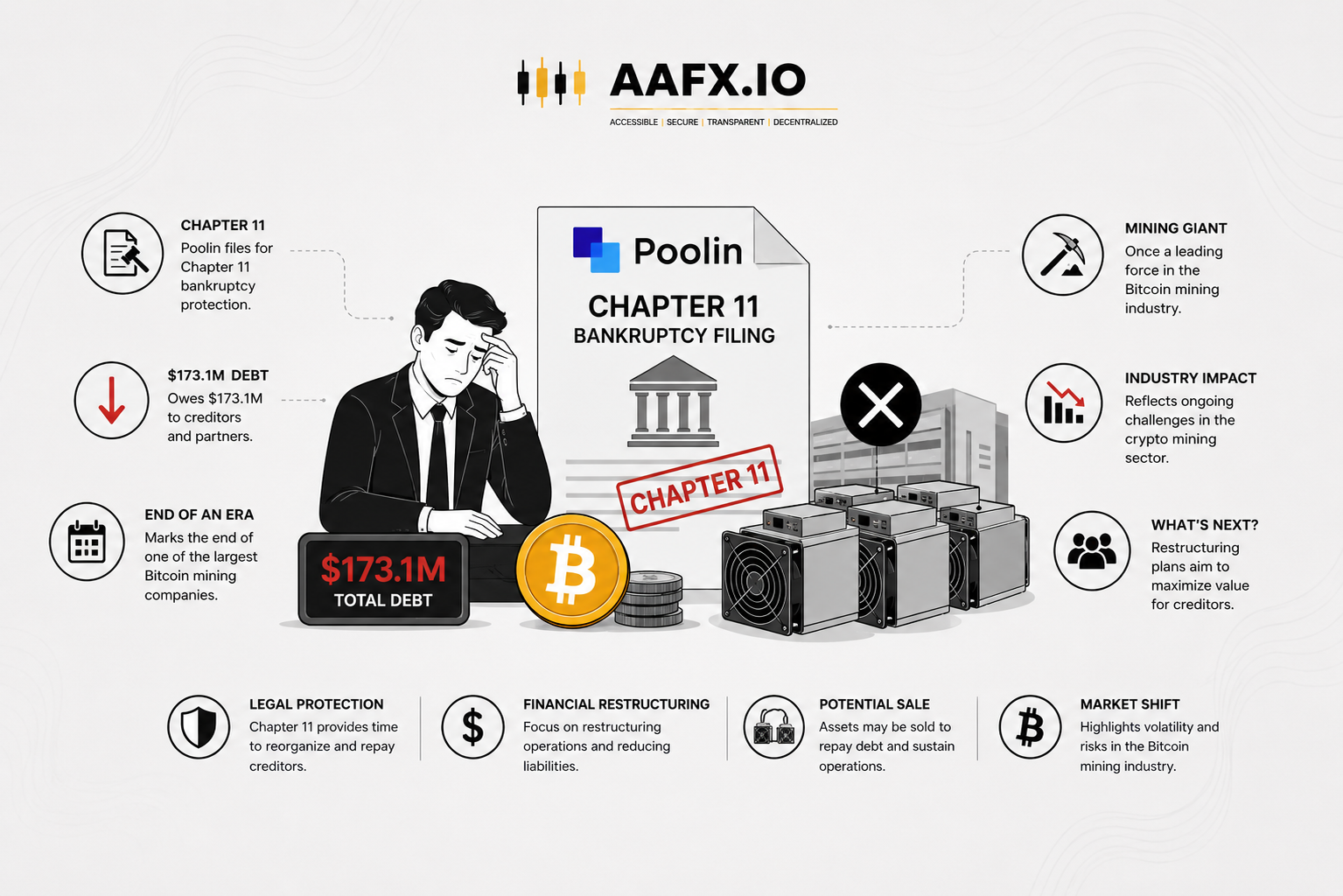
Poolin files for Chapter 11 bankruptcy with $173.1M in liabilities as wallet losses and failed mining expansion reshape the Bitcoin mining landscape.
Poolin Bankruptcy Ends Industry Leader
Poolin, once among the world’s largest Bitcoin mining pools, has officially filed for Chapter 11 bankruptcy protection in the United States, marking the collapse of a company that played a major role in the cryptocurrency mining industry. The filing covers Singapore-based parent company Poolin, along with its U.S. subsidiaries, Lonestar Dream Inc. and Lonestar Taproot LLC.
Rather than using Chapter 11 to reorganize and continue operations, the companies are pursuing a court-supervised liquidation focused on selling their remaining mining infrastructure in Texas. The decision concludes a financial crisis that began during the 2022 cryptocurrency bear market, when declining digital asset prices exposed weaknesses across the mining sector.
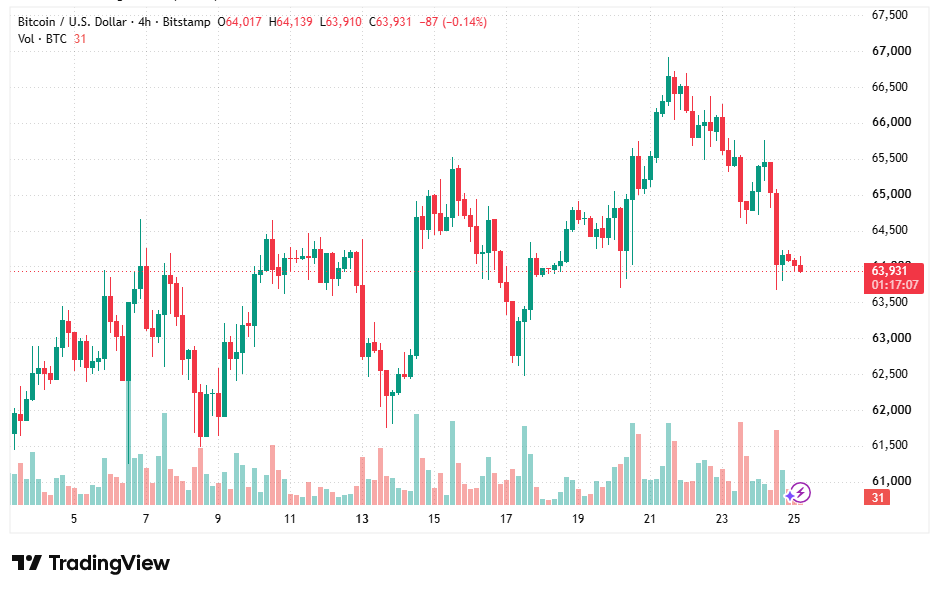
Court filings initially estimated assets between $1 million and $10 million, while liabilities ranged from $100 million to $500 million. However, Chief Restructuring Officer Michael DuFrayne later clarified that Poolin’s total pre-bankruptcy obligations stand at approximately $173.1 million, offering a more precise picture of the company’s financial condition.
Wallet Losses Trigger Collapse
Although Poolin built its reputation through Bitcoin mining, its wallet business became the primary source of financial distress. During the crypto boom, the company expanded beyond mining by offering digital asset deposits, cryptocurrency-backed USDT loans, and yield-generating products to customers seeking passive income.
When cryptocurrency markets crashed in 2022, Poolin froze withdrawals, leaving roughly 11,700 wallet users unable to access their funds. Instead, customers received IOU tokens representing approximately $163.7 million in assets, making them unsecured creditors in the bankruptcy process.
The company’s financial pressure intensified after borrowing $213 million against cryptocurrency collateral from Antalpha Technologies. As digital asset prices continued falling, Antalpha liquidated much of that collateral in late 2022, significantly increasing Poolin’s losses.
Several factors accelerated the company’s downfall:
- $163.7 million owed to approximately 11,700 wallet users.
- $213 million borrowed against crypto collateral.
- Nearly $45.9 million in operating losses at its Texas subsidiaries.
- Texas mining and hosting facilities shut down on July 10.
These setbacks transformed what had been a profitable mining enterprise into one struggling with mounting debt and shrinking operational capacity.
Asset Sale Shapes Creditor Recovery
Poolin also faced mounting challenges in its U.S. mining expansion. Rising energy costs, weaker Bitcoin mining profitability, and declining network economics made operations increasingly unsustainable. After accumulating roughly $45.9 million in operating losses through Lonestar Dream and Lonestar Taproot, the company permanently closed its Texas mining facilities.
Before filing for bankruptcy, Poolin actively marketed its remaining assets to more than 335 prospective buyers, resulting in 28 signed non-disclosure agreements and seven letters of intent. An earlier attempt to sell its Texas operations to China Green Agriculture for $49 million ultimately failed to reach completion.
The company will now liquidate its remaining assets through the Chapter 11 process, with proceeds distributed to creditors. However, recovery for wallet users is expected to be significantly below the $163.7 million owed, depending on auction results.
The bankruptcy also reflects broader challenges across the Bitcoin mining industry. Mining activity has weakened as profitability declined, forcing operators to shut down equipment. Industry data shows hashrate drawdowns remained negative throughout the year, deteriorating to around -16% by July, while Bitcoin’s true hashrate dropped roughly -12% after late January and failed to fully recover.
Poolin’s collapse illustrates how aggressive expansion, leveraged lending, and volatile cryptocurrency markets can rapidly undermine even the industry’s most established participants. As the liquidation unfolds, its outcome will likely serve as another defining case study in crypto sector risk management.
Sources & Methodology
Primary-source standard: Market-moving facts should link to original data releases, regulator notices, company filings or official project announcements whenever available. Secondary reporting is used for additional context, not as a substitute for original evidence.
Page last reviewed: