
Gold prices edged higher on Tuesday as investors adopted a cautious stance ahead of a series of key U.S. labor market reports while continuing to monitor escalating tensions in the Middle East. Safe-haven demand remained supported by geopolitical uncertainty and rising oil prices, although expectations that the Federal Reserve could keep interest rates higher for longer limited gains. According to Reuters, gold traded in a narrow range as markets weighed inflation risks against the outlook for U.S. monetary policy.
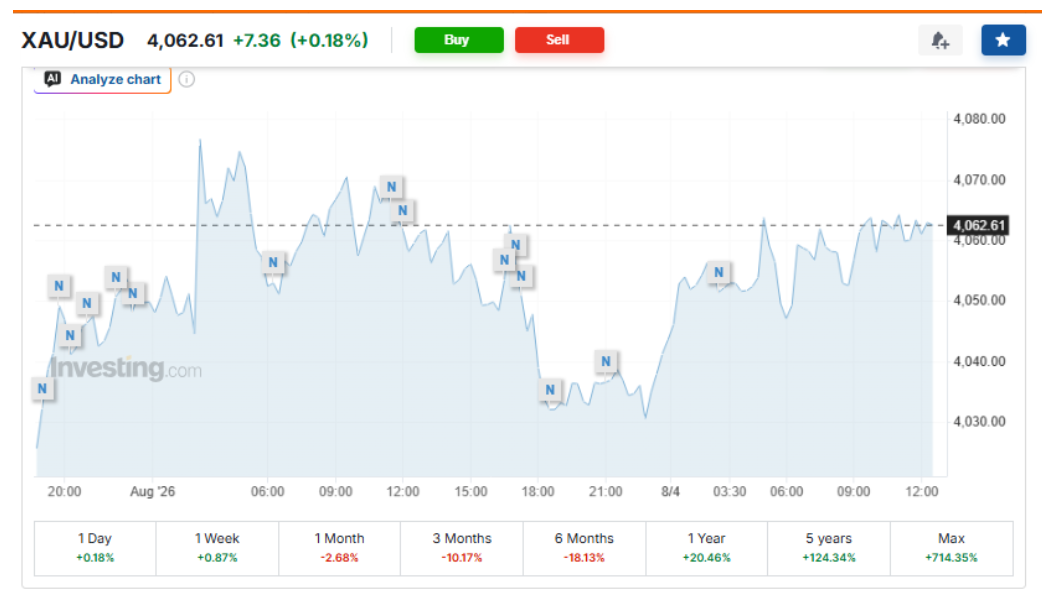
Gold Holds Above $4,060 as Precious Metals Extend Gains
Gold prices remained resilient despite mixed macroeconomic signals, with spot gold (XAU/USD) rising about 0.2% to around $4,061.96 per ounce, while U.S. gold futures gained 0.7% to approximately $4,118.30 per ounce. Other precious metals also advanced, with silver climbing to $58.88 per ounce, platinum rising to $1,648.97, and palladium reaching $1,278.38. The U.S. Dollar Index remained close to the 100 level, offering little direction for bullion. According to Reuters, gold has largely traded between $4,000 and $4,200 per ounce in recent sessions as investors balance geopolitical risks with expectations of tighter monetary policy.
Markets Await Key U.S. Labor Reports for Fed Rate Signals
Investor attention has shifted toward this week’s U.S. labor market data, including the JOLTS Job Openings report, ADP private payrolls, weekly jobless claims, and Friday’s closely watched Nonfarm Payrolls report. These releases are expected to provide fresh clues about the strength of the U.S. economy and whether the Federal Reserve will need to raise interest rates again later this year. Recent comments from New York Federal Reserve President John Williams and three Federal Reserve officials who favored another rate hike at last week’s meeting have reinforced expectations that interest rates may remain elevated for longer if inflation does not ease. Higher interest rates generally reduce the appeal of non-yielding assets such as gold, while weaker economic data could increase expectations for future policy easing and support bullion prices.
Brent Oil Jumps 20% in July as Middle East Tensions Support Gold
Geopolitical developments continue to play a significant role in supporting gold prices. According to Reuters, Brent crude oil surged more than 20% in July after renewed fighting between the United States and Iran and attacks on commercial vessels near Oman raised concerns about global energy supplies. Rising oil prices have renewed fears of higher inflation, complicating the Federal Reserve’s efforts to bring price growth under control.
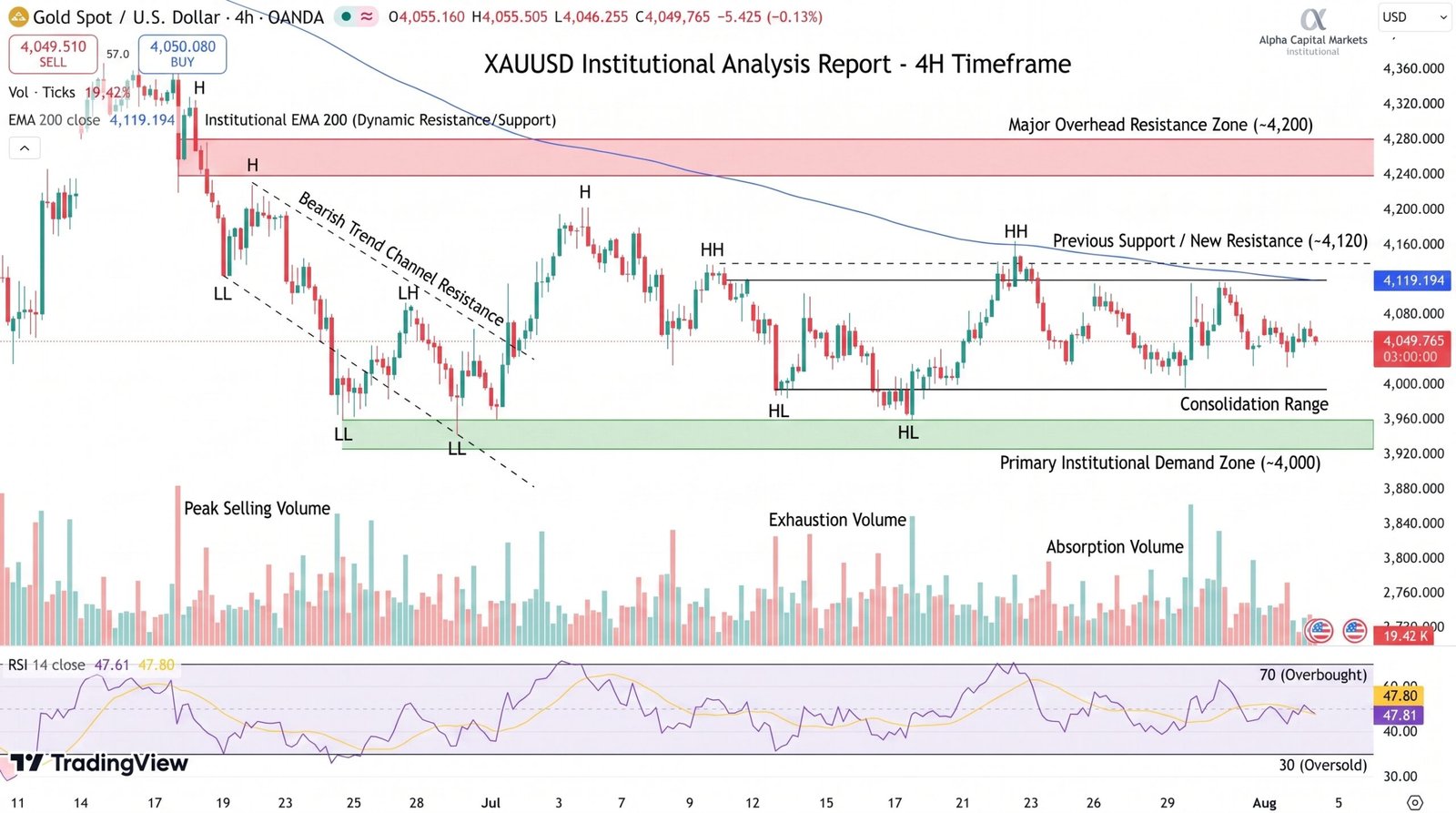
At the same time, Iran stated that no negotiations with the United States are currently underway, contradicting recent comments by U.S. President Donald Trump that diplomatic talks were imminent. Although gold has corrected from its record highs reached earlier this year, it remains significantly higher than year-ago levels as investors continue to seek protection from geopolitical uncertainty, inflation risks, and market volatility.
Investors Eye Nonfarm Payrolls for Fresh Market Direction
Markets will closely monitor the upcoming U.S. employment reports, particularly Friday’s Nonfarm Payrolls data, as these figures are likely to shape expectations for the Federal Reserve’s next policy decision. Stronger-than-expected employment data could reinforce the case for another interest rate increase, potentially supporting the U.S. dollar and limiting further gains in gold.
Conversely, signs of a cooling labor market could reduce expectations for additional tightening, weakening Treasury yields and the dollar while providing fresh support for precious metals. Investors will also remain focused on developments in the Middle East, where any further escalation could boost safe-haven demand and increase volatility across commodity markets.
Sources & Methodology
Primary-source standard: Market-moving facts should link to original data releases, regulator notices, company filings or official project announcements whenever available. Secondary reporting is used for additional context, not as a substitute for original evidence.
Page last reviewed: