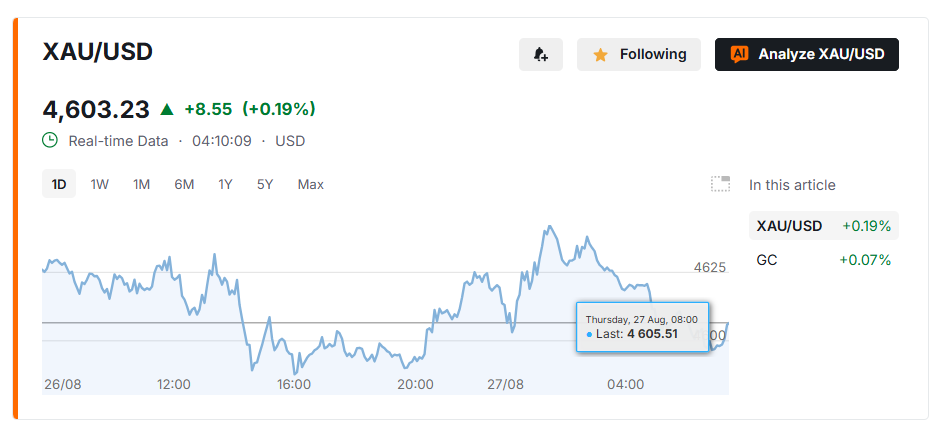
Gold edged higher Thursday, rising 0.6% to $4,620.68 an ounce, as investors looked ahead to Federal Reserve Chair Kevin Warsh’s first Jackson Hole speech for signals on the path of interest rates. The move follows a 1.4% pullback Wednesday that snapped a five-session winning streak, triggered by U.S. inflation data that came in slightly above forecast. Silver rose 1.4% to $69.10 an ounce and platinum gained 0.9% to $1,852, while the U.S. Dollar Index held steady near 99.14. Gold remains up roughly 14% this month.
Sticky Inflation Lifts Dollar, Yields
Wednesday’s pullback traced directly to inflation data that kept price pressures well above the Fed’s target. The Personal Consumption Expenditures price index rose 3.7% in the year through July, unchanged from June and slightly ahead of the 3.6% economists had forecast. Because gold pays no interest and is priced in dollars, the resulting rise in the dollar and Treasury yields weighed directly on the metal.
Markets responded by raising the odds of a September rate hike. The probability of at least a 25-basis-point increase now sits near 40%, up from about 36% before the data, with traders still pricing in higher rates by year-end. The report also pointed to resilience elsewhere in the economy: second-quarter GDP growth held at 1.5%, personal income rose 0.4% in July, and consumer spending was flat.
- XAU/USD: $4,620.68 (+0.6%); Gold Futures: $4,674.71 (+0.5%)
- Silver (XAG/USD): $69.10 (+1.4%); Platinum (XPT/USD): $1,852 (+0.9%)
The Debasement Trade Offsets Pressure
ANZ analysts say gold’s downside should stay limited because what’s known as the debasement trade continues to draw buyers. The logic is straightforward: investors are buying gold as a hedge against the risk that persistent budget deficits, heavy government borrowing, and policies aimed at capping long-term yields could erode the dollar’s purchasing power over time.
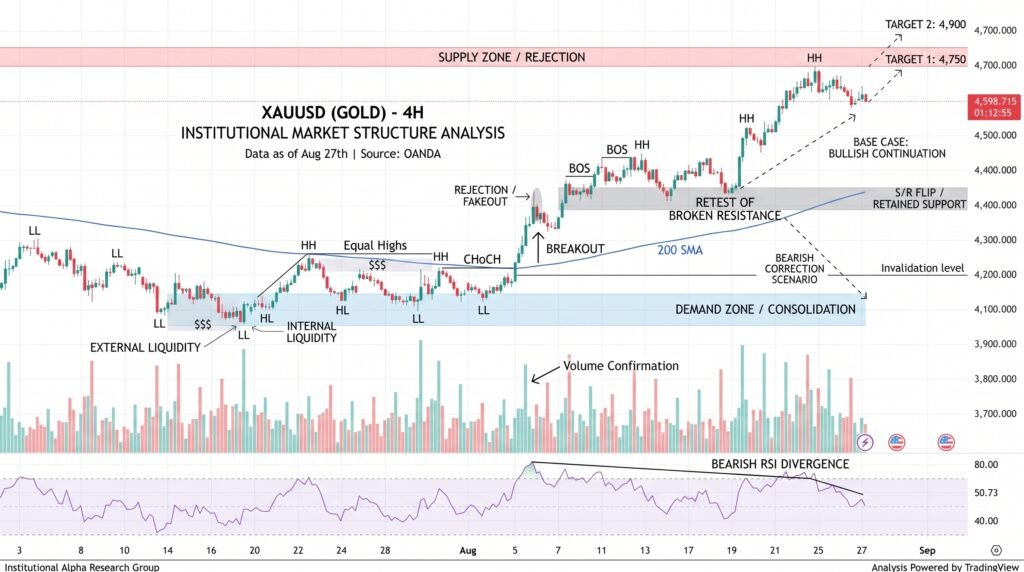
That dynamic has intensified since the Treasury doubled its planned buybacks of longer-dated debt, a move ANZ links to renewed fiscal-policy concerns that have kept the debasement trade active. The theme has acted as a counterweight to rate-driven selling — gold’s roughly 14% gain this month came largely after the Treasury announcement gave the rally fresh momentum, even after Wednesday’s setback. The metal also continues to trade above its 200-day moving average, a level widely used as a gauge of longer-term trend strength.
Warsh’s Speech Is the Next Test
Attention now turns to Friday, when Warsh delivers his first major address as Fed chair at Jackson Hole. Investors want clarity on how he intends to respond to inflation that has stayed above the Fed’s 2% target for an extended stretch, particularly since he has moved away from the traditional forward guidance his predecessors relied on.
Markets are also looking for Warsh to address how monetary policy interacts with the bond market, a question sharpened by the Treasury’s buyback expansion. His tone on that point could determine whether the debasement trade keeps gold supported or whether a hawkish signal on rates reasserts the pressure that drove Wednesday’s decline. Either way, Friday’s speech is shaping up as the clearest catalyst gold has faced this week.
Sources & Methodology
Primary-source standard: Market-moving facts should link to original data releases, regulator notices, company filings or official project announcements whenever available. Secondary reporting is used for additional context, not as a substitute for original evidence.
Page last reviewed: