Chinese artificial intelligence developer DeepSeek has hired CITIC Securities to prepare for a potential listing on Shanghai’s STAR Market, according to Reuters, marking a significant step toward becoming a publicly traded company. The Hangzhou-based startup is targeting the start of its IPO process in 2026, although the timetable, fundraising amount and potential valuation have not been finalized. A listing could provide DeepSeek with additional capital for AI infrastructure, model development and retaining researchers as competition between Chinese and U.S. AI companies becomes increasingly expensive.
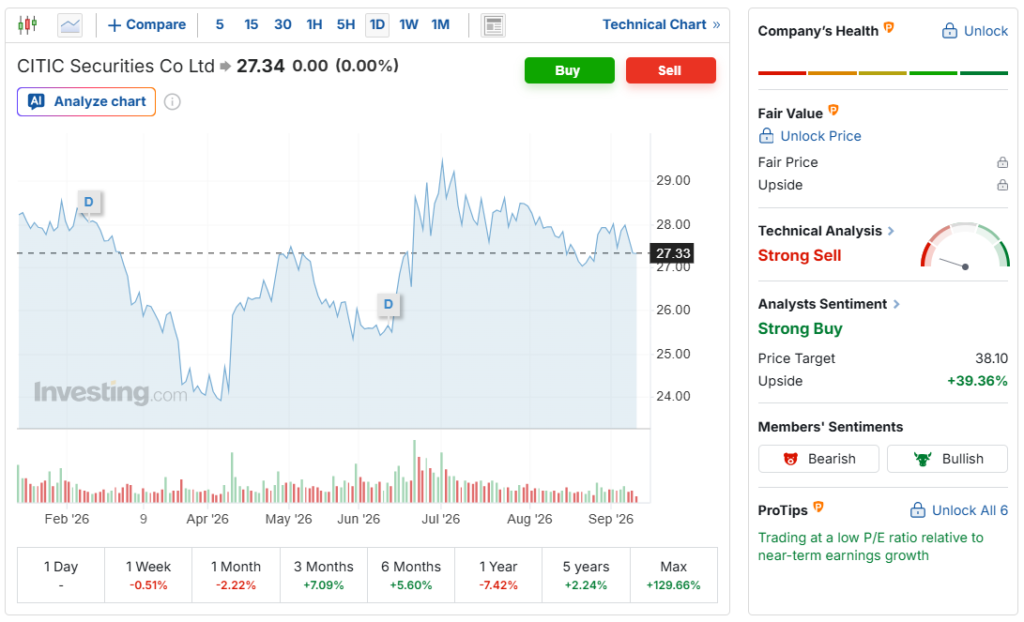
CITIC Appointment Advances IPO Plans
The appointment of CITIC Securities is important because companies preparing to list in mainland China generally undergo a pre-listing tutoring process with a securities firm before formally submitting an IPO application.
Reuters reported that DeepSeek has selected Shanghai’s technology-focused STAR Market as its intended venue and wants to begin the listing process this year. However, hiring an investment bank does not mean the IPO has been formally filed or approved. DeepSeek and CITIC Securities had not publicly commented on the arrangement when Reuters published its report.
DeepSeek’s capital requirements have increased rapidly as it expands its models and computing infrastructure. The company completed its first major external financing earlier this year after previously relying heavily on resources connected to founder Liang Wenfeng’s High-Flyer hedge fund.
Reuters reported in June that DeepSeek was raising approximately 50 billion yuan, or $7.4 billion, from investors including Tencent and battery manufacturer CATL. A subsequent Chinese stock-exchange filing implied a valuation of about 350.88 billion yuan, or $51.8 billion, although Reuters noted that this was a transaction-implied equity valuation rather than a definitive company valuation.
DeepSeek is now pursuing another funding round that could value the company at approximately 500 billion yuan, or $75 billion, according to Reuters.
AI Competition Drives Capital Demand
The IPO preparations come as Chinese AI developers increase spending on computing infrastructure and engineering talent. DeepSeek rose internationally after its V3 and R1 models challenged assumptions about how efficiently Chinese developers could build competitive AI systems despite U.S. restrictions on advanced semiconductor exports.
The company has continued expanding its technology. Its official DeepSeek Transparency Center lists DeepSeek-V4, released in April 2026, among its latest major model generations. The company has subsequently updated V4-Pro and V4-Flash, with current API documentation showing support for context lengths of up to one million tokens.
DeepSeek is not alone in seeking public capital. Chinese AI developers Z.AI and MiniMax have already completed Hong Kong listings this year, while Beijing-based Moonshot AI has confidentially filed for a Hong Kong IPO.
Competition for researchers is another consideration. Reuters reported that DeepSeek wants additional funding to strengthen compensation and retain important staff as better-funded technology companies, including ByteDance and Xiaomi, compete for AI talent.
Conclusion
Hiring CITIC Securities moves DeepSeek closer to a potential Shanghai STAR Market IPO, but the transaction remains at a preparatory stage. No final fundraising target, listing valuation or IPO date has been announced.
The proposed listing nevertheless reflects DeepSeek’s transformation from a largely self-funded AI research operation into a capital-intensive competitor requiring substantial investment in chips, data centers, models and researchers. With its private valuation potentially moving toward 500 billion yuan, DeepSeek’s eventual IPO could become an important test of how public investors value China’s rapidly expanding AI industry.
Sources & Methodology
Primary-source standard: Market-moving facts should link to original data releases, regulator notices, company filings or official project announcements whenever available. Secondary reporting is used for additional context, not as a substitute for original evidence.
Page last reviewed: