
Key Points
- Options markets imply Oracle shares could move roughly 11% in either direction following fiscal Q1 earnings.
- Wall Street expects about $19.06 billion in revenue and $1.74 in adjusted EPS.
- Cloud growth, Oracle’s $638 billion backlog and its massive AI infrastructure spending could matter more than a simple earnings beat.
Oracle reports fiscal first-quarter 2027 results after the U.S. market closes on September 10, with investors preparing for another potentially large move in ORCL. Options pricing implies an approximately 11% swing in either direction by the end of the week, which would put the shares near $179 on a positive move or below $145 on an equivalent decline from recent levels. The result will depend not only on earnings and revenue but also on Oracle Cloud Infrastructure growth, its AI backlog, capital expenditure and financing guidance.
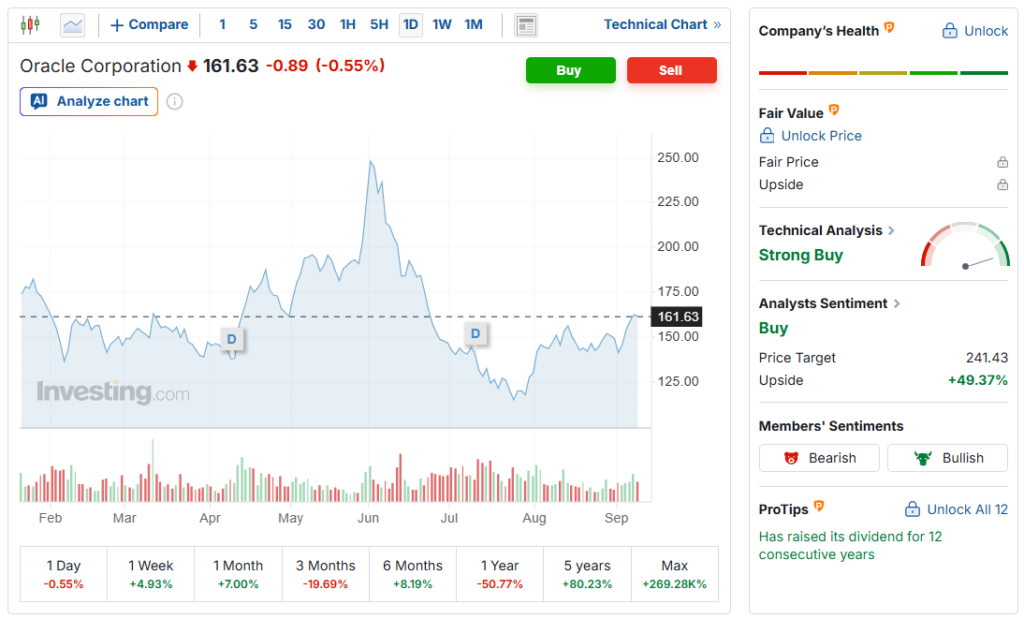
Oracle Faces a High Earnings Bar
Oracle Investor Relations confirms that fiscal Q1 results will be released September 10 after the closing bell, followed by the earnings call at 4 p.m. Central Time.
Analysts currently expect approximately $19.06 billion in revenue, representing about 28% year-over-year growth, and adjusted earnings of roughly $1.74 per share, up from $1.47 a year earlier.
Those estimates are broadly consistent with Oracle’s own guidance. In June, the company forecast Q1 revenue growth of 27%–29%, total cloud revenue growth of 58%–64% in U.S. dollars and adjusted EPS of $1.72–$1.76.
A result above those ranges combined with stronger forward guidance could support an upside reaction. Based on current options pricing, a move of about 5%–10% would be reasonable within the market-implied range, while an 11% move would take ORCL toward approximately $179 from around $161.
Cloud Growth Could Decide Reaction
The more important number may be Oracle Cloud Infrastructure revenue. OCI revenue increased 93% year over year to $5.8 billion in the previous quarter, helping total cloud revenue reach $9.9 billion. Oracle’s remaining performance obligations, representing contracted revenue that has not yet been recognized, reached a record $638 billion.
For Q1, Oracle previously forecast cloud revenue growth of 58%–64%. Investors will therefore be watching whether AI computing demand is converting Oracle’s enormous backlog into revenue at the expected pace.
A strong earnings beat accompanied by faster cloud growth and an improving outlook could push ORCL toward the upper end of its implied post-earnings range.
$95 Billion Spending Plan Is the Risk
Capital expenditure remains the major counterweight. Oracle spent $55.7 billion on capital expenditures in fiscal 2026, more than double the previous year’s level, as it expanded data-center capacity for AI customers.
The company is expected to spend roughly $95 billion in fiscal 2027, while its net cash capital outlay could be closer to $70 billion because some customers prepay for GPUs or provide their own hardware. Oracle has also said it expects to raise approximately $40 billion through debt and equity financing during fiscal 2027, including a previously announced $20 billion at-the-market equity program.
That spending explains why simply beating EPS may not be sufficient. Oracle demonstrated this risk after its June results. The company reported $2.11 adjusted EPS versus roughly $1.95–$1.96 expected and $19.2 billion in revenue, yet its shares subsequently dropped more than 9% as investors focused on capital spending and financing requirements.
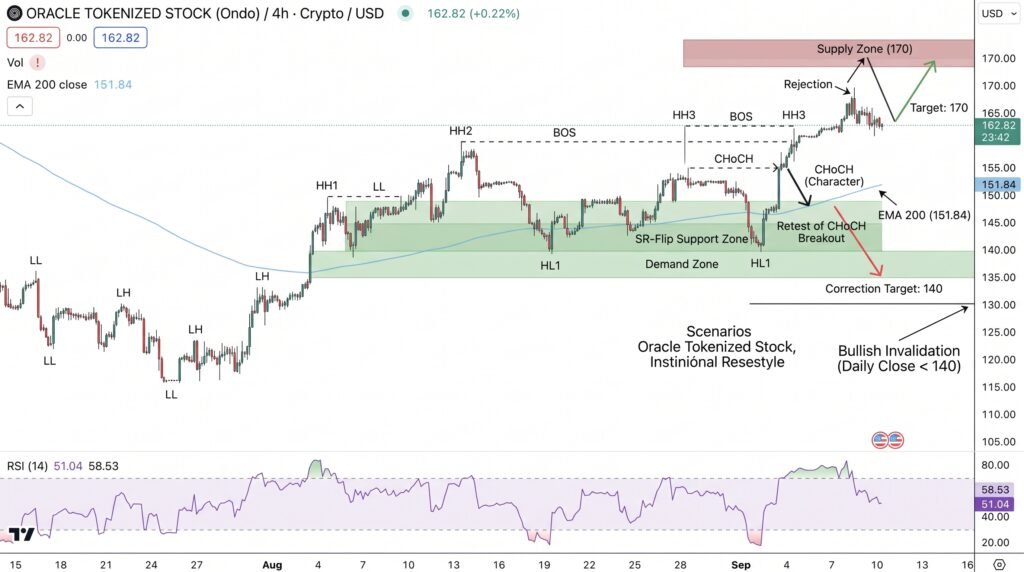
Conclusion
The options market currently provides the clearest benchmark for Oracle’s post-earnings volatility: approximately 11% in either direction, implying a broad range of roughly $145 to $179 around recent prices.
A clean earnings beat, OCI growth above expectations and reassuring spending guidance could send ORCL toward $170–$179. Conversely, weaker cloud growth, higher capital requirements or concerns about converting its $638 billion backlog into profitable revenue could push shares toward $145–$154.
For tonight’s report, EPS and revenue are only the starting point. Cloud growth, backlog conversion, margins, capital expenditure and financing requirements are likely to determine whether investors reward or sell the results.
Sources & Methodology
Primary-source standard: Market-moving facts should link to original data releases, regulator notices, company filings or official project announcements whenever available. Secondary reporting is used for additional context, not as a substitute for original evidence.
Page last reviewed: