Solana is preparing to activate its major Alpenglow network upgrade on October 21, targeting transaction finality in approximately 150 milliseconds. The change will replace the blockchain’s existing TowerBFT consensus system, altering how validators agree that transactions are irreversible. According to the Solana Foundation, the upgrade aims to reduce finality from about 12.8 seconds to a fraction of a second. Actual performance will depend on network conditions. The transition also requires validator software changes and introduces a new fee structure, while potentially reshaping the network’s reported transaction statistics.
Alpenglow Targets Faster Transaction Finality
The Alpenglow upgrade is designed to make transactions final much faster by changing how validators reach agreement. Validators are computers that verify transactions, maintain the ledger and help secure the network.
Under the existing TowerBFT consensus system, validators record their votes as transactions on the blockchain. Alpenglow will instead allow validators to exchange votes directly and aggregate approvals into certificates that confirm blocks after one or two voting rounds.
This distinction matters because a transaction appearing successful is not necessarily the same as receiving final confirmation that it cannot be reversed under the network’s consensus rules.
Faster finality could benefit merchants accepting SOL, exchanges processing deposits and cross-chain bridges transferring assets between blockchains. These services could rely on stronger settlement assurances sooner, potentially reducing waiting times and exposure to transactions being reversed.
The upgrade’s principal targets include:
- 150 milliseconds: The intended time to reach transaction finality.
- 12.8 seconds: The approximate finality time under the existing system.
- October 21: The scheduled mainnet activation date, at the start of epoch 1064.
Validator Changes and New Network Fees
The transition requires validator operators to prepare before activation. The Foundation says operators must use an Agave-based client built on version 4.3.0. Alternative validator clients Firedancer and Frankendancer will not support the initial migration, requiring their operators to switch temporarily to a supported client.
The upgrade will also change how validators pay to participate. Instead of paying approximately 1 SOL per epoch in voting transaction fees, validators will face a fixed Validator Admission Ticket fee of 0.8 SOL per epoch.
An epoch is a period during which Solana organizes validator responsibilities. The new fee is deducted from the validator’s vote account, and operators must maintain sufficient funds to remain eligible for participation.
Another significant consequence concerns reported network activity. Because validator votes will no longer appear as on-chain transactions, Solana’s headline transaction count could fall sharply even if users continue trading, transferring tokens and making payments at the same pace. Investors should therefore distinguish between changes in reported transaction volume and changes in actual user activity.
October 21 Migration and SOL Outlook
The migration is scheduled to begin around 15:00 UTC on October 21, when Solana enters epoch 1064. The network will continue using TowerBFT for the first 5,000 slots before completing the transition to Alpenglow approximately 18 minutes later.
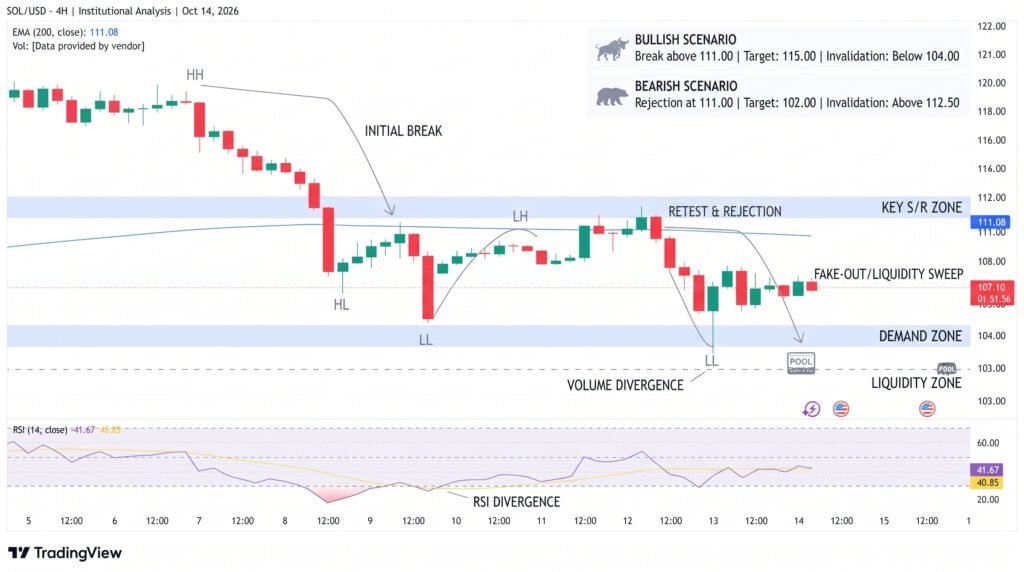
This staged handoff is intended to support a controlled change in consensus rather than an abrupt switch without preparation.
Conclusion:
Alpenglow represents a major change to Solana’s transaction-confirmation process. Its 150-millisecond target could strengthen the network’s appeal for payments and applications requiring rapid settlement. However, successful implementation, validator readiness and real-world performance will determine whether the upgrade delivers its intended benefits. Traders should also account for the expected change in transaction-count statistics when evaluating Solana’s network activity after activation.
Sources & Methodology
Primary-source standard: Market-moving facts should link to original data releases, regulator notices, company filings or official project announcements whenever available. Secondary reporting is used for additional context, not as a substitute for original evidence.
Page last reviewed: