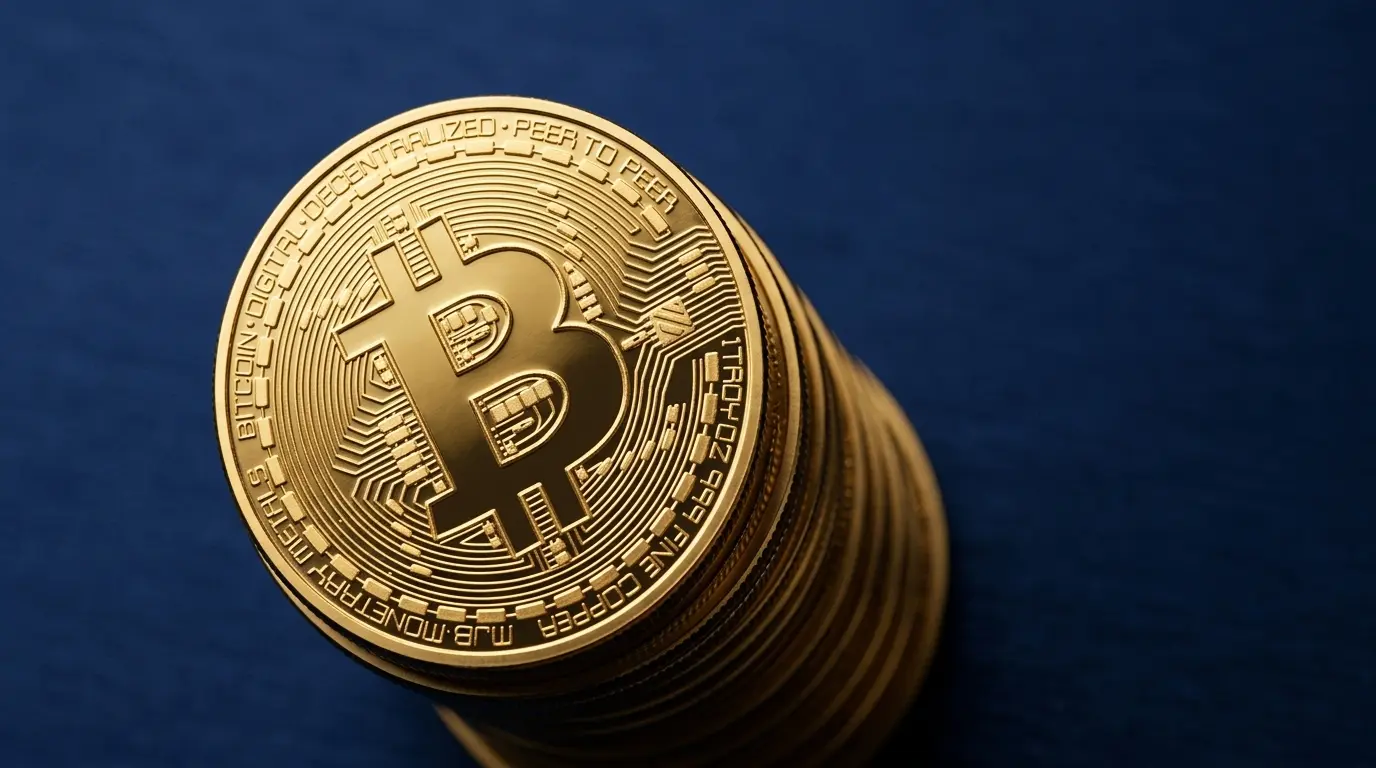
Bitcoin fell below $82,000 on Thursday after surrendering an overnight recovery toward $85,000, as falling technology stocks and rising oil prices weakened demand for risk-sensitive assets. The world’s largest cryptocurrency declined 1.8% to $81,906.8 by 05:50 ET (09:50 GMT), according to the supplied market data. The retreat highlights the difficulty of sustaining a recovery amid uncertainty over artificial intelligence spending, inflation and interest rates. Other major cryptocurrencies also declined, extending pressure across the digital-asset market.
Bitcoin Reverses as AI Stocks Slide
Bitcoin’s latest decline followed a brief rally that brought prices close to $85,000 overnight. Continued investment in spot Bitcoin exchange-traded funds (ETFs) offered some support, but the recovery lost momentum as global technology shares came under renewed pressure.
On Thursday, investors reassessed the outlook for major technology companies following quarterly earnings reports and concerns about the costs and potential returns of artificial intelligence investments. Global equities weakened as worries over corporate spending and financing conditions reduced appetite for risk. Reuters reported that technology stocks dragged global markets lower, while escalating Middle East tensions pushed Brent crude toward $112 a barrel.
Bitcoin frequently responds to shifts in broader market sentiment. When investors become more cautious, they may reduce exposure to volatile assets, including cryptocurrencies. Expectations for higher interest rates can add pressure by increasing the relative appeal of interest-bearing investments and tightening financial conditions.
Oil prices have added another concern. Higher energy costs can feed inflation, potentially limiting the scope for central banks to cut interest rates. Continued geopolitical uncertainty has therefore created another obstacle to a sustained cryptocurrency recovery.
Crypto Prices Today: Altcoins Decline
The weakness extended across major digital assets on Thursday, with most leading tokens posting losses as the overnight rebound faded.
According to the supplied market figures:
- Ethereum (ETH) fell 2% to $2,405.48.
- BNB declined 1.8%.
- XRP dropped 2.1%.
- Solana (SOL) lost 2.4%, while Cardano (ADA) fell 4%.
- Dogecoin (DOGE) slid 3.4%, and Official Trump ($TRUMP) declined 2.9%.
These losses indicate that selling pressure was not confined to Bitcoin. Smaller cryptocurrencies can experience sharper price swings when investors reduce risk, although individual token performance also depends on liquidity, market positioning and project-specific developments.
Recent reporting also points to continued uncertainty around the broader market. On October 22, Bloomberg reported that U.S. spot Bitcoin ETFs had attracted $1.1 billion in net inflows during the week, showing that institutional demand could persist even as prices weakened.
Bitcoin Outlook as Risk Aversion Grows
Bitcoin remains vulnerable while technology shares weaken and energy prices sustain inflation concerns. However, ETF inflows could help cushion losses if institutional buying continues and broader financial conditions stabilize.
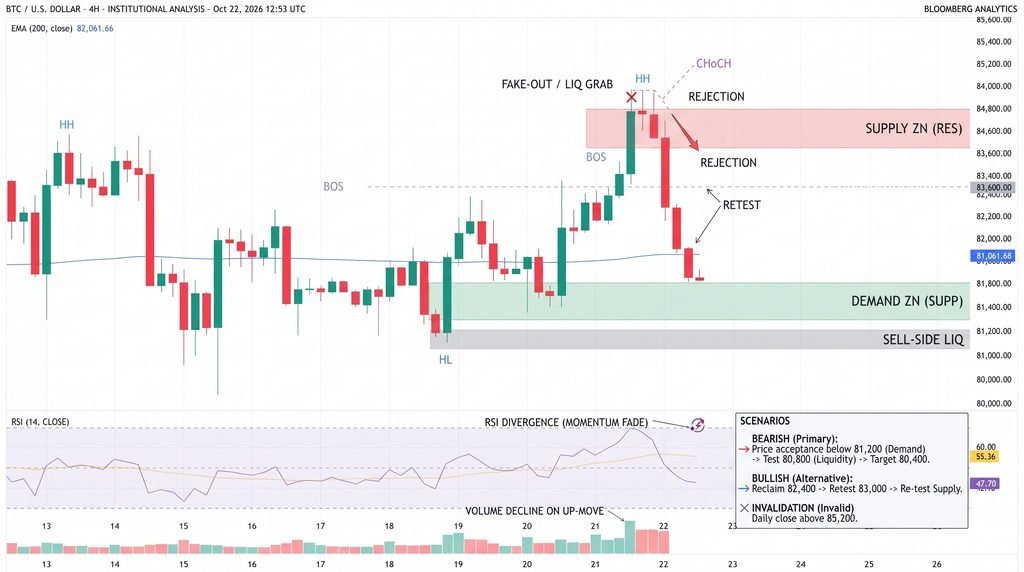
Traders will likely monitor whether Bitcoin can reclaim $82,000 and approach the $85,000 area again. Failure to sustain a recovery could keep prices under pressure, while improving equity-market sentiment and easing oil prices could support renewed buying.
Conclusion
Bitcoin’s 1.8% decline to $81,906.8 underscores the influence of macroeconomic conditions on cryptocurrency prices. The AI-related stock selloff, elevated oil prices and interest-rate uncertainty have weakened risk appetite, dragging major altcoins lower as well. Persistent ETF inflows offer a potential source of support, but a durable recovery will depend on improving market sentiment and Bitcoin’s ability to regain lost ground.
Sources & Methodology
Primary-source standard: Market-moving facts should link to original data releases, regulator notices, company filings or official project announcements whenever available. Secondary reporting is used for additional context, not as a substitute for original evidence.
Page last reviewed: