
Bitcoin steadied near $83,600 on Tuesday after extending losses from the weekend as rising U.S. Treasury yields and continuing U.S.-Iran tensions reduced appetite for risk-sensitive assets. Bitcoin rose about 0.6% to $83,637.10 early Tuesday after briefly climbing toward $85,000 over the weekend before reversing lower. The move comes as investors reassess the outlook for Federal Reserve policy following a 25-basis-point rate increase and renewed concerns about inflation.
Yields Keep Pressure on Bitcoin
Higher bond yields remain a central obstacle for Bitcoin and other speculative assets. The U.S. 10-year Treasury yield recently moved above 5%, reaching levels not seen since 2007, as investors increased expectations for further interest-rate increases to contain persistent inflation.
The Federal Reserve raised its benchmark interest rate by 25 basis points in September. Higher yields can make government debt more attractive relative to assets that do not generate traditional interest income, potentially reducing demand for cryptocurrencies.
U.S.-Iran tensions are adding another layer of uncertainty. Rising oil prices have increased concerns that energy costs could keep inflation elevated, complicating the outlook for monetary policy.
The combination leaves Bitcoin sensitive to both economic data and geopolitical developments. This week’s U.S. employment figures could influence expectations for future Fed policy and, in turn, the direction of Treasury yields and the dollar.
USDT Faces Fresh Senate Scrutiny
Bitcoin is also navigating a separate regulatory development involving Tether and its USDT stablecoin.
A report released Monday by Democratic members of the U.S. Senate Permanent Subcommittee on Investigations examined 846 cryptocurrency wallets sanctioned or targeted for seizure because of links to Iran and regional proxies. Investigators said 84% of those wallets had transacted exclusively or almost exclusively in USDT.
The report alleges that USDT was used to move funds across borders and support Iran’s financial network despite U.S. sanctions. Those are findings and allegations from the Senate Democratic investigators, rather than a court determination.
Tether disputed the characterization of its compliance efforts and said it has supported the freezing of nearly $550 million in Iran-linked USDT during 2026. The company also said it has cooperated with U.S. and international law enforcement agencies.
Key developments include:
- Bitcoin: around $83,637 early Tuesday.
- 10-year Treasury yield: above 5%.
- Iran-linked wallets studied: 846.
- USDT-linked wallets: 84% of those examined.
Altcoins Stabilize After Weekend Losses
Broader cryptocurrency markets showed signs of stabilization alongside Bitcoin. Ethereum rose about 1.8% to $2,698.46, while XRP gained roughly 1.6%.
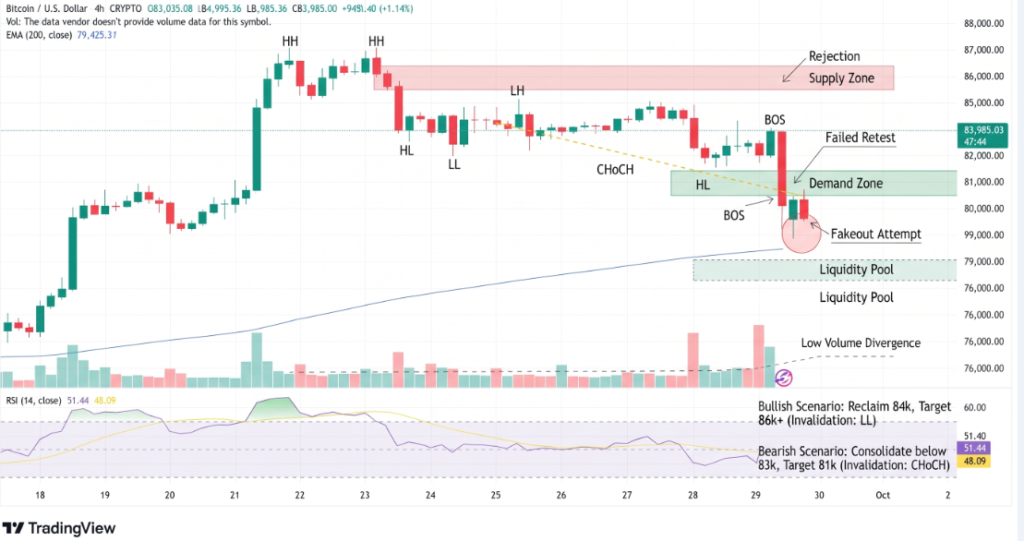
The modest rebound follows broader weakness on Monday, when Bitcoin fell as high Treasury yields and limited progress on U.S.-Iran negotiations reduced demand for risk assets.
Meanwhile, traditional financial institutions continue to expand their digital-asset operations. Citi has been broadening its digital-asset services into markets including Japan and the United Arab Emirates, adding to evidence that institutional infrastructure around cryptocurrencies continues to develop.
Conclusion
Bitcoin remains close to $83,600 as investors balance higher Treasury yields, renewed Fed rate expectations and geopolitical uncertainty. The Senate report on USDT adds a separate regulatory risk for the stablecoin sector, although Tether says it has assisted authorities with substantial Iran-linked freezes. For Bitcoin, the next major drivers are likely to remain U.S. employment data, inflation expectations, Treasury yields and changes in risk appetite.
Sources & Methodology
Primary-source standard: Market-moving facts should link to original data releases, regulator notices, company filings or official project announcements whenever available. Secondary reporting is used for additional context, not as a substitute for original evidence.
Page last reviewed: