
Bitcoin rose 1.1% to $82,219.10 on Friday, October 16, recovering after briefly falling below $80,000 in the previous session. Lower U.S. Treasury yields and easing oil prices helped support risk-sensitive assets, while bargain hunting encouraged a modest rebound. However, Bitcoin remained on track for a second consecutive weekly decline as persistent inflation, expectations of further Federal Reserve tightening, technology-stock weakness and outflows from spot Bitcoin exchange-traded funds weighed on sentiment.
Bitcoin Faces Second Weekly Decline
Bitcoin was down approximately 0.9% for the week and more than 2% in October, challenging the seasonal rally commonly known as “Uptober.” The decline reflects a combination of macroeconomic pressure and weaker investment flows rather than a single market event.
September inflation in the United States accelerated to 3.7% year over year, while monthly consumer prices increased 0.6%, according to the Bureau of Labor Statistics. September retail sales also rose 0.8%, reinforcing evidence that consumer demand remains resilient. These figures complicate the Federal Reserve’s efforts to control inflation and have increased concerns about another interest-rate increase.
Higher interest rates can weigh on Bitcoin because the asset does not pay interest and competes with yield-bearing investments for capital. Meanwhile, a sharp sell-off in technology and artificial-intelligence stocks has reduced investors’ appetite for speculative assets.
According to the figures in the supplied market report, US spot Bitcoin ETFs recorded approximately $146.2 million in net outflows so far this week. Continued withdrawals can add pressure when investors reduce exposure to Bitcoin-linked funds.
Crypto Prices Recover as Yields Ease
Major cryptocurrencies advanced on Friday alongside Bitcoin, although most remained on course for weekly losses. Falling Treasury yields can improve the appeal of risk assets by easing financial-condition concerns, but a short-term recovery does not necessarily signal a durable change in trend.
The latest reported prices showed:
- Ethereum (ETH): rose 3.3% to $2,452.72, but remained down nearly 2.6% for the week.
- XRP: gained 1.6% on Friday.
- Solana (SOL): advanced 3.4%.
- Cardano (ADA): climbed 3.7%.
- BNB: added 1.1%, while Dogecoin rose 2.6%.
Despite Friday’s gains, XRP, Solana and Cardano were still down between 3.8% and 8% for the week, according to the supplied figures. The uneven performance suggests that buying interest remains selective across the crypto market.
Fed Policy Remains the Main Risk
The next direction for Bitcoin will depend partly on whether inflation and economic activity keep pushing interest-rate expectations higher. The September inflation report showed headline prices rising faster than anticipated, while resilient spending gave policymakers little reason to ease financial conditions quickly.
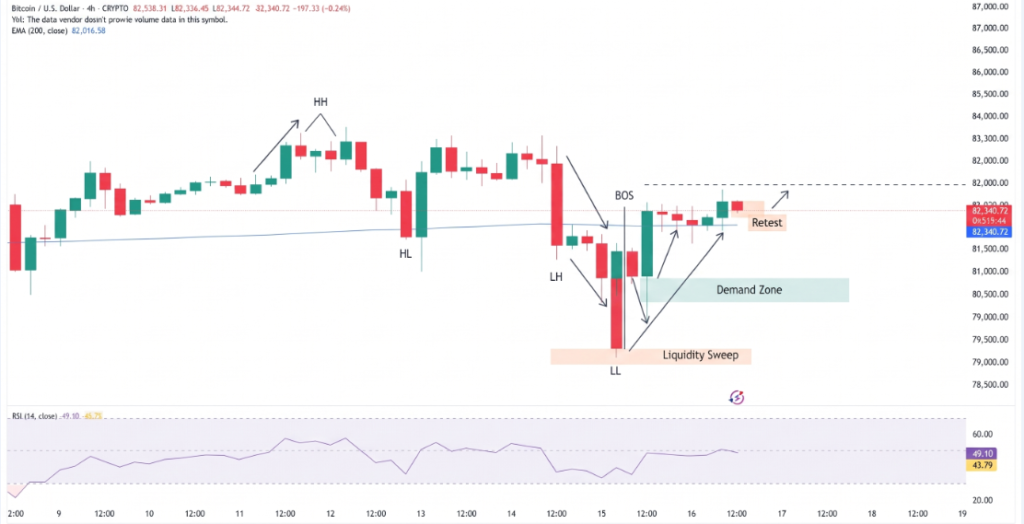
At the same time, falling Treasury yields amid technology-stock volatility suggest investors are also seeking safer assets. If yields resume climbing, cryptocurrencies could face renewed selling pressure. A sustained decline in yields, by contrast, may give Bitcoin room to stabilize.
Conclusion
Bitcoin’s rebound to $82,219 offers some relief after its brief drop below $80,000, but the broader outlook remains fragile. A second weekly loss, continued ETF outflows and uncertainty over Federal Reserve policy are limiting recovery prospects. Traders will be watching Treasury yields, fund flows and upcoming economic data to determine whether Friday’s advance develops into a sustained rebound or remains a temporary pause in the decline.
Sources & Methodology
Primary-source standard: Market-moving facts should link to original data releases, regulator notices, company filings or official project announcements whenever available. Secondary reporting is used for additional context, not as a substitute for original evidence.
Page last reviewed: