
The Cardano Foundation is facing significant resistance to its request for nearly 25 million ADA to finance a global conference program in 2027. The treasury proposal has attracted substantially more voting stake against it than in support, raising questions about the value of conference spending and its measurable contribution to blockchain adoption. With voting still open, delegates are demanding clearer evidence of results, stronger financial safeguards and accountability before approving another major allocation from Cardano’s community treasury.
Cardano Treasury Proposal Faces Opposition
Submitted on November 16, the Cardano Global Events 2027 proposal requests 24,995,775 ADA, equivalent to approximately $4.999 million at an assumed token price of $0.20.
At the time of the reported voting snapshot, representatives controlling approximately 741.7 million ADA had voted against the request, compared with 140.8 million ADA supporting it. That represents more than five times as much voting stake opposing the proposal. The figures are not a final result because the governance process remains open.
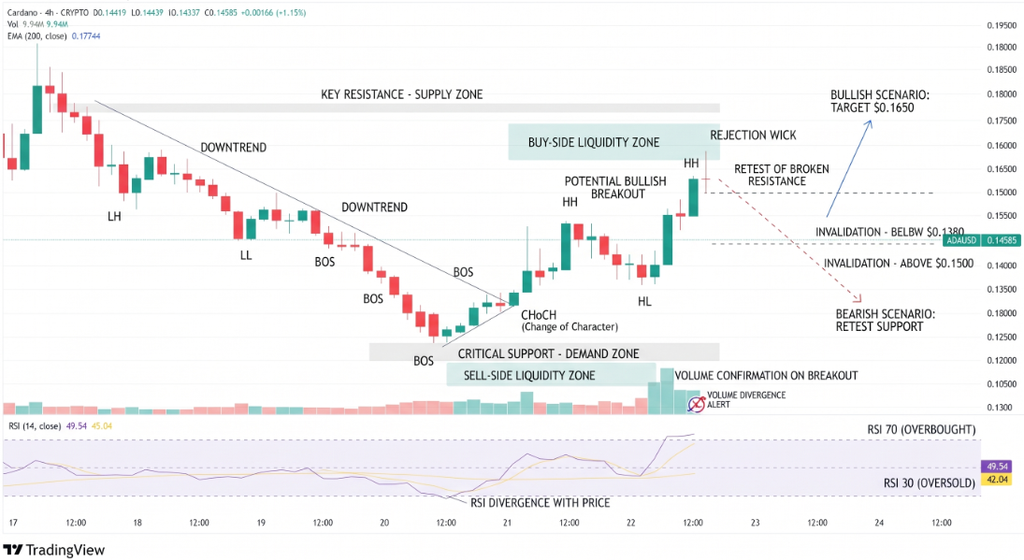
With ADA trading near $0.14 in the supplied market snapshot, the requested tokens were worth approximately $3.5 million at market prices. The Foundation’s proposed budget, however, remains denominated in dollars and assumes a higher ADA valuation.
The program would finance Cardano’s presence at 12 international conferences during 2027, including exhibition booths, sponsorship packages, side events, four hackathons and travel assistance for participating ecosystem projects. The Foundation says it will not charge for staff time or generate a profit from the allocation.
DReps Demand Proof of Previous Results
Much of the opposition centers on whether previous conference spending produced lasting adoption rather than temporary publicity.
A delegate known as YUTA, controlling approximately 482.5 million ADA, accounts for a substantial share of the opposing stake. YUTA has asked the Foundation to demonstrate whether earlier events generated measurable increases in network transactions, fees, developer retention, customers and commercial partnerships.
Other delegates have raised similar concerns. SASA_nagamaru argues that networking conversations and wallet registrations alone do not establish sustainable demand for Cardano.
Several representatives have also questioned the proposed funding structure:
- YUTA: Wants evidence linking past spending to measurable ecosystem growth.
- SASA_nagamaru: Seeks verifiable proof of adoption and real-world usage.
- InputEndorsers: Wants the Foundation to justify its sponsorship costs and consider an independent review.
- BKIND: Opposes releasing the entire annual budget before performance checks.
- DeepStatecraft: Supports considering smaller, milestone-based payments.
These objections point to a broader governance debate over how community funds should be allocated and monitored.
Foundation Defends Events Strategy
The Cardano Foundation argues that shared conference booths give smaller projects access to investors, developers and potential partners they could not reach independently.
The Foundation says its previous 2025–2026 events program exceeded its targets. Its published results report 8,191 booth contacts, 1,169 developers engaged and 79 ecosystem projects given opportunities to showcase their work. It also reported 219 collaborations initiated or discussed.
The disagreement follows an earlier funding setback. The proposed Cardano Summit 2026 in Singapore was canceled after its treasury request failed to secure the required approval. A separate proposal supporting Cardano’s presence at TOKEN2049 Singapore was approved.
The current Global Events 2027 proposal is scheduled to reach its voting deadline on December 20, 2026.
Conclusion
The dispute highlights Cardano’s increasingly active treasury governance, with delegates demanding measurable returns before approving large ecosystem budgets. The Foundation has presented evidence of developer engagement and conference participation, but opponents want stronger proof that these activities translate into sustained network usage. Whether the proposal secures approval will depend on how delegates weigh global visibility against financial accountability before the December 20 deadline.
Sources & Methodology
Primary-source standard: Market-moving facts should link to original data releases, regulator notices, company filings or official project announcements whenever available. Secondary reporting is used for additional context, not as a substitute for original evidence.
Page last reviewed: