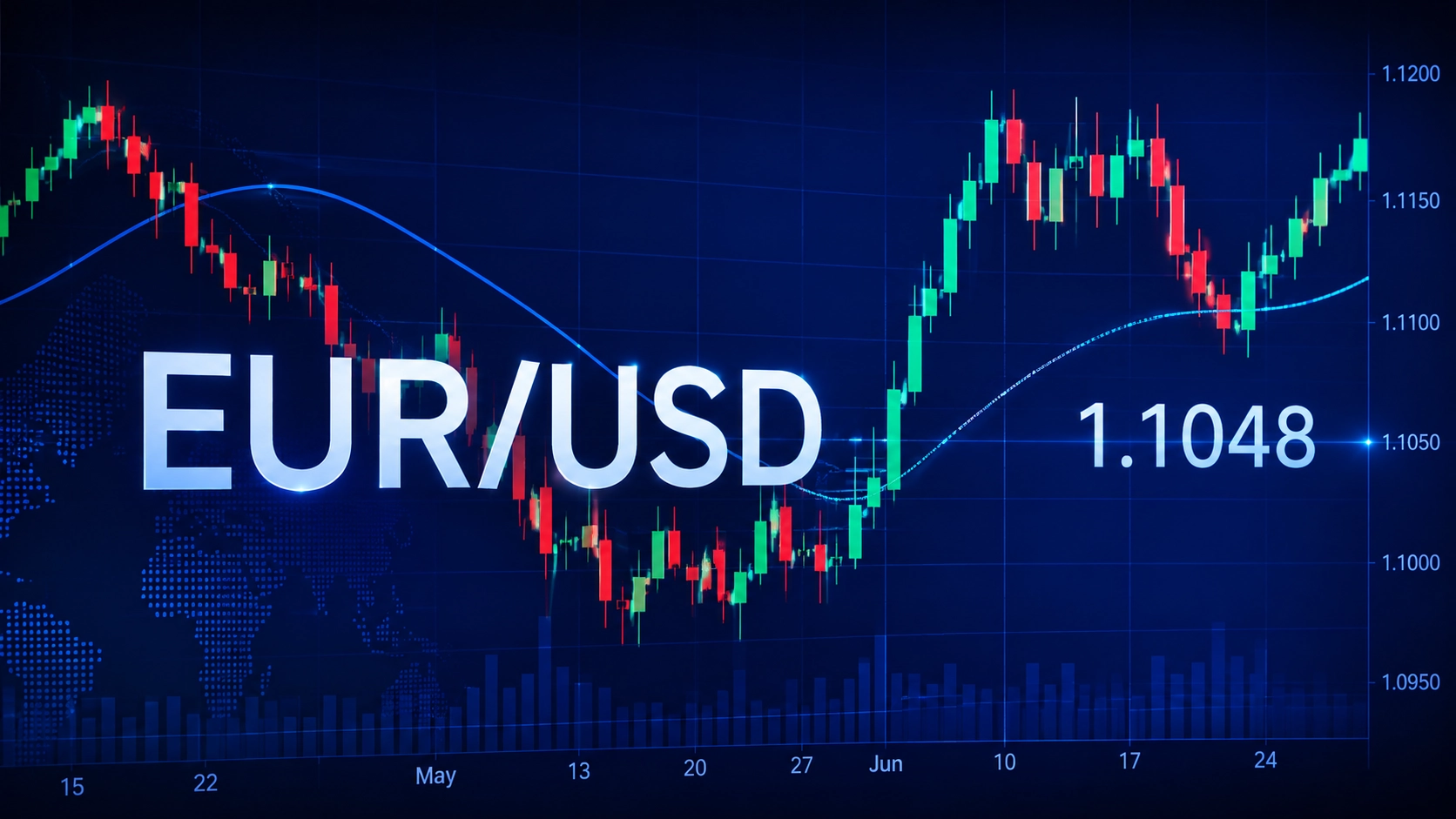
The EUR/USD pair recovered toward 1.1005 during Wednesday’s early European session but remained vulnerable to further losses as expectations of Federal Reserve (Fed) interest-rate increases strengthened the US Dollar. Persistent inflation and hawkish comments from US policymakers have reinforced expectations of monetary tightening in December. Meanwhile, uncertainty surrounding the European Central Bank’s (ECB) policy outlook and France’s fiscal position continues to weigh on the Euro. Technically, the pair remains bearish below its 100-day Simple Moving Average (SMA), with 1.1000 emerging as an important support level.
Fed rate hike bets pressure the Euro
The US Dollar continues to benefit from expectations that the Fed will maintain a restrictive monetary policy as inflation remains elevated. Kansas City Fed President Jeffrey Schmid has emphasized that inflation is still too high, while Dallas Fed President Lorie Logan has indicated that policymakers may need to accelerate the pace of monetary tightening.
Fed Governor Christopher Waller has also raised the possibility of a larger 50-basis-point increase if inflation remains persistent. A basis point represents one-hundredth of a percentage point.
According to the CME FedWatch figures cited in the supplied market report, traders assigned a 95.7% probability to a 25-basis-point December rate increase and a 4.3% probability to a 50-basis-point move. These figures reflect the report’s market snapshot rather than a guaranteed policy decision.
The prospect of higher US interest rates supports the Dollar by increasing the potential returns available on dollar-denominated assets. This creates an additional challenge for EUR/USD, particularly while European economic and fiscal concerns remain unresolved.
On the European side, economists surveyed by Reuters expect the European Central Bank to deliver another rate increase in December. However, more than one-third anticipate additional tightening in early 2027 as inflation remains above the ECB’s 2% target.
Analysts at HSBC also maintain a cautious outlook, citing resilient US economic activity, persistent inflation and unresolved French fiscal pressures as factors supporting the Dollar.
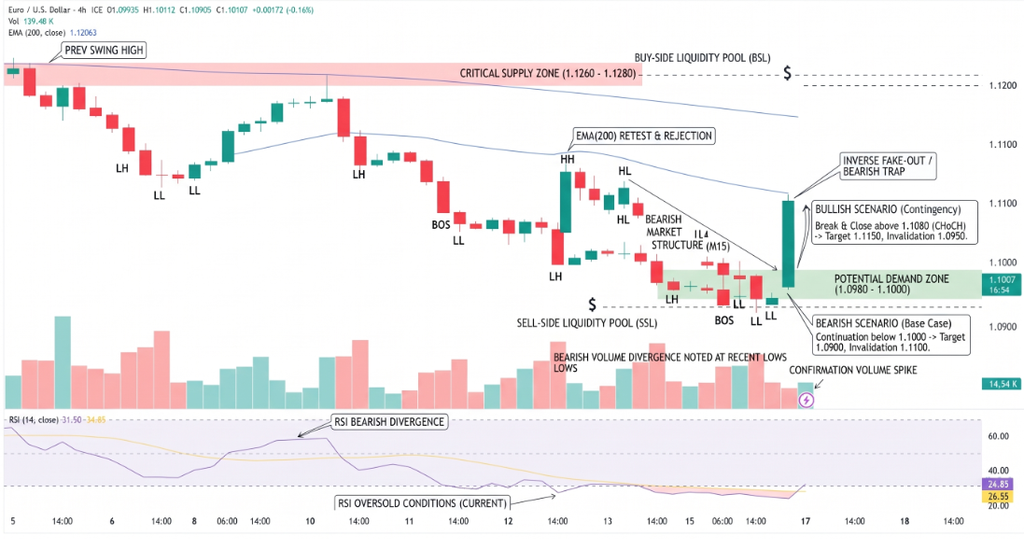
EUR/USD technical analysis: 1.1000 support
The daily chart maintains a bearish structure as EUR/USD trades below its 100-day SMA and the middle line of the 20-day Bollinger Bands. The pair is consolidating close to the lower Bollinger Band, indicating sustained selling pressure.
The Relative Strength Index (RSI) stands at 32.3, approaching oversold territory. This suggests that bearish momentum remains dominant, although an extended decline could eventually encourage short-term buying.
Important technical levels include:
- Immediate support: 1.1000.
- Next downside target: 1.0951, the May 12, 2025 low.
- Further support: 1.0733, the May 27, 2025 low.
- Initial resistance: 1.1100.
- Bollinger middle band: 1.1150.
- 100-day SMA: 1.1395.
A decisive break below 1.1000 could expose the 1.0951 support level, followed by 1.0733. Conversely, a recovery above 1.1100 could open the way toward 1.1150 and the November 10 high of 1.1251.
EUR/USD outlook: Sellers retain control
The broader outlook remains negative while EUR/USD trades below its key moving averages. The upper Bollinger Band near 1.1295 and the 100-day SMA at 1.1395 represent additional resistance levels that buyers would need to overcome to establish a stronger recovery.
Conclusion
EUR/USD faces competing monetary-policy expectations, but stronger US inflation concerns and hawkish Fed commentary currently favor the Dollar. Although the RSI suggests that selling conditions are becoming stretched, a sustained break above 1.1100 is needed to improve the near-term outlook. Until then, 1.1000 remains the critical support threshold, with a break potentially exposing the pair to further losses.
Sources & Methodology
Primary-source standard: Market-moving facts should link to original data releases, regulator notices, company filings or official project announcements whenever available. Secondary reporting is used for additional context, not as a substitute for original evidence.
Page last reviewed: