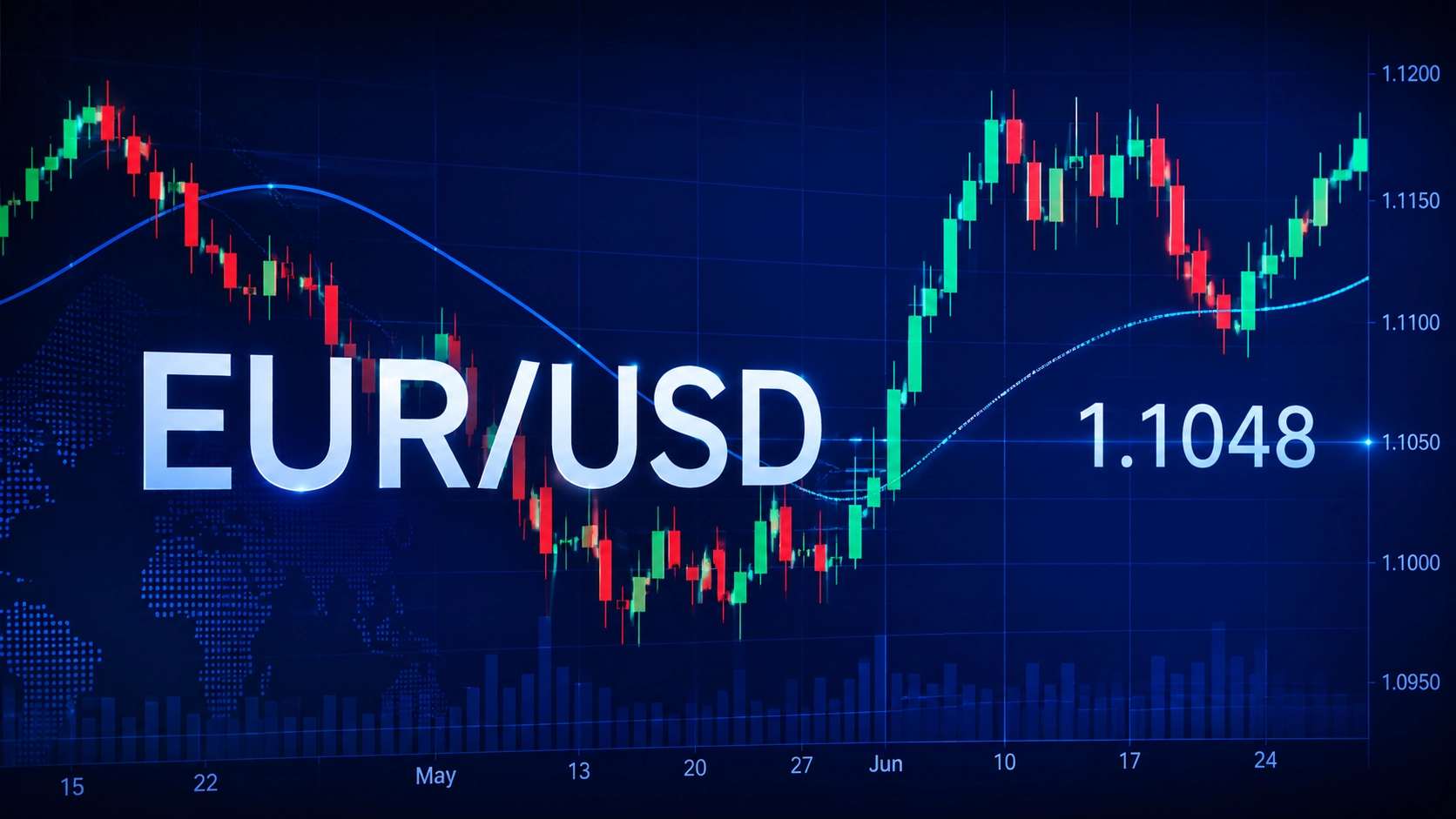
The Euro steadied against the US Dollar on Friday after four consecutive sessions of losses pushed EUR/USD to a fresh yearly low near 1.1215. The pair traded around 1.1253 in Asian hours as the dollar eased slightly from its recent highs. Attention is now shifting to the September US employment report, with markets looking for evidence that could alter expectations for the Federal Reserve’s next rate move. Economists expect 90,000 new US jobs, compared with 162,000 in August, while unemployment is forecast to remain at 4.1%.
EUR/USD Awaits US Jobs Data
The US Dollar Index remained elevated near 101.93 after reaching 102.20 in the previous session, its highest level in more than a year. That strength has added pressure to EUR/USD and helped push the pair below several short-term technical benchmarks.
The September Nonfarm Payrolls report is particularly important because the Federal Reserve raised its policy rate by 25 basis points in September to a 3.75%-4.00% target range. A significant slowdown in hiring could reduce pressure for additional tightening, while stronger employment could reinforce expectations that borrowing costs may remain higher for longer.
Dallas Fed President Lorie Logan has taken a notably hawkish position. She said Thursday that rates need to rise by at least another 50 basis points to make policy “modestly restrictive” and bring inflation back toward the Fed’s 2% target. Logan also stressed that her comments represent her own assessment rather than the view of all Fed officials.
Euro Inflation Adds Another Catalyst
European markets are also awaiting the September euro-area Harmonised Index of Consumer Prices flash estimate. The release was scheduled for Oct. 2, making it another major event for EUR/USD traders on the same day as the US payrolls report.
Higher-than-expected euro-area inflation could complicate expectations for the European Central Bank by keeping price pressures above its 2% objective. Conversely, a softer reading could give policymakers more room to maintain a cautious approach.
For traders, the combination of US employment and euro-area inflation creates two opposing policy signals. The key releases are:
- US September payrolls: Forecast at 90,000.
- US unemployment rate: Forecast at 4.1%.
- Euro-area September HICP: Flash estimate due Oct. 2.
EUR/USD Technical Levels in Focus
On the daily chart, EUR/USD remains below the 20-day Exponential Moving Average near 1.1423, keeping the short-term structure bearish. The 14-day Relative Strength Index is around 19.8, deep in oversold territory. That reading indicates that selling momentum has become stretched, although an oversold RSI alone does not confirm a reversal.
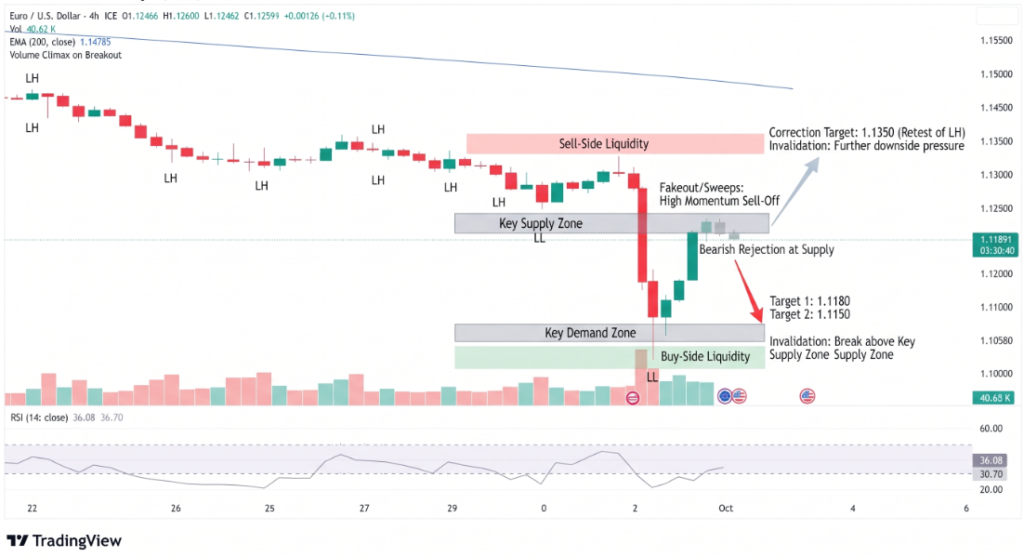
A recovery would first confront the June 24 low near 1.1325 before the 20-day EMA around 1.1423. Sustained trade above those levels would signal that buyers are beginning to regain control of the short-term trend.
On the downside, 1.1200 is the immediate psychological support. A decisive break below that level could bring 1.1100 into focus.
Conclusion
EUR/USD enters Friday’s session near 1.1253 after falling to a yearly low of 1.1215. The pair remains technically weak, but the deeply oversold RSI leaves room for volatility around major economic releases. US Nonfarm Payrolls and euro-area inflation will provide the next major tests for dollar and euro rate expectations, while 1.1200 and 1.1325 remain important levels for the technical outlook.
Sources & Methodology
Primary-source standard: Market-moving facts should link to original data releases, regulator notices, company filings or official project announcements whenever available. Secondary reporting is used for additional context, not as a substitute for original evidence.
Page last reviewed: