
Gold prices declined on Thursday, October 29, as investors assessed the Federal Reserve’s latest interest-rate decision and awaited fresh US inflation data. Spot gold fell 0.7% to $4,038.49 an ounce, while US gold futures slipped to $4,049.72. The Fed kept interest rates unchanged in a closely watched decision but offered limited guidance on its next move. A firmer US dollar and uncertainty over future monetary policy weighed on bullion, although continued central-bank gold purchases provided longer-term support. Markets are now focused on the Personal Consumption Expenditures (PCE) price index for clues about inflation and the likelihood of further rate increases. Fed Decision Pressures Gold Prices
Fed Decision Pressures Gold Prices
The Federal Reserve voted 10-2 on October 28 to maintain its benchmark federal funds rate at 3.75% to 4%. The decision matched market expectations, but policymakers stressed that inflation remained elevated and that further economic data would help determine the appropriate policy stance.
Higher interest rates can weigh on gold because the precious metal does not pay interest. When yields on cash and bonds rise, investors have a stronger incentive to hold interest-bearing assets instead of bullion. A stronger US dollar can also make dollar-priced gold more expensive for buyers using other currencies.
Federal Reserve Chair Kevin Warsh indicated that the central bank could reduce its scheduled policy decisions from eight to six annually beginning next fall. Investors are nevertheless monitoring the possibility of another rate increase before year-end, particularly as elevated energy prices complicate efforts to bring inflation under control.
Inflation Data and Metals in Focus
The September PCE price index is the next major focus for traders. The measure tracks changes in prices paid by consumers and is the Fed’s preferred inflation gauge. A stronger-than-expected reading could reinforce expectations that interest rates will remain elevated, potentially adding pressure to gold.
Other precious metals also weakened during Thursday’s trading session. At the reported price snapshot:
- Silver: Fell 1.4% to $53.2295 an ounce.
- Platinum: Declined 1.4% to $1,520.17.
- Spot palladium: Dropped 0.7% to $1,009.02.
- Palladium futures: Lost 1.1% to $1,002.25.
- US Dollar Index: Edged higher to 102.20.
Gold’s decline followed three consecutive sessions of modest gains. The metal has also faced pressure from broader equity-market volatility. During a recent technology-stock selloff linked to concerns over artificial-intelligence spending, some investors reportedly sold gold to cover losses elsewhere in their portfolios. Gold fell 2.5% in October in the supplied market report, putting it on track for a second consecutive monthly decline.
Central Banks Provide Long-Term Support
Despite short-term selling pressure, central-bank demand remains an important factor for gold. Goldman Sachs estimates central banks purchased 79 tonnes in August, compared with a pre-2022 monthly average of approximately 17 tonnes. China accounted for an estimated 25 tonnes, making it the largest identifiable buyer in that assessment. These figures are estimates, not a complete tally of officially reported purchases.
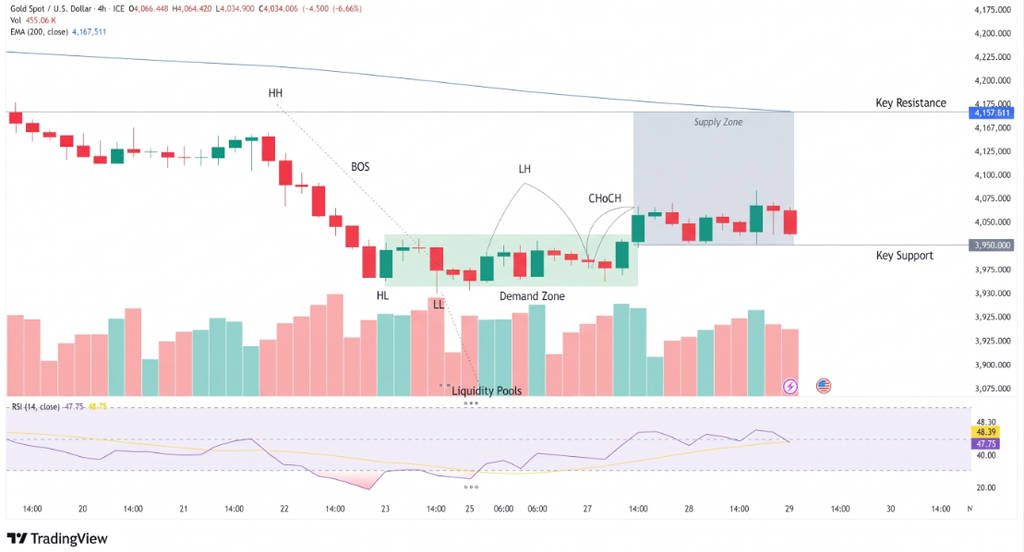
Sustained central-bank gold buying can help cushion price declines because central banks often accumulate gold to diversify foreign-exchange reserves and reduce reliance on other reserve assets. However, such demand does not guarantee immediate price gains.
The Gold Bullion Company managing director Rick Kanda has said continued central-bank purchases could support prices over time. His assessment reflects the role of official demand alongside interest rates, investor confidence and geopolitical uncertainty
Conclusion
Gold’s near-term direction will depend heavily on the inflation outlook and the Fed’s next policy signals. A hotter PCE reading could strengthen expectations for tighter monetary policy, while easing inflation could reduce pressure on bullion. Central-bank buying offers a longer-term source of support, but traders must balance it against dollar movements, bond yields and changing risk appetite.
Sources & Methodology
Primary-source standard: Market-moving facts should link to original data releases, regulator notices, company filings or official project announcements whenever available. Secondary reporting is used for additional context, not as a substitute for original evidence.
Page last reviewed: