Gold prices declined on Wednesday as uncertainty surrounding efforts to end the U.S.-Iran conflict and expectations for further Federal Reserve tightening weakened demand for the precious metal. Spot gold fell 0.4% to $4,108.58 an ounce, while U.S. gold futures dropped 0.3% to $4,126.55. A modestly stronger U.S. Dollar Index and persistent inflation concerns added pressure as investors assessed whether elevated energy costs could keep interest rates higher for longer.
Gold Prices Slide as Peace Hopes Fade
At 21:21 ET, spot gold was down 0.4%, extending its weekly decline to more than 1%. Gold has also lost roughly one-fifth of its value since the U.S.-Iran conflict began in late February, according to the supplied market report. Disruptions to energy markets have raised inflation concerns and complicated the outlook for global monetary policy.
Other precious metals also weakened:
- Silver: Fell 0.9% to $57.4890 an ounce.
- Platinum: Declined 0.6% to $1,646.70.
- Palladium: Dropped 0.7% to $1,098.70.
- U.S. Dollar Index: Rose 0.1% to 101.80.
The movement in gold reflected changing expectations around diplomacy and energy prices. Reports of potential peace negotiations initially pushed crude oil prices lower, supporting bullion as the inflation outlook appeared less threatening. However, those gains faded after a diplomat dismissed reports that a settlement was close, allowing oil prices to recover.
Higher oil prices can increase transportation, manufacturing and household energy costs. If those pressures keep inflation elevated, the Federal Reserve may have less room to lower borrowing costs.
Fed Rate Outlook Keeps Bullion Under Pressure
Investors are focused on the Federal Reserve’s October 27–28 policy meeting, with markets expecting officials to leave interest rates unchanged. Remarks from Chair Kevin Warsh reportedly did little to alter that view before the central bank’s communications blackout.
Gold does not pay interest, making it less attractive when investors can earn higher returns from interest-bearing assets such as U.S. Treasury securities. Expectations of additional rate increases can therefore weigh on bullion, particularly when inflation remains above the Fed’s 2% target.
Market pricing in the supplied report indicated less than a 17% probability of a quarter-point increase in October, while the perceived chance of another hike later this year stood near 85%. These estimates are market expectations, not confirmed policy decisions. Investors can monitor changing rate expectations through the CME FedWatch Tool.
Economic Weakness Adds to Market Uncertainty
U.S. housing data offered a counterpoint to inflation concerns. September housing starts declined, while pending home sales fell to a record low, suggesting weakness in the housing sector. These developments supported longer-dated Treasury prices as investors reassessed the economic outlook.
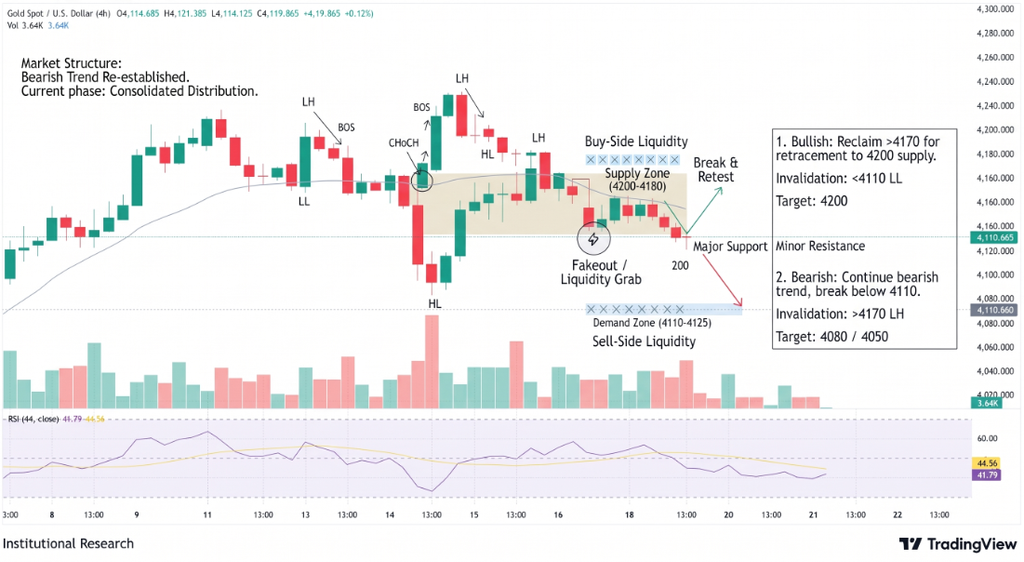
The competing forces leave gold sensitive to incoming data and geopolitical headlines. Traders are weighing several factors:
- Whether diplomatic efforts can produce a lasting reduction in energy-market risks.
- Whether inflation remains persistent enough to prompt further Fed tightening.
- Whether weakening housing activity signals a broader slowdown that could eventually support gold.
Conclusion
Gold’s decline toward $4,109 reflects the tension between geopolitical uncertainty, inflation risks and expectations for Federal Reserve policy. A credible peace agreement and easing oil prices could reduce inflation fears and help bullion recover. Conversely, renewed energy-market disruption or stronger expectations for interest-rate increases could extend the pressure. Investors will be watching diplomatic developments, Treasury yields, inflation data and signals surrounding the October Fed meeting for clearer direction.
Sources & Methodology
Primary-source standard: Market-moving facts should link to original data releases, regulator notices, company filings or official project announcements whenever available. Secondary reporting is used for additional context, not as a substitute for original evidence.
Page last reviewed: