
Gold prices were little changed Friday as investors waited for the September U.S. jobs report for fresh clues on the Federal Reserve’s interest-rate path. Spot gold was around $4,184 an ounce in early Asian trading, while U.S. gold futures were near $4,215. The metal remained on track for a second consecutive weekly decline, with losses exceeding 2% during the week. A stronger dollar and elevated Treasury yields continued to reduce demand for the non-yielding asset.
Dollar and Yields Limit Gold Demand
The U.S. Dollar Index remained close to a 17-month high after gaining for a third consecutive week. A stronger dollar generally makes dollar-priced commodities more expensive for international buyers, adding pressure to gold.
At the same time, the U.S. 10-year Treasury yield climbed to 5.34% on Thursday, its highest level since 2002, before easing toward 5.25%. Higher bond yields increase the opportunity cost of holding gold because bullion does not generate interest income.
The combination has left gold facing competing forces:
- Dollar strength is limiting overseas demand for bullion.
- Higher Treasury yields are increasing the cost of holding non-yielding assets.
Jobs Data Could Shift Fed Expectations
The September Nonfarm Payrolls report is scheduled for Friday and is expected to show a slowdown in hiring. Economists surveyed by Reuters expect about 90,000 new jobs, compared with 162,000 in August, while the unemployment rate is forecast to remain at 4.1%. Wage growth will also be closely watched because stronger earnings could reinforce inflation concerns.
The Federal Reserve raised its benchmark interest-rate target by 25 basis points in September to 3.75%-4.00%, its first increase in three years. The central bank said inflation remained elevated while economic activity continued to expand at a solid pace.
Market expectations for another increase in October have fallen sharply in recent sessions. Reuters reported that traders were pricing only about a 28% probability of an October hike on Friday, compared with roughly 70% earlier in the week.
Gold Outlook Hinges on Jobs Report
Softer U.S. inflation data had recently helped gold recover as traders reduced expectations for an immediate rate increase. However, rising oil prices and geopolitical tensions have kept inflation risks in focus, while higher long-term Treasury yields continue to provide a counterweight to safe-haven demand.
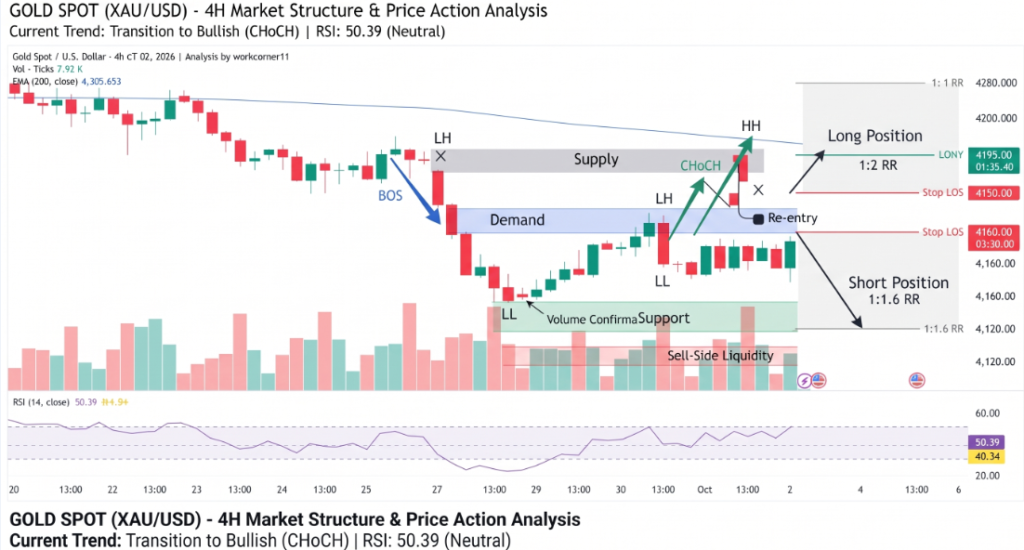
GOLD Price Chart – Source: Tradingview
The jobs report could therefore produce a significant repricing across the dollar, Treasury market and precious metals. A stronger employment reading could reinforce expectations for tighter monetary policy, while weaker hiring could reduce pressure for another near-term increase.
Other metals were also firmer in early trading. Silver Prices and Platinum posted modest gains, while Copper Futures also advanced.
Conclusion
Gold is entering the jobs report with several forces pulling in different directions. The dollar and elevated Treasury yields remain obstacles, while softer inflation and reduced October rate-hike expectations offer some support. With September payrolls expected to show slower hiring, the employment figures, unemployment rate and wage data will be central to determining how markets reassess the Fed’s next move.
Sources & Methodology
Primary-source standard: Market-moving facts should link to original data releases, regulator notices, company filings or official project announcements whenever available. Secondary reporting is used for additional context, not as a substitute for original evidence.
Page last reviewed: