
Gold prices were broadly steady Friday near $4,275 an ounce but remained on course for a weekly decline of more than 3%. Higher energy costs, a firmer U.S. dollar and sharply rising Treasury yields have increased expectations that the Federal Reserve may need to raise interest rates again to contain inflation. Spot XAU/USD was little changed at $4,274.89, while Gold Futures gained 0.3% to $4,309.72. The Dollar Index rose 0.1% to 101.29.
Gold Faces Higher Rate Pressure
The latest move extends a difficult week for bullion as investors reassess the outlook for U.S. monetary policy. The Fed raised its benchmark rate by 25 basis points on Sept. 16 to a target range of 3.75% to 4%, its first increase since July 2023. The central bank said inflation remained elevated and that uncertainty was still high.
Markets have since increased expectations for another rate increase as energy prices add to inflation concerns. Reuters reported earlier this week that traders were pricing roughly a 90% probability of a December hike, highlighting how quickly the rate outlook has shifted.
- Spot gold: $4,274.89
- Gold Futures: $4,309.72
- Silver: $63.79
- Platinum: $1,754.17
- U.S. Dollar Index: 101.29
Gold does not generate interest income, so higher bond yields can increase the opportunity cost of holding bullion. That pressure intensified Thursday as the 30-year U.S. Treasury yield reached about 5.5%, its highest level since 2004, while the 10-year yield climbed to around 5.22%.
Hormuz Risk Keeps Inflation Elevated
Energy markets remain central to the gold outlook. Oil prices have stayed elevated as the United States and Iran remain locked in negotiations over the Strait of Hormuz, a major route for global energy shipments.
U.S. and Iranian negotiators are reportedly exploring a phased arrangement under which Tehran would reopen the waterway while Washington eases its blockade. The reports have contributed to volatility in crude markets, although the outcome remains uncertain.
Higher oil prices create a difficult backdrop for the Fed because sustained fuel costs can slow progress toward its 2% inflation objective. That raises the possibility of tighter monetary policy for longer, a scenario that can weigh on non-yielding assets such as gold.
Gold Outlook Hinges on Rates
For bullion, the immediate focus remains on the interaction between inflation, interest rates, the U.S. dollar and Treasury yields. A sustained rise in long-term yields could keep pressure on gold, while any moderation in energy prices or rate expectations could reduce that headwind.
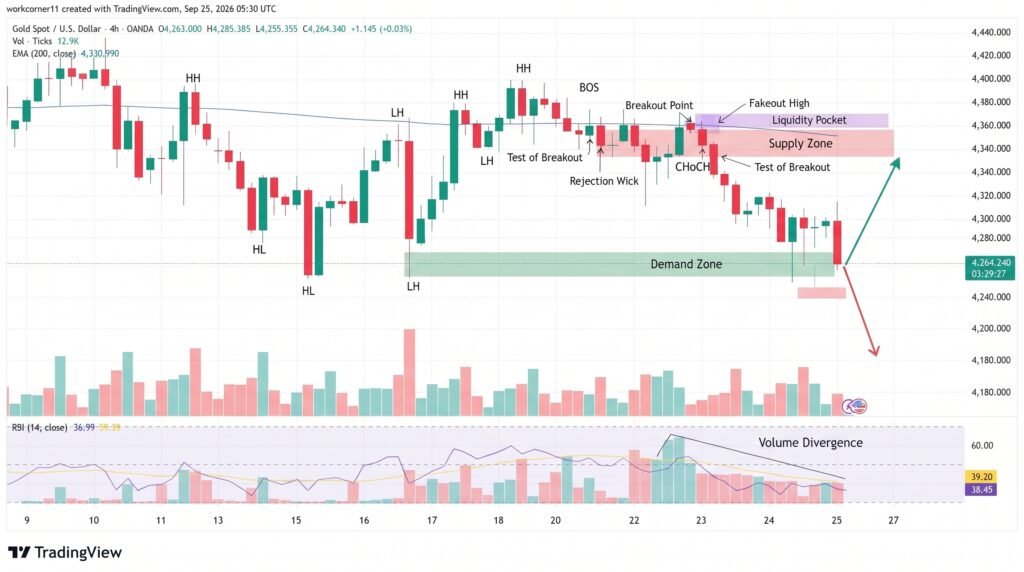
The broader market is therefore watching both the Fed’s policy signals and developments around Hormuz. Until those risks become clearer, gold’s position near $4,275 leaves the metal sensitive to changes in yields, the dollar and expectations for another rate increase.
Conclusion
Gold is entering the end of the week under pressure from a stronger dollar, elevated energy prices and rapidly rising Treasury yields. With the Fed already having raised rates to 3.75%-4% this month and markets considering another increase, bullion faces a challenging near-term backdrop. At the same time, continued uncertainty around Hormuz and global energy supplies could keep inflation risks elevated. The next moves in gold are likely to remain closely tied to changes in oil prices, bond yields and expectations for the Fed’s next policy decision.
Sources & Methodology
Primary-source standard: Market-moving facts should link to original data releases, regulator notices, company filings or official project announcements whenever available. Secondary reporting is used for additional context, not as a substitute for original evidence.
Page last reviewed: