Gold prices recovered on Monday after touching a 14-month low, as a technology-led stock market selloff renewed demand for defensive assets. Spot gold climbed 2.4% to $3,616.51 an ounce, while US gold futures advanced 2.9%, according to Reuters’ November 23 market report. The recovery followed five consecutive losing sessions and a weekly decline of approximately 9%. However, expectations for further Federal Reserve tightening continue to limit the metal’s upside, leaving investors focused on US inflation data and the central bank’s December policy decision.
Tech Selloff Revives Safe-Haven Demand
Bullion rebounded from Friday’s low of $3,502.49, its weakest level since September 2025. The decline reflected pressure from a stronger US Dollar, rising expectations for restrictive monetary policy and concerns that interest rates could increase further.
Monday’s recovery coincided with a broad retreat in technology shares. Investors reassessed the sustainability of heavy spending on artificial intelligence infrastructure, putting semiconductor companies and major equity indexes under pressure. The S&P 500 recorded seven consecutive daily losses through Friday and entered correction territory, while the Nasdaq Composite erased its gains for the year.
The technology selloff also affected Asian markets, where semiconductor stocks led early declines. This shift in investor sentiment encouraged demand for assets traditionally viewed as stores of value during periods of financial uncertainty.
Lower US Treasury yields provided another source of support. Gold does not pay interest, so declining bond yields can make bullion more attractive relative to government securities. Nevertheless, market volatility can also trigger forced selling when investors need cash to cover losses elsewhere.
Fed Rate Expectations Remain a Risk
The Federal Reserve’s policy outlook remains a major obstacle to a sustained gold recovery. According to market pricing reported by Reuters, traders saw a 93.5% probability of a 25-basis-point rate increase at the December meeting. That estimate is market-implied rather than an announced policy decision.
The October 27–28 FOMC minutes, released November 18, showed that nearly all policymakers considered a quarter-point increase in December likely to be appropriate. Some participants also discussed the possibility of a larger increase if inflation remained persistent.
Higher borrowing costs generally pressure gold by increasing the appeal of interest-bearing assets and supporting the Dollar. A stronger US currency can also make bullion more expensive for international buyers.
Investors are therefore turning to the Personal Consumption Expenditures (PCE) price index, the Fed’s preferred inflation gauge. Wednesday’s report could influence expectations for the December 8–9 policy meeting.
Silver and Platinum Join the Recovery
Other precious metals also advanced during Monday’s session, reflecting improved demand across the sector. Reuters reported silver rising approximately 3% to $42.41 an ounce, while platinum and palladium each gained around 1.2%.
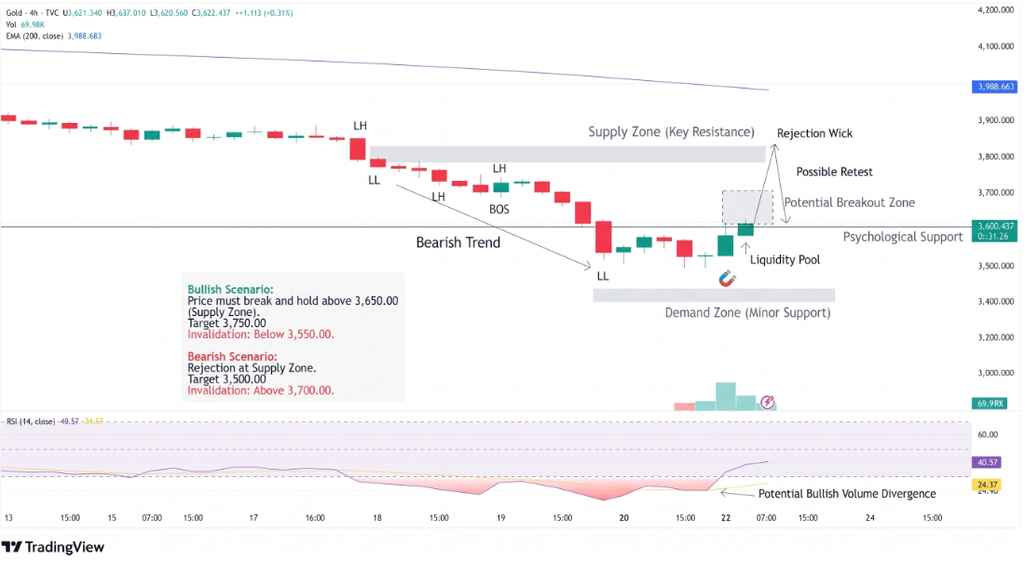
The main factors influencing bullion include:
- US inflation: PCE data could reshape expectations for interest rates.
- Fed policy: Further tightening may limit gold’s recovery.
- Treasury yields: Lower yields can improve bullion’s relative appeal.
- Equity volatility: Continued technology-sector weakness may support defensive demand.
Conclusion
Gold’s rebound from $3,502.49 signals renewed buying interest after its sharp weekly decline, but it does not yet confirm a lasting recovery. Persistent inflation and expectations of another Federal Reserve rate increase remain significant risks. If US PCE inflation comes in softer than expected, bullion could extend its gains. A stronger reading, however, may revive selling pressure and strengthen the US Dollar.
Sources & Methodology
Primary-source standard: Market-moving facts should link to original data releases, regulator notices, company filings or official project announcements whenever available. Secondary reporting is used for additional context, not as a substitute for original evidence.
Page last reviewed: