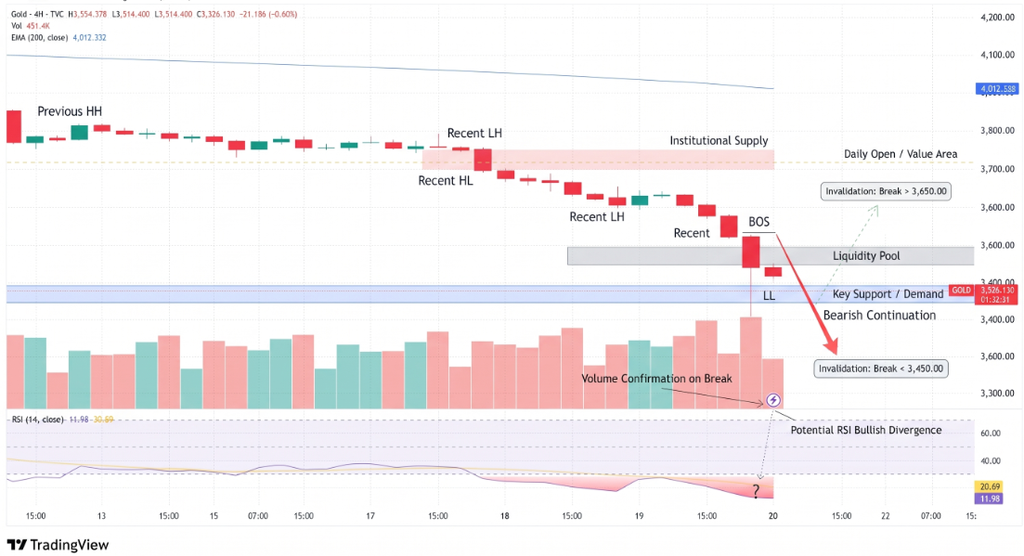
Gold prices extended their decline on Friday, putting bullion on track for its steepest weekly loss in eight months as a stronger US dollar and expectations of another Federal Reserve interest-rate increase weakened demand. Spot gold fell sharply, reaching a 14-month low, while US gold futures recorded even steeper losses. Investors increasingly expect the Fed to tighten monetary policy in December as inflation remains elevated. Higher borrowing costs and Treasury yields are reducing the appeal of gold, which generates no interest income. The sell-off has also been amplified by financial-market volatility and liquidation pressure, pushing precious metals lower across the board.
Gold Prices Sink as Dollar Strengthens
Gold prices dropped 2.3% to $3,539.74 per ounce by 23:21 ET (04:21 GMT), after touching their lowest level since September 2025 earlier in the session. US gold futures fell 4% to $3,537.45, reflecting mounting bearish pressure across the bullion market.
The precious metal was heading toward a weekly decline of approximately 9%, its largest since March. The latest weakness follows a prolonged period of selling as traders reassess the Federal Reserve’s monetary policy outlook and the potential consequences of persistently elevated inflation.
The US Dollar Index remained near a 19-month high, increasing the cost of dollar-denominated gold for international buyers. A stronger greenback typically reduces overseas demand for bullion by making purchases more expensive in other currencies.
Other precious metals also recorded substantial losses on Friday:
- Silver: Fell 6.6% to $41.45 per ounce.
- Platinum: Declined 3.4% to $1,304.60 per ounce.
- Gold futures: Dropped 4% to $3,537.45.
The simultaneous decline across precious metals indicates broader selling pressure rather than weakness isolated to gold.
Fed Rate Hike Bets Pressure Bullion
Expectations of tighter US monetary policy have intensified following the release of minutes from the Federal Reserve’s October meeting. Almost all policymakers indicated that additional interest-rate increases could be necessary to bring inflation under control.
Markets were pricing in a 97.3% probability of a 25-basis-point rate increase in December, while the likelihood of a larger 50-basis-point hike stood at 2.7%, according to the CME FedWatch Tool.
A basis point represents one-hundredth of a percentage point, meaning a 25-basis-point increase would raise the federal funds rate by 0.25 percentage points.
Federal Reserve officials have continued to express concerns about persistent inflation. Philadelphia Fed President Anna Paulson said Friday that another rate increase was necessary to address elevated price pressures, adding to the hawkish tone from policymakers.
Higher interest rates generally weigh on gold because they increase the returns available from interest-bearing assets, including government bonds. Consequently, investors may shift capital away from bullion toward assets offering more attractive yields.
Market Volatility Adds Selling Pressure
Gold’s decline has also been influenced by wider financial-market instability. Investors have been selling assets to raise cash, meet margin requirements and offset losses elsewhere in their portfolios.
Technology stocks have faced renewed pressure amid concerns about artificial intelligence valuations, contributing to a broader reassessment of risk across financial markets.
Despite gold’s traditional role as a safe-haven asset, these liquidity pressures have temporarily weakened its appeal. Elevated Treasury yields have further increased the opportunity cost of holding non-yielding bullion.
The market’s near-term direction will largely depend on upcoming US inflation data, Federal Reserve communications and movements in the dollar and Treasury yields.
Conclusion
Gold’s sharp weekly decline reflects a fundamental shift in monetary-policy expectations rather than a single market event. With traders increasingly anticipating a December rate hike, bullion faces continued pressure unless inflation moderates or the dollar weakens. A sustained recovery in gold will likely require a meaningful change in the Fed’s policy outlook or renewed demand for defensive assets.
Sources & Methodology
Primary-source standard: Market-moving facts should link to original data releases, regulator notices, company filings or official project announcements whenever available. Secondary reporting is used for additional context, not as a substitute for original evidence.
Page last reviewed: