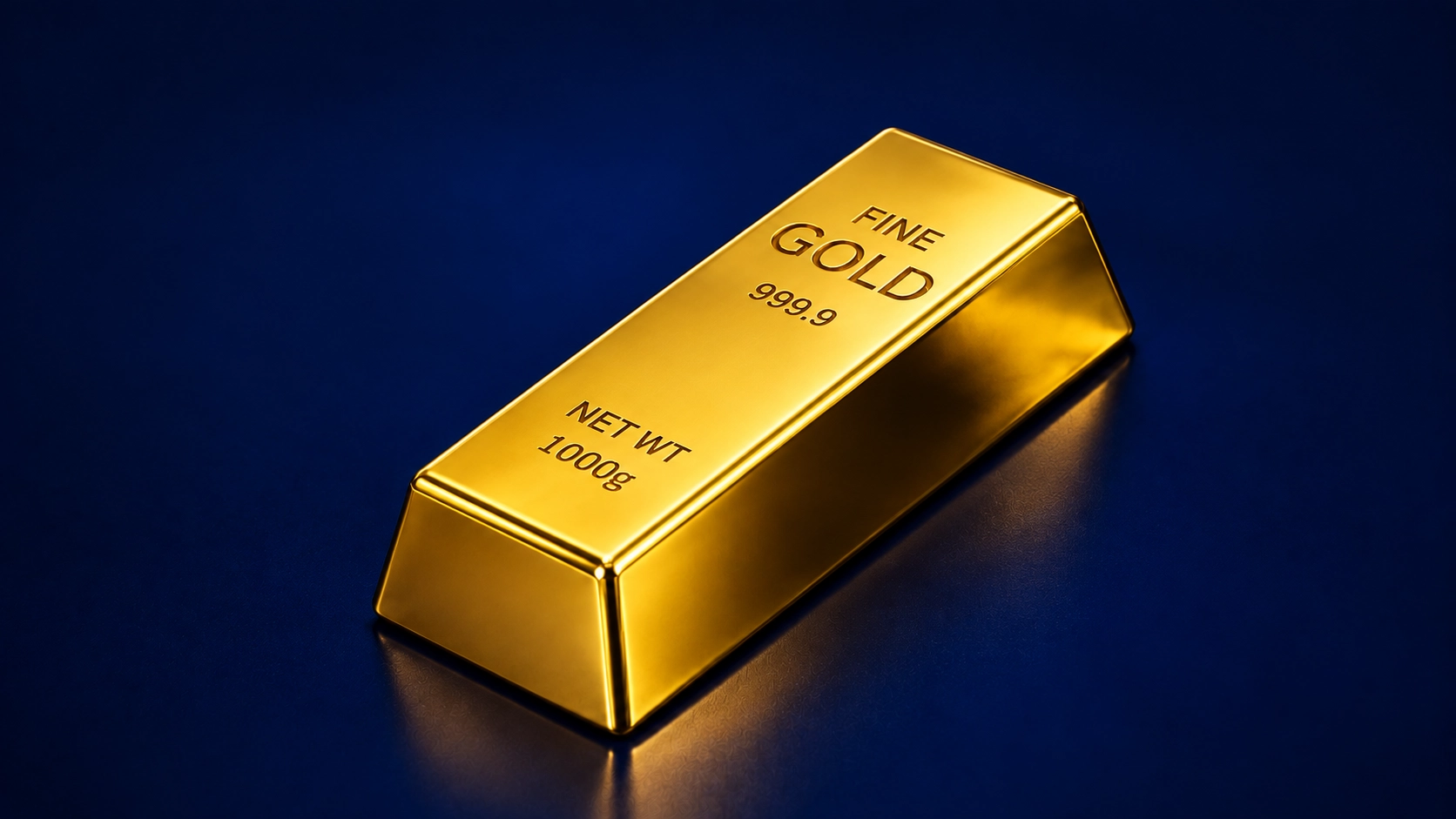
Gold prices slipped Monday as traders reassessed the Federal Reserve’s rate path following Chair Kevin Warsh’s hawkish inflation warning, while a fresh spike in oil prices added to inflation worries. Despite the pullback, bullion remains roughly 10% higher for August and is on track for its strongest monthly gain since January.
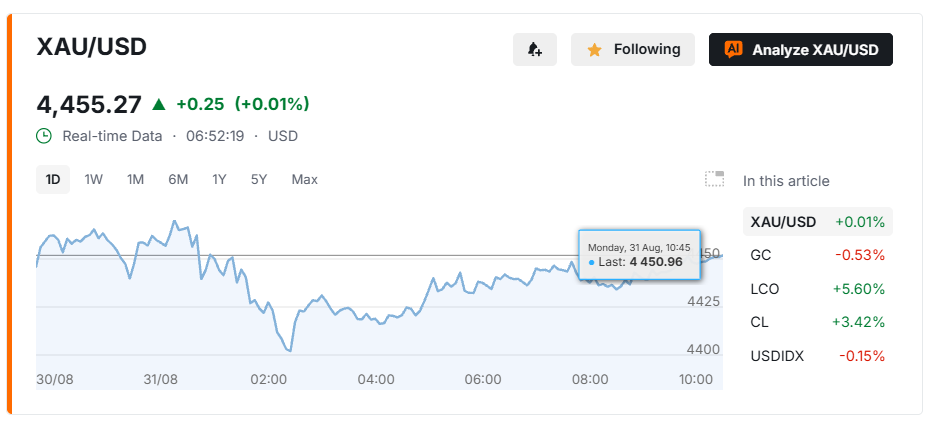
As of 05:01 ET, XAU/USD fell 0.4% to $4,438.30 an ounce, and Gold Futures dropped 0.9% to $4,488.41. Silver rose 1.0% to $67.04, while platinum slid 1% to $1,805.69. The US Dollar Index eased 0.1% to 99.6.
Warsh Inflation Warning Fuels Rate Bets
Gold tumbled 3.2% Friday, its steepest one-day drop since early June, after Warsh said the Fed still has work to do to return inflation to its 2% target. The remarks pushed traders to raise the odds of another rate increase, with markets now pricing roughly a 57% probability of a September hike, according to CME’s FedWatch tool.
Higher-rate expectations weigh on gold because the metal pays no interest, making yield-bearing assets like Treasury bonds comparatively more appealing. The dollar’s subsequent strength added further pressure, since a firmer greenback makes gold costlier for holders of other currencies. Analysts at ANZ said the retreat reflected that exact shift, noting Warsh’s warning reduced near-term demand even as they expect losses to stay contained. Key figures behind the move:
- 57% probability of a September rate hike, per CME’s FedWatch tool
- 3.2% single-day drop Friday, gold’s sharpest since early June
- 10% gain for gold so far in August
Treasury Moves Keep Debasement Trade Alive
Gold’s August rally gained momentum earlier this month after the U.S. Treasury unexpectedly stepped up purchases of longer-dated government bonds. The intervention pushed yields lower and weighed on the dollar, reviving concerns that mounting government debt could erode confidence in U.S. assets.
The episode renewed focus on the debasement trade, the theme that helped drive gold’s roughly 65% rally in 2025 as investors sought a hedge against widening deficits, currency depreciation and eroding purchasing power. ANZ views the hawkish policy shift as a risk to that demand but argues the underlying fiscal concerns remain firmly in place.
Oil Spike Adds to Inflation Pressure
Energy markets are compounding the inflation debate. Brent crude climbed to around $89.38 a barrel Monday, while U.S. crude reached $84.50, after American forces struck Iranian launchers on Larak Island Sunday. Iran then struck U.S. forces stationed in Jordan, according to reports, raising fears the conflict could widen and keep energy costs elevated longer.
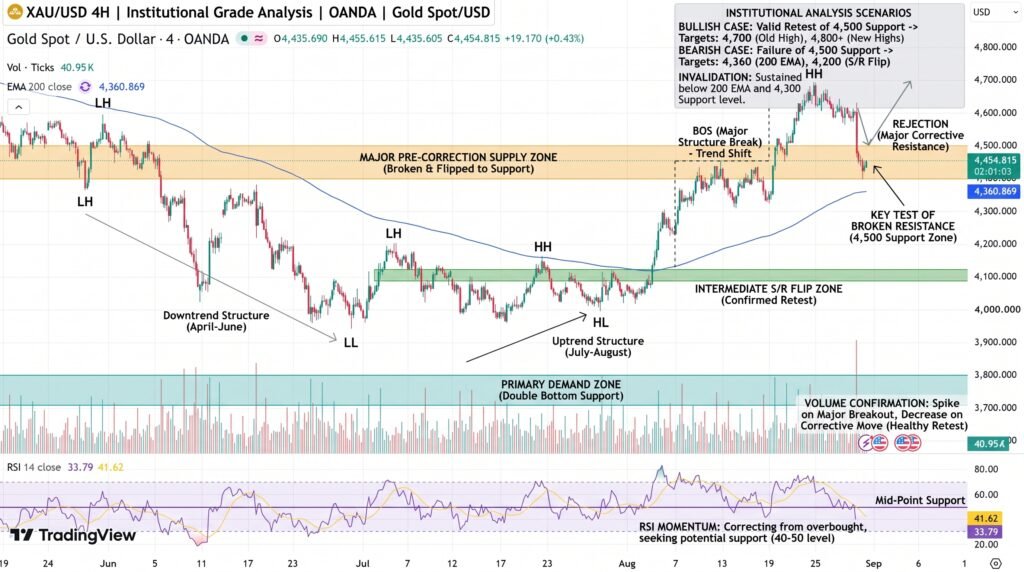
Gold had rebounded sharply from its late-June low near $3,942 before Friday’s selloff, as renewed central bank and investor buying pushed the metal well above the $4,000 threshold.
What Comes Next for Gold
Investors will watch upcoming U.S. employment and inflation data closely, since either report could reinforce the case for a September hike or unwind recent hawkish positioning. With rate expectations and fiscal concerns pulling in opposite directions, gold’s next move hinges on which force dominates first.
Sources & Methodology
Primary-source standard: Market-moving facts should link to original data releases, regulator notices, company filings or official project announcements whenever available. Secondary reporting is used for additional context, not as a substitute for original evidence.
Page last reviewed: