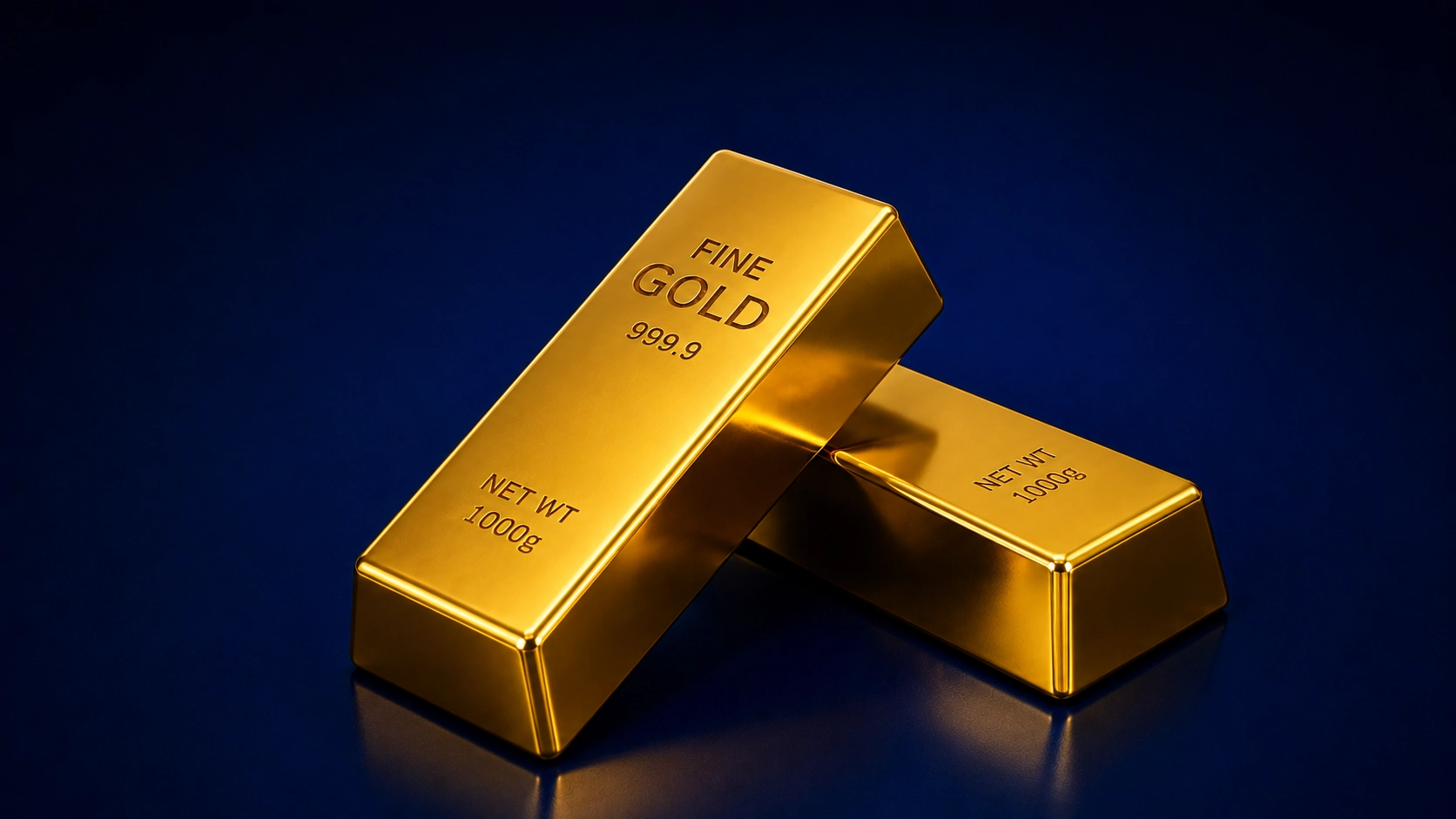
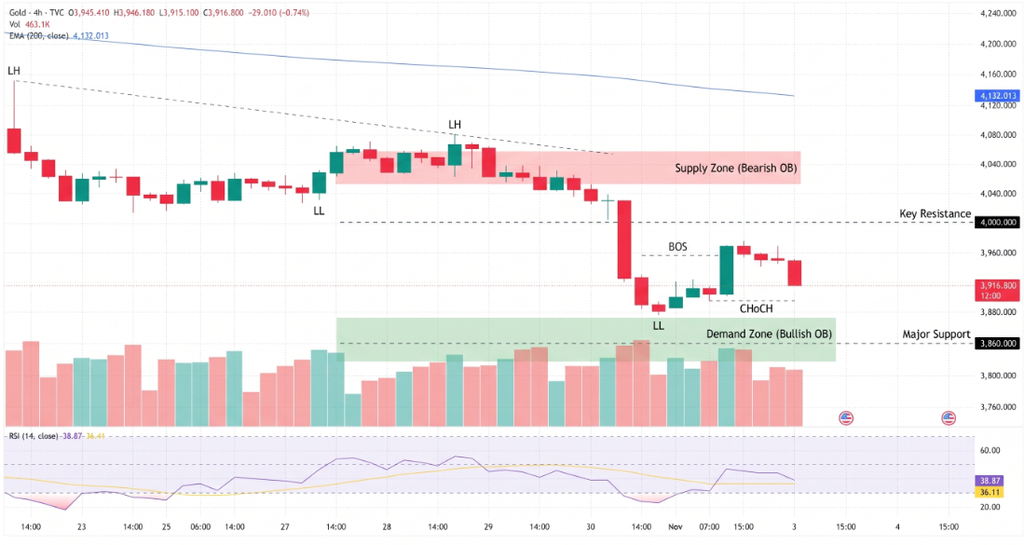
Gold retreated on Tuesday as renewed selling across precious metals offset support from hopes of diplomatic progress between the United States and Iran. Spot bullion fell below $3,950, while investors assessed the potential impact of the US midterm elections on inflation expectations, government finances and financial markets. At 00:55 ET, spot gold was down 0.7% at $3,920.44 an ounce, while US gold futures lost 1% to $3,929.67. The move followed a 1.9% rebound on Monday, when falling oil prices eased concerns about further monetary tightening.
Iran peace hopes ease oil price pressure
Gold’s latest retreat followed a sharp recovery in the previous session, supported by signs that diplomatic efforts involving Washington and Tehran could gain momentum. Iranian President Masoud Pezeshkian said the government had received additional authority from Supreme Leader Mojtaba Khamenei to pursue negotiations. US President Donald Trump also indicated that progress was possible.
The developments pushed Brent crude down more than 7% on Monday before prices stabilised. Brent settled at $104.77 a barrel, while US WTI crude ended at $96.46. Lower energy prices can reduce inflation pressure and weaken expectations of additional interest-rate increases, supporting gold by reducing the opportunity cost of holding a non-yielding asset.
However, diplomatic progress remains uncertain. The conflict has disrupted energy markets and raised concerns about inflation, while disagreements over sanctions, security guarantees and regional access remain obstacles to a lasting agreement.
US midterm elections put gold in focus
Investors are also watching the US midterm elections for potential changes in the political balance of power. The outcome could influence expectations for government spending, fiscal deficits and economic policy, all of which can affect demand for gold as a store of value.
Higher interest rates remain a major obstacle. Because bullion does not pay interest, investors may favour bonds and other yield-bearing assets when borrowing costs rise. Reuters reported that markets were pricing in a 74% probability of a Federal Reserve rate increase in December, keeping pressure on precious metals despite easing oil prices.
Gold fell 6.8% in October, breaking below the psychologically important $4,000 level and reaching a one-year low. Technology-stock weakness also contributed to selling as some investors liquidated bullion positions to cover losses elsewhere.
Precious metals extend Tuesday’s decline
Selling spread across the metals complex at the supplied 00:55 ET snapshot:
- Silver fell 2.8% to $49.2455 an ounce.
- Platinum declined 1% to $1,432.32.
- Palladium dropped 1.6% to $952.15.
- The US Dollar Index slipped 0.1% to 101.75.
Despite the weakness, some indicators suggest selling may be becoming stretched. Gold’s relative strength index, or RSI, entered oversold territory last week, a condition that can precede a technical rebound but does not guarantee one. Physical demand has also offered support, with ANZ pointing to increased buying by Chinese households during the recent price decline.
Conclusion
Gold remains caught between improving diplomatic prospects and persistent concerns about interest rates, inflation and geopolitical risk. Cheaper oil could reduce pressure on central banks and support bullion, while uncertainty surrounding the US election may renew demand for defensive assets. However, a sustained recovery will depend on whether buying interest strengthens and the Federal Reserve’s rate outlook becomes less restrictive. Renewed military escalation or stronger expectations of monetary tightening could trigger another decline.
Sources & Methodology
Primary-source standard: Market-moving facts should link to original data releases, regulator notices, company filings or official project announcements whenever available. Secondary reporting is used for additional context, not as a substitute for original evidence.
Page last reviewed: