


The Bank of Japan’s decision to lift interest rates to their highest level in 30 years was expected to stabilize the currency. Instead, it delivered the opposite result. The Japanese yen slid sharply, touching 157.67 per U.S. dollar, its weakest level in decades, underscoring how fragile confidence remains in Japan’s monetary outlook.
Japanese officials reacted swiftly. Atsushi Mimura, Japan’s vice finance minister for international affairs, warned that authorities were prepared to take “appropriate action” against what he described as one-sided and sharp currency moves. The warning followed steep declines not only against the dollar but also the euro at 184.90 and the Swiss franc at 198.08. Market participants widely see 160 per dollar as a potential intervention line.
The selloff highlights a core problem: raising rates alone is no longer enough to support the yen when investors doubt the policy path ahead.
Bitcoin Gains as Currency Stress Builds
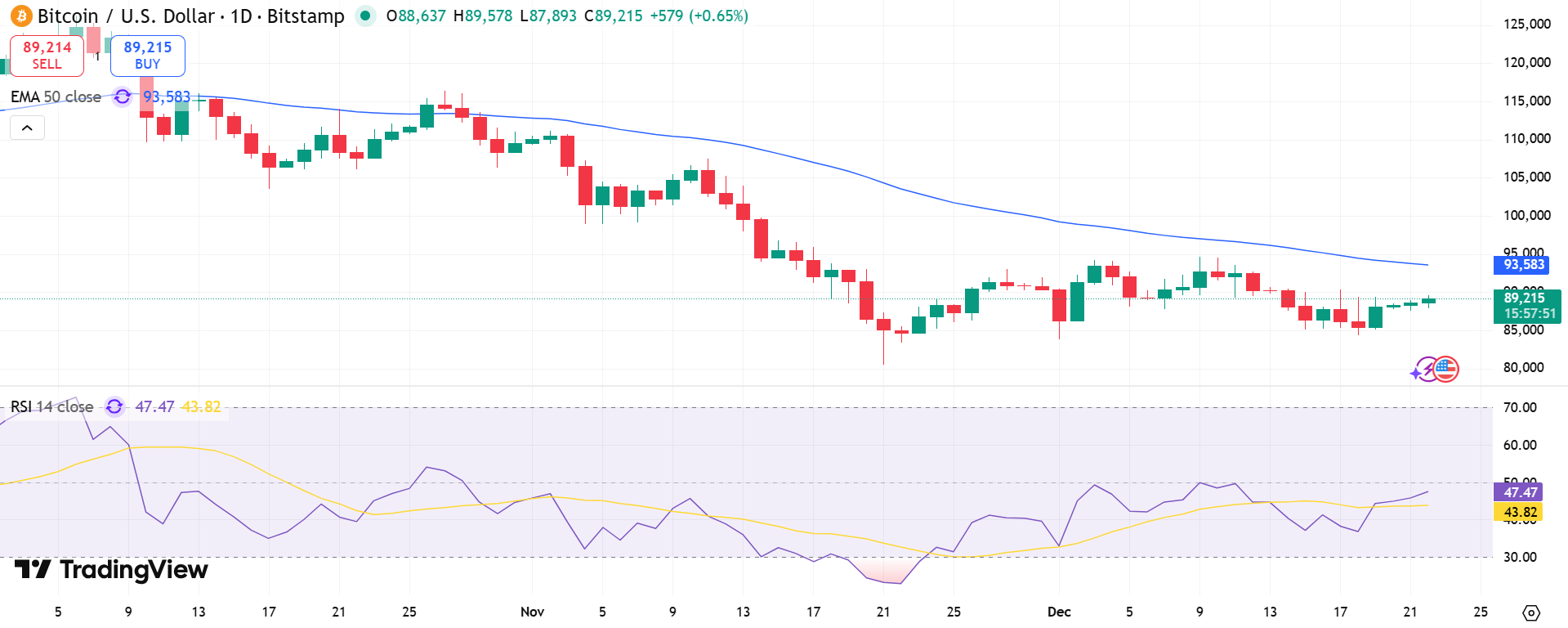
The yen’s weakness briefly spilled into crypto markets, where Bitcoin saw a modest rebound. Bitcoin traded near $88,949, up 1.04% on the day, as some investors sought alternatives amid currency volatility. Over the past month, the world’s largest cryptocurrency is up 5.9%, though it remains down 0.78% on the week.
The link between a falling yen and Bitcoin demand is not new. Periods of sharp currency depreciation often prompt speculative flows into digital assets. Still, analysts caution against reading too much into the latest move. Any sustained rally depends heavily on Japan’s next steps.
Key market signals shaping Bitcoin’s outlook include:
- Potential yen intervention that could strengthen the currency
- Global risk appetite, which remains uneven
- Interest-rate differentials favoring the U.S. dollar
- Short-term speculative positioning in crypto markets
If Japanese authorities step in decisively, some of the capital that flowed into Bitcoin could reverse just as quickly.
Why Higher Rates Failed to Lift the Yen
Several structural factors explain why the BOJ’s rate hike backfired. First, the move was fully priced in. Overnight index swaps had implied nearly 100% odds of a hike, triggering a classic “buy the rumor, sell the news” reaction once the decision became official.
Second, Japan’s real interest rates remain deeply negative, estimated around -2.15%, compared with roughly +1.44% in the United States. This gap continues to fuel carry trades, where investors borrow yen cheaply and invest in higher-yielding assets abroad.
Finally, communication missteps compounded the damage. Robin Brooks, a senior fellow at the Brookings Institution, criticized BOJ Governor Kazuo Ueda’s press remarks for lacking clarity on future policy direction. Without firm guidance, markets were left uncertain, accelerating the yen’s decline.
For now, the BOJ faces a delicate balance: defending the currency without derailing fragile economic momentum.

