

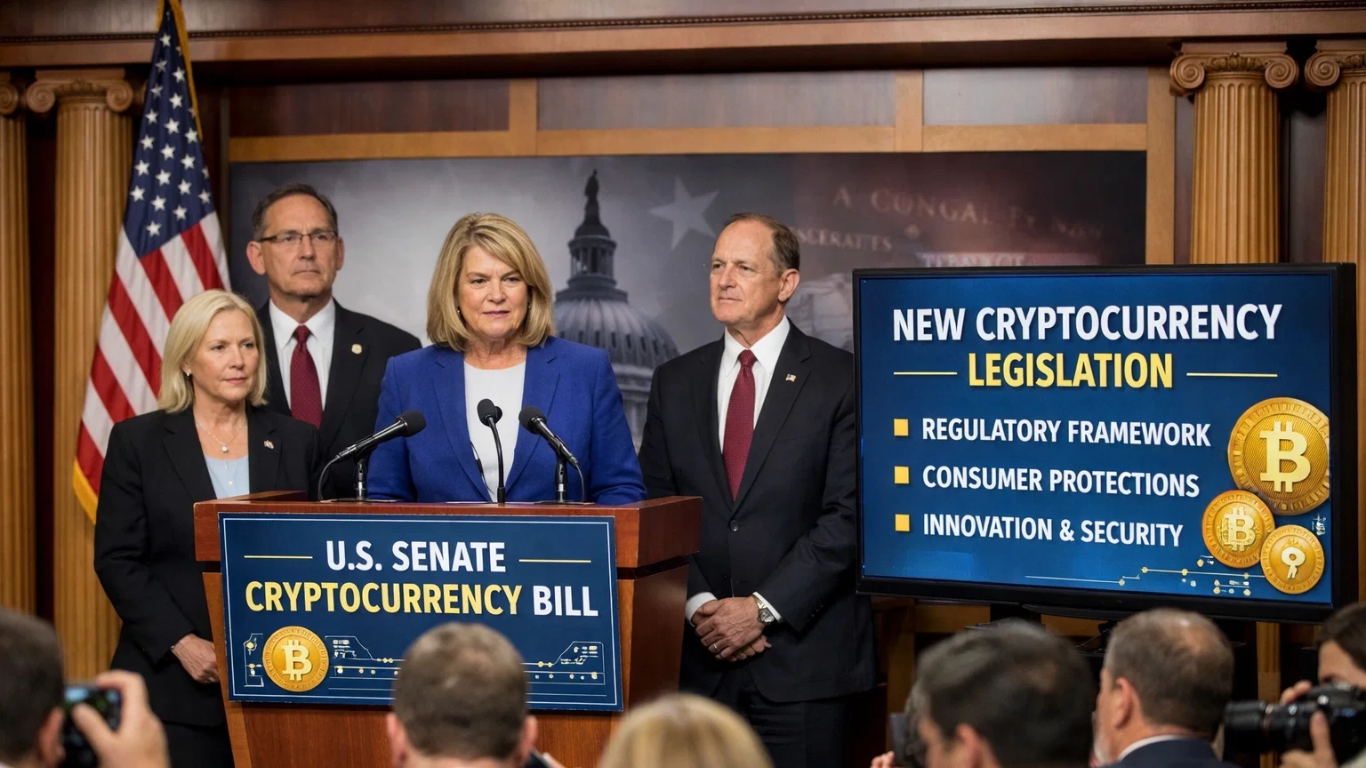
The U.S. Senate Agriculture Committee has released an updated draft of its long-awaited crypto market structure bill ahead of a scheduled January 27 markup, pushing the legislation forward despite the absence of bipartisan backing. The move signals growing urgency among Republican lawmakers to establish a federal framework for digital asset regulation, even as negotiations with Democrats remain unresolved.
Committee Chairman John Boozman confirmed the release, positioning the draft as an evolution of earlier bipartisan proposals that sought to grant the Commodity Futures Trading Commission (CFTC) expanded authority over digital asset markets. However, talks broke down over key provisions, leaving Democrats unwilling to support the current version.
The decision to proceed without cross-party consensus highlights a widening divide in Congress over how cryptocurrencies should be regulated, particularly regarding consumer protections, enforcement authority, and jurisdictional boundaries.
Key changes reshape regulatory oversight
The revised draft reinforces the CFTC’s role as the primary regulator for most digital assets, particularly commodities such as Bitcoin, while outlining clearer registration and compliance standards for crypto exchanges, brokers, and custodians. Lawmakers argue that the approach offers regulatory certainty to an industry that has long operated in legal gray areas.
A central legislative component remains the CLARITY Act, which aims to establish a clear process for classifying digital assets and determining whether oversight falls under the Securities and Exchange Commission (SEC) or the CFTC. This distinction is critical, as regulatory ambiguity has been cited as a barrier to innovation and institutional participation.
Key elements of the draft include:
- Expanded CFTC authority over spot crypto markets
- Mandatory registration for crypto service providers
- Defined asset classification standards under federal law
- Enhanced disclosure and compliance requirements
Despite these additions, Democrats have raised concerns about enforcement strength and investor safeguards, arguing the bill may tilt too heavily toward industry interests.
Political pressure builds amid stalled talks
The Senate Banking Committee’s parallel crypto legislation remains stalled, weighed down by disagreements over stablecoin yield structures and consumer protections. Sources indicate the committee may delay its markup until late March as lawmakers shift focus toward President Donald Trump’s housing policy agenda.
Meanwhile, the White House has publicly urged Congress to accelerate crypto legislation, citing the need to preserve U.S. competitiveness in global financial innovation. Speaking at the World Economic Forum in Davos, President Trump said he hoped to sign a comprehensive crypto market bill soon, framing it as a pathway to expanding financial access and capital formation in the United States.
Still, analysts warn that passing a partisan bill could complicate implementation and invite legal challenges. Without bipartisan alignment, the regulatory future of U.S. crypto markets remains uncertain, even as momentum for reform continues to build.

