
Prediction market platform Polymarket has launched a comprehensive review of its promotional content after allegations surfaced that creators showcased simulated trades disguised as real activity.
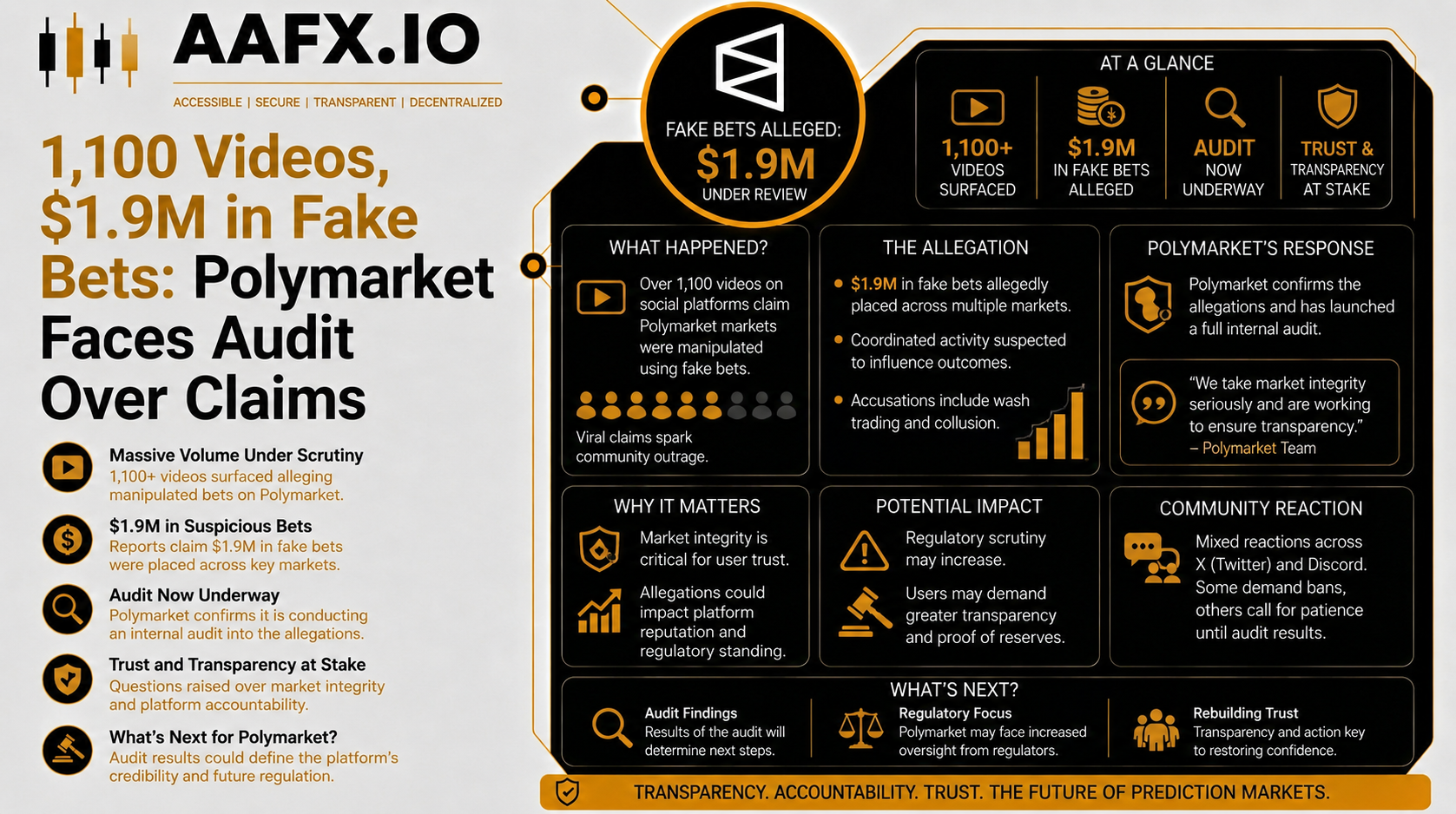
The move follows an investigation that claimed more than 1,100 promotional videos featured fake wagers totaling approximately $1.9 million.
The controversy has drawn significant attention because prediction markets rely heavily on transparency and user trust. Promotional content that appears to display successful trading activity can influence user behavior, making accuracy and disclosure critical.
Reports indicate that many creator videos portrayed large profitable bets on versions of the platform that were not connected to real market activity. The findings prompted Polymarket to begin an internal audit aimed at examining how promotional campaigns were produced, approved, and distributed.
The review arrives at a time when prediction markets are gaining wider recognition among retail traders, institutions, and political analysts. As adoption expands, scrutiny of marketing practices is becoming increasingly important.
Fake Trades Raise Trust Concerns
According to reports, investigators reviewed roughly 1,100 creator-generated videos and found that a large percentage appeared to use replica versions of the Polymarket interface. These videos allegedly displayed trades and profits that never occurred on the actual platform.
One creator reportedly showcased 145 wagers worth nearly $410,000 over several months, yet investigators concluded the transactions were not real. Collectively, the videos displayed approximately $1.9 million in wagers that lacked corresponding activity on the platform.
Key findings include:
- More than 1,100 promotional videos were reviewed.
- Roughly 70% allegedly used simulated trading interfaces.
- About $1.9 million in displayed wagers were reportedly fictitious.
- One creator appeared to show 145 trades worth $410,000.
- Questions emerged regarding content oversight and disclosure practices.
For users, the issue extends beyond marketing. Many traders rely on platform visibility, trading volume, and community sentiment when evaluating opportunities. If promotional material exaggerates success rates or activity levels, it can distort perceptions and influence decision-making.
The allegations also highlight broader concerns surrounding influencer-driven financial content, where entertainment and promotion can blur the line between demonstration and reality.
Compliance Questions Resurface
The latest controversy has revived attention on Polymarket’s regulatory history. In 2022, the platform’s operator reached a settlement with U.S. regulators regarding event-based contracts that were deemed non-compliant under existing rules.
While the current allegations focus on marketing practices rather than trading operations, they introduce fresh questions about governance, internal controls, and accountability. Industry observers expect the audit to examine several areas:
- Creator partnership policies.
- Approval processes for promotional content.
- Disclosure requirements for simulated trades.
- Internal compliance monitoring systems.
- Oversight of marketing expenditures and campaigns.
The outcome of the audit could have implications beyond Polymarket itself. Prediction markets have experienced growing adoption as blockchain technology expands into mainstream finance and forecasting applications. Any findings that reveal weak controls could affect confidence across the sector.
Ultimately, the platform’s response will be judged by the transparency of its investigation and the corrective actions that follow.
A detailed and independently verified report could help restore credibility, while incomplete disclosures may intensify concerns among users, partners, and regulators. In an industry where trust is a core asset, the audit may prove as important as the allegations that triggered it.
