

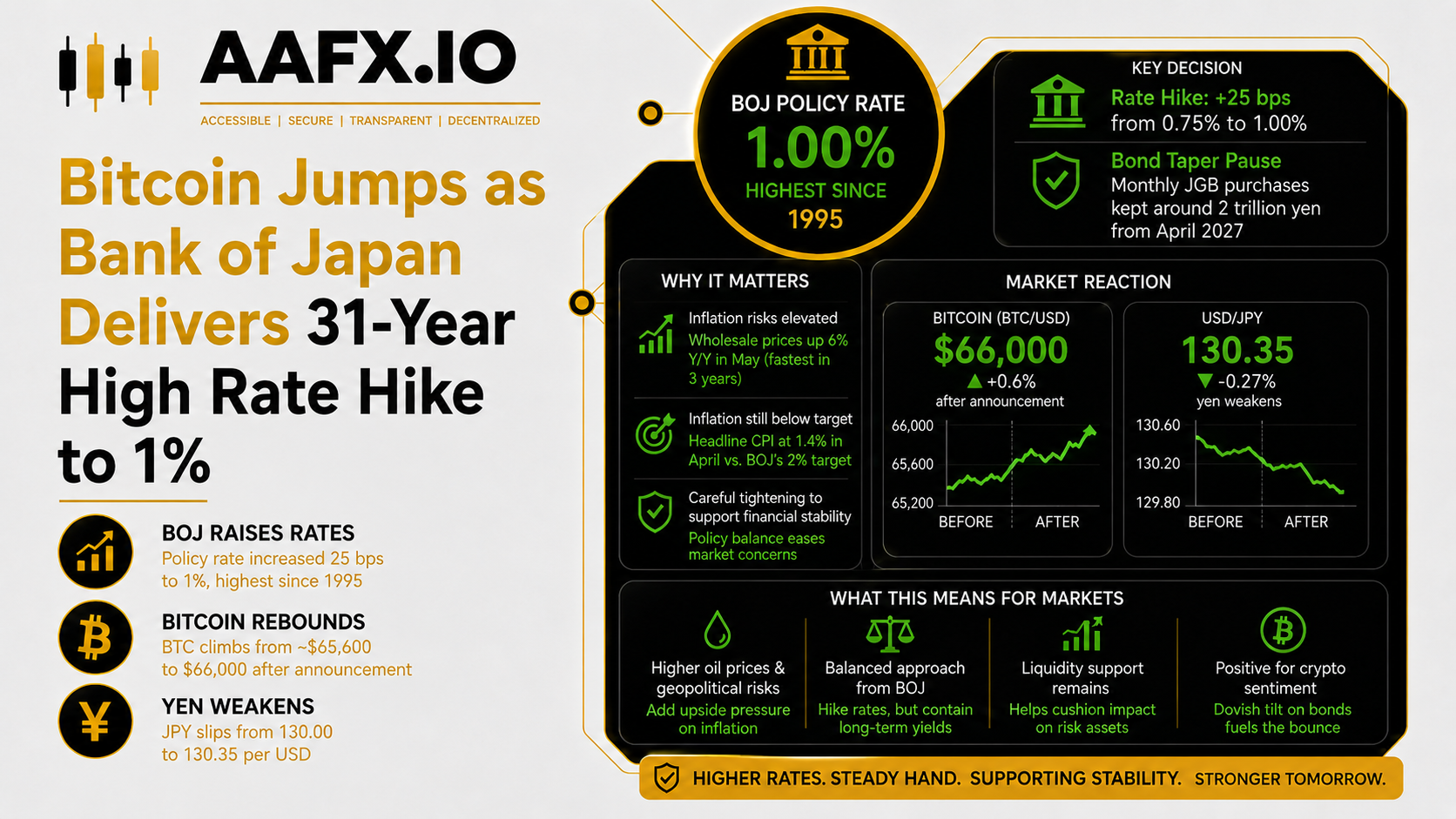
Bitcoin rebounds above $66,000 after the Bank of Japan raises rates to 1%, its highest level since 1995, while pausing bond tapering measures.
BOJ Raises Rates to Highest Since 1995
Bitcoin regained momentum on June 16 after the Bank of Japan (BOJ) raised its benchmark interest rate by 25 basis points to 1%, marking the country’s highest borrowing cost in 31 years. The increase, from 0.75%, was largely expected by markets and represents another step in Japan’s campaign to contain inflation.
The BOJ’s decision comes after years of ultra-low interest rates that helped fuel global demand for equities, bonds, and other risk assets. Policymakers warned that inflation risks remain elevated, particularly due to higher energy prices and geopolitical tensions that are feeding into consumer costs faster than anticipated.
Recent economic data highlight the challenge facing Japan:
- Wholesale prices rose more than 6% year-over-year in May, the fastest increase in three years.
- Consumer inflation measured 1.4% in April, still below the BOJ’s 2% target.
- The benchmark interest rate now stands at 1%, the highest level since 1995.
Bitcoin Defies Traditional Market Logic
Rate increases typically pressure risk assets because higher borrowing costs reduce liquidity and make safer investments more attractive. Yet Bitcoin moved in the opposite direction.
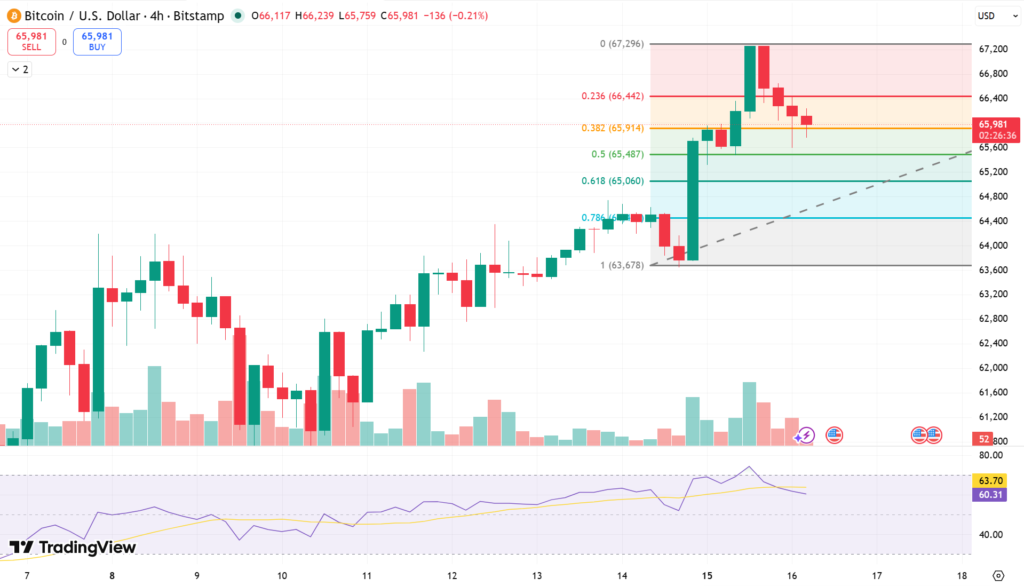
After initially falling during the Asian trading session, Bitcoin rebounded sharply, climbing from approximately $65,600 to $66,000 following the announcement. The Japanese yen also weakened modestly, slipping from 130 per U.S. dollar to around 130.35.
The market’s positive response appears to be linked to a critical detail in the BOJ’s statement: the central bank decided to pause its bond tapering program.
That decision softened the impact of the rate increase by signaling that policymakers remain cautious about pushing long-term borrowing costs significantly higher. Investors interpreted the move as an effort to preserve financial stability while still combating inflation.
Bond Purchase Pause Calms Investors
The BOJ indicated it would maintain monthly purchases of Japanese government bonds at roughly 2 trillion yen beginning in April 2027, easing concerns that yields could rise too quickly.
By slowing the reduction in bond purchases, the central bank is effectively capping upward pressure on long-term interest rates. Lower long-term yields can support liquidity conditions, benefiting financial markets and helping offset the restrictive effects of higher short-term rates.
For cryptocurrency investors, this policy mix created a favorable backdrop. While the headline rate hike signaled tighter monetary policy, the continued support for bond markets suggested that liquidity conditions may not tighten as aggressively as initially feared.
Bitcoin’s rebound underscores how digital assets increasingly react not only to interest-rate decisions themselves but also to the broader policy signals surrounding liquidity and market stability. The BOJ’s latest move demonstrates that even in a higher-rate environment, nuanced central bank policies can still provide support for risk-sensitive assets such as Bitcoin.
