

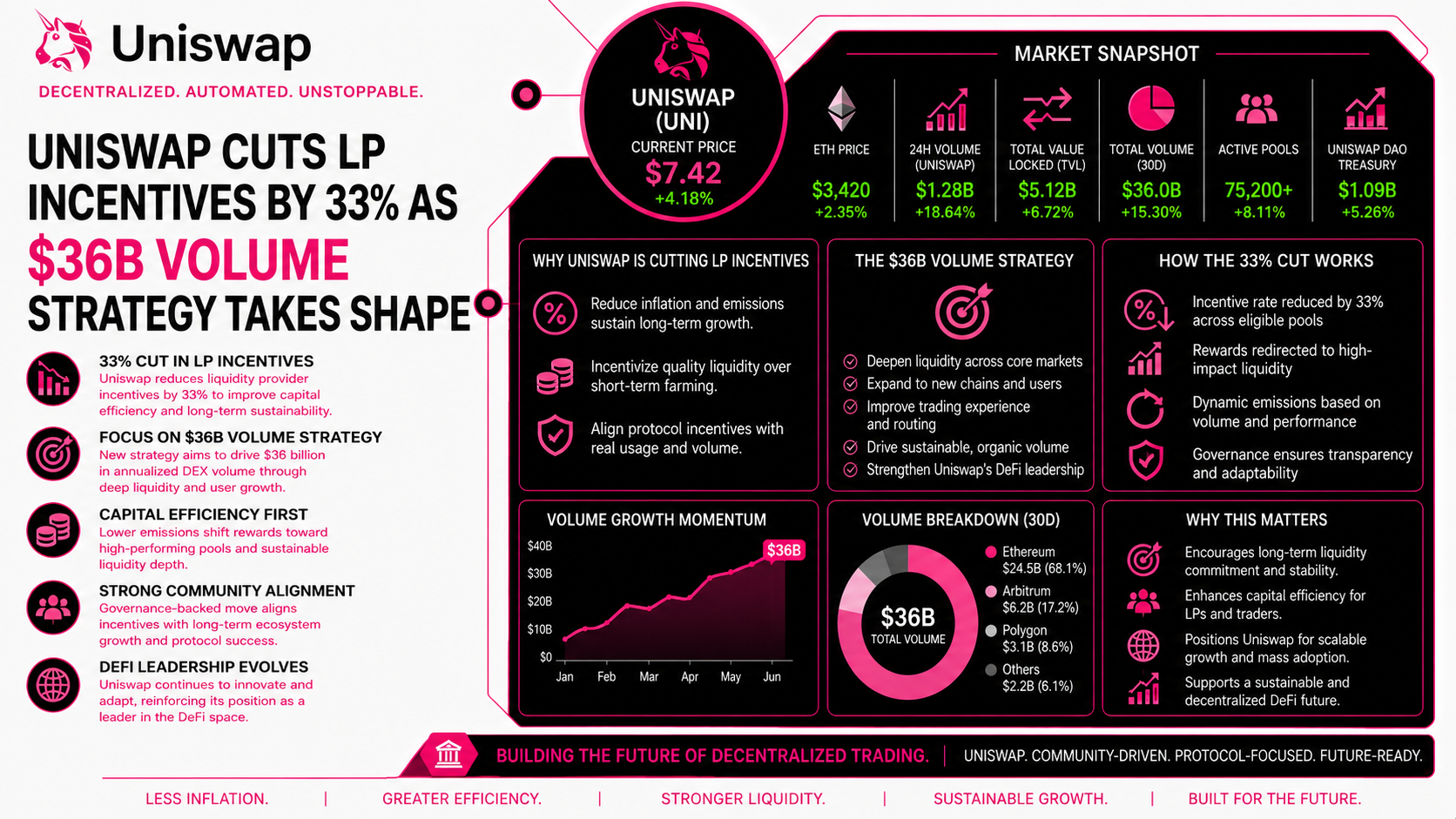
Uniswap plans to cut LP incentives by up to 33% while leveraging $36B monthly volume, lower trading costs, and deeper stablecoin liquidity.
Uniswap Shifts DeFi Incentive Model
Uniswap is making a significant strategic change that could redefine how decentralized exchanges compete in the evolving decentralized finance (DeFi) market. The protocol has proposed reducing V4 liquidity provider (LP) fee incentives by as much as 33%, signaling a move away from the aggressive reward structures that helped fuel DeFi’s early growth.
The decision comes at a time when competition among decentralized exchanges is intensifying. Protocols are increasingly challenged to balance sustainable growth with attractive rewards for liquidity providers. Rather than continuing to offer higher incentives, Uniswap is focusing on improving trading efficiency and execution quality.
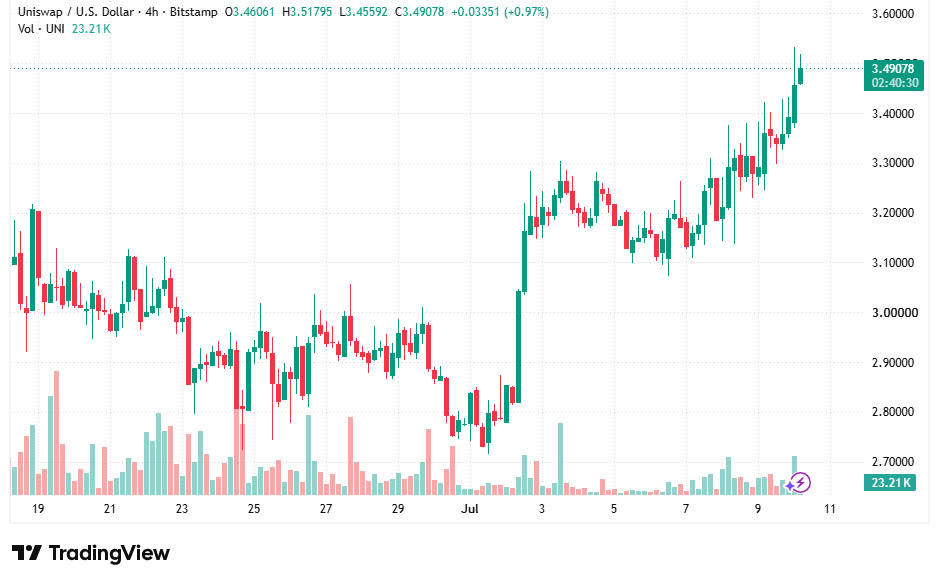
Despite the proposed reduction, Uniswap remains one of the dominant players in the sector. At the time of the proposal, the protocol managed approximately $3.02 billion in total value locked (TVL) and processed nearly $36 billion in monthly trading volume. These figures highlight the platform’s ability to maintain market leadership even as competitors introduce alternative liquidity programs.
The strategy reflects a broader industry trend where platforms seek long-term sustainability instead of relying heavily on incentive-driven growth.
Focus on Trading Efficiency
Under the previous V3 framework, Uniswap allocated a larger share of trading-related rewards to liquidity providers. That approach successfully attracted capital during the rapid expansion of decentralized finance, but it also increased costs for the protocol.
The new proposal is based on a different assumption: better trade execution can become a stronger competitive advantage than higher rewards.
Uniswap expects several operational improvements to support this transition:
- Lower trading costs for users
- Tighter bid-ask spreads across pools
- More efficient capital deployment
- Improved execution quality for large transactions
By enhancing these core trading metrics, the protocol aims to attract greater trading activity. If volume growth accelerates sufficiently, higher transaction throughput could compensate for lower returns paid to liquidity providers.
However, this strategy introduces clear risks. Liquidity providers have the flexibility to move funds between competing platforms. If alternative decentralized exchanges offer more attractive yields, Uniswap could face pressure on liquidity depth and market share.
Stablecoin Liquidity Becomes Key
A major component of Uniswap’s plan involves strengthening stablecoin infrastructure. Through integration with the Peg Stability Module, traders can access zero-slippage routing between USDS, DAI, and USDC. This development improves liquidity efficiency while reducing execution costs for users.
The integration also enhances Sky’s FX Layer by transforming stablecoin parity routing into a practical settlement framework. As a result, larger trades can be executed with minimal price impact, creating a smoother trading experience.
Key expected benefits include:
- Deeper stablecoin liquidity pools
- Reduced slippage on large trades
- Faster and more efficient routing
- Lower transaction friction
Ultimately, Uniswap’s success will depend on market adoption rather than protocol engineering alone. If traders respond positively to lower costs and improved execution, the exchange could further strengthen its position as the leading decentralized trading platform. If not, competing DEXs may attract liquidity by continuing to offer more generous incentives, reshaping the competitive landscape of DeFi once again.
