

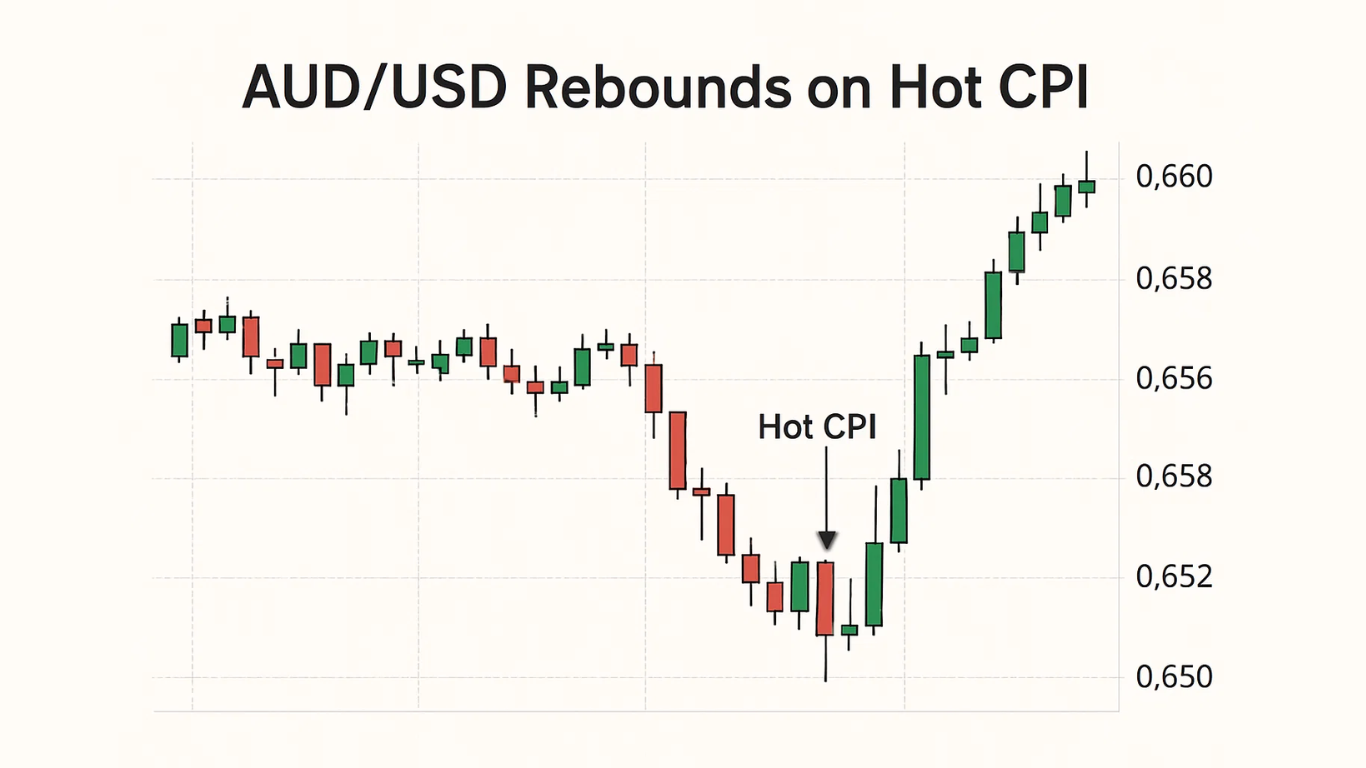
The Australian Dollar strengthened on Wednesday after hotter-than-expected inflation data signaled the Reserve Bank of Australia may be in no rush to ease policy. October CPI rose 3.8% year over year, topping forecasts of 3.6% and pushing AUD/USD toward 0.6500, its strongest intraday level of the week. The move helped unwind earlier declines, though the pair remains toward the lower end of its 0.6400–0.6700 trading corridor.
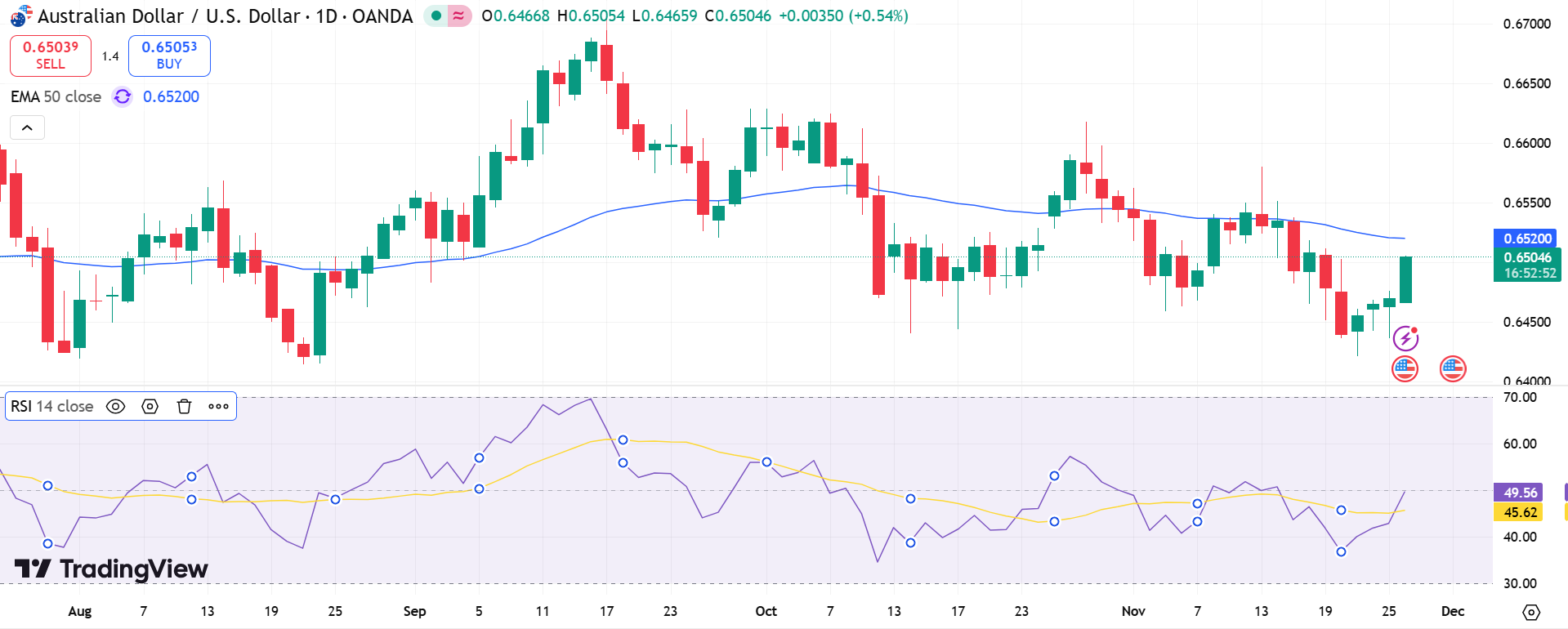
The firmer inflation print has revived speculation that the RBA will need to maintain a tighter stance for longer, limiting expectations for near-term rate cuts. Still, AUD/USD has struggled to break above key technical levels, including the 200-day SMA at 0.6460, which continues to frame market sentiment.
Technical risks remain tilted to the downside:
- A close below 0.6460 would expose the November low at 0.6421
- Further losses could target 0.6414 (August) and 0.6372 (June)
- Resistance sits at 0.6532 (100-day SMA) and 0.6546 (55-day SMA)
Momentum indicators show a market searching for direction, with RSI hovering near 40 and ADX edging toward 15, signaling an early but uncertain trend buildup.
Economic Data Paints a Mixed Picture
Australia’s broader economic backdrop remains steady but unspectacular. Manufacturing PMI climbed to 51.6 in November, while Services PMI edged up to 52.7, underscoring modest expansion. Retail Sales gained 4.3% year over year, and the nation’s trade surplus widened to A$3.94 billion, supported by resilient commodity exports.
The labor market also offered encouraging signs. Unemployment dipped to 4.3%, while Employment Change rose 42,200 in October, marking a rebound from earlier softness. These data points suggest the economy is cooling gradually, not abruptly.
Inflation, however, remains the central challenge. Last month’s firm quarterly CPI pushed the RBA into a more hawkish posture, and October’s reading reinforces the need for patience before contemplating easing.
China and RBA Keep Market on Edge
China’s uneven recovery continues to weigh on the Australian outlook. Third-quarter GDP expanded 4.0%, but activity indicators—including a 50.6 manufacturing PMI and 4.9% industrial production—signal fading momentum. The People’s Bank of China held loan prime rates steady, reflecting a preference for stability rather than stimulus.
RBA policy remains cautious. Rates held at 3.60% in November, with officials reiterating that inflation is still too high to consider cuts. Markets now assign a 93% probability of no change at the December meeting.
For AUD/USD, the backdrop remains tricky: China’s slow recovery, uncertain global demand, and technical pressure limit upside potential, even as firmer domestic inflation provides intermittent support.

