

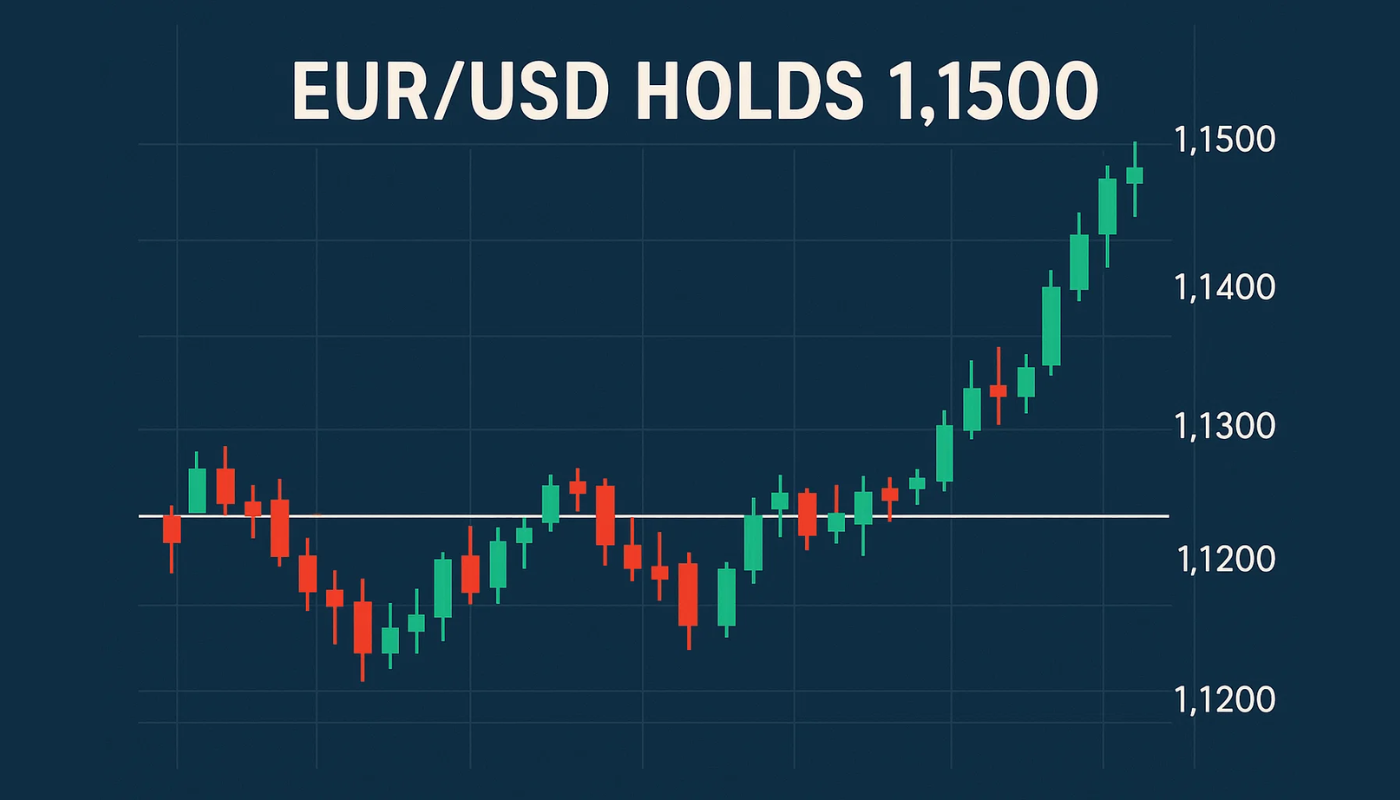
The EUR/USD pair stabilized above 1.1500 on Monday after ending the previous week lower, supported by dovish signals from Federal Reserve officials that boosted expectations for a December rate cut. Those comments limited additional U.S. dollar strength and helped the euro regain some footing despite lingering macroeconomic headwinds.
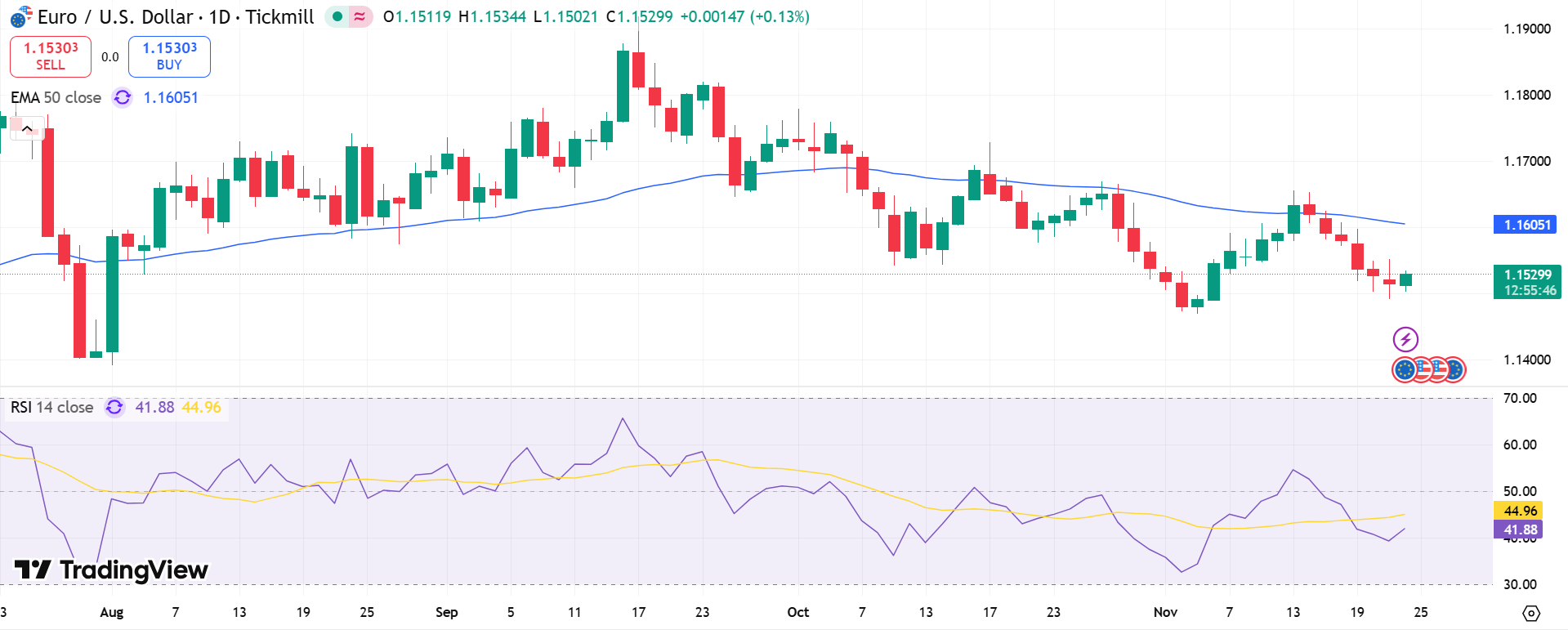
Technically, the pair remains under pressure. The 20-period SMA continues to slide below the 50-, 100-, and 200-period SMAs, reinforcing a bearish structure. The RSI sits at 46, recovering from oversold conditions but still beneath the 50 midline—a sign that upside momentum remains constrained.
Key levels shaping near-term EUR/USD direction:
- Resistance: 1.1568 (23.6% Fibonacci), 1.1629 (38.2% Fibonacci)
- Support: 1.1500 (round level), 1.1470 (swing low), 1.1450 and 1.1400 (static supports)
These technical markers suggest that rebound attempts remain corrective rather than trend-defining, with buyers needing a clear catalyst to alter the broader trajectory.
Mixed U.S. Jobs Data Offers Limited Support
Fresh labor-market data from the U.S. offered a nuanced backdrop for dollar traders. The Bureau of Labor Statistics reported that Nonfarm Payrolls increased by 119,000 in September, far exceeding expectations for 50,000 and reversing a 4,000 decline recorded in August. However, downward revisions dented the report’s overall strength: July’s payrolls were trimmed by 7,000, and August’s figures were revised down by 26,000 to show a net loss.
The unemployment rate edged higher to 4.4%, up from 4.3%, indicating some cooling in labor conditions. Still, the market’s immediate reaction to the data was limited. A risk-averse mood across global markets kept the dollar supported, preventing EUR/USD from mounting a stronger rebound during Thursday’s session.
Macroeconomic uncertainty remains a central theme for FX markets, with traders increasingly focused on whether upcoming data can justify the market’s roughly 70% pricing for a December rate cut.
Eurozone Data Softens as Focus Turns to PMIs
European data did little to strengthen the euro. Germany’s early November PMI readings pointed to weakening momentum: the Services PMI slipped to 52.7 from 54.6, while Manufacturing PMI fell to 48.4 from 49.6. Hamburg Commercial Bank’s Chief Economist, Cyrus de la Rubia, warned the German economy was “limping toward marginal growth at best” in the fourth quarter.
Later today, U.S. S&P Global PMIs will be closely watched. If both Manufacturing and Services readings land above 50, the dollar may extend its strength into the weekend, putting renewed pressure on EUR/USD. Conversely, a sub-50 print in either measure could revive euro buying and offer the pair an opportunity to deepen its recovery.

