

The euro edged higher on Wednesday, keeping EUR/USD comfortably above the 1.1800 handle as a wobble in the U.S. dollar gave the single currency breathing room ahead of crucial eurozone inflation data. Trading in the European session was calm but constructive, with investors reluctant to take large bets before the release of the preliminary Harmonized Index of Consumer Prices.
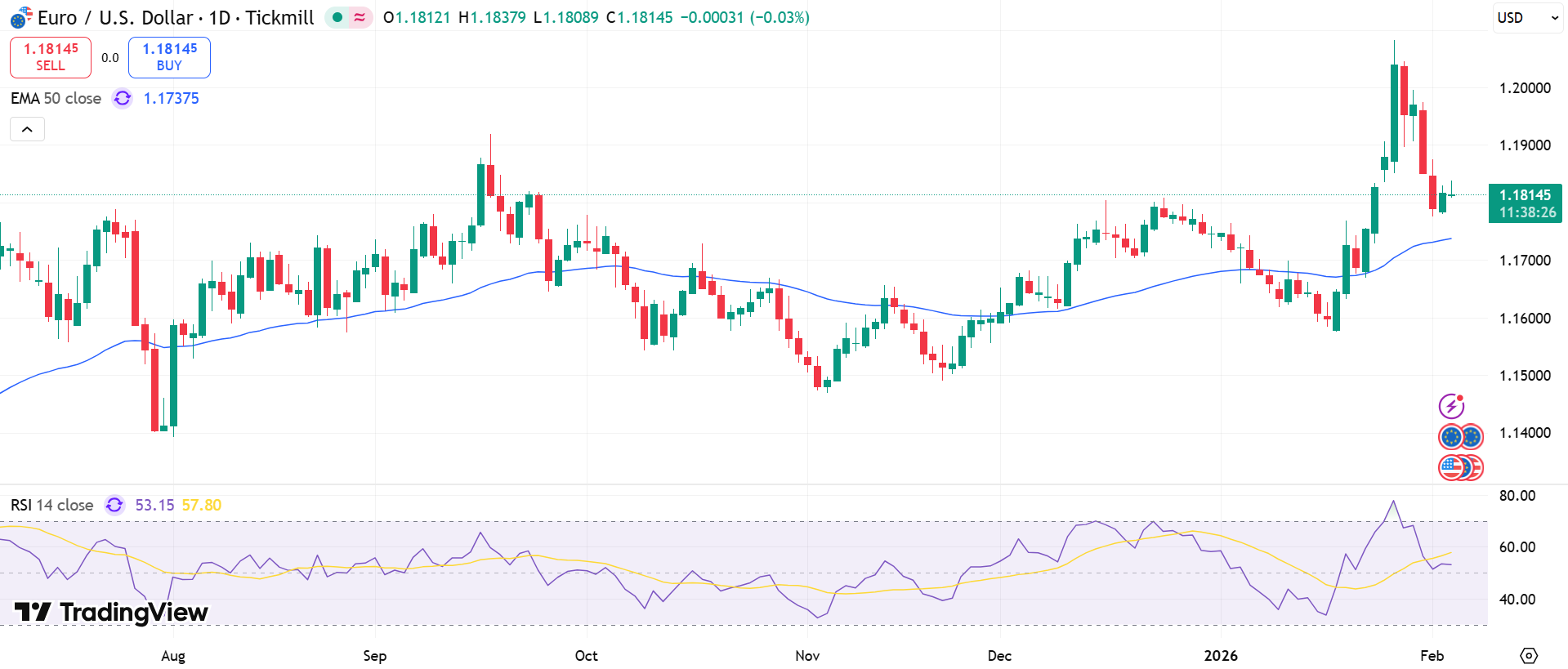
The pair has found short-term support in the 1.1770–1.1780 zone after a recent pullback. Technical traders note that a break below 1.1775 could open the door to deeper losses toward the 55-day and 100-day moving averages near 1.1700 and 1.1680. Further down, the widely watched 200-day average around 1.1610 would become critical, with a breach potentially reviving tests of last year’s lows near 1.1470 and 1.1390.
For now, sellers have failed to push the euro through that first line of defense. On the upside, resistance sits well overhead at January’s 2026 peak of 1.2082, followed by former highs from 2021 at 1.2266 and 1.2349. Momentum gauges suggest the recent rally has cooled but not collapsed—RSI hovers around 53, while the ADX near 32 indicates a still-established trend rather than a market in chaos.
Fed steady, ECB patient
The Federal Reserve remains the dominant force behind currency moves. At its January meeting, policymakers kept the federal funds range at 3.50%–3.75% and struck a confident tone on growth, even as inflation was described as “somewhat elevated.” The decision passed 10–2, with two officials favoring a 25-basis-point cut.
Chair Jerome Powell emphasized that policy will stay “meeting by meeting,” ruling out rate hikes as the base case while acknowledging that tariff-driven price pressures should peak around mid-year. Falling Treasury yields after the meeting have taken some pressure off the euro by easing the dollar’s yield advantage.
Across the Atlantic, the European Central Bank has adopted a wait-and-see posture. At its December meeting, officials kept rates unchanged and signaled no rush to cut, citing inflation near target and still-uncertain growth prospects. Markets now see virtually no chance of a move at Thursday’s meeting and price only minimal easing over 2026. The message has been consistent: patient, but not complacent.
Positioning and what comes next
Speculative flows remain broadly supportive of the euro, though enthusiasm has softened. CFTC data show non-commercial net longs climbing to about 132,100 contracts, while institutional short positions have also increased to roughly 181,600—suggesting a more balanced, two-way market. Open interest has risen to about 929,300 contracts, a six-week high, pointing to renewed participation rather than retreat.
The near-term path for EUR/USD hinges more on Washington than Frankfurt. Until the Fed clarifies its 2026 rate path or the eurozone delivers a clearer growth rebound, any gains are likely to be gradual rather than explosive.
What traders are watching this week:
- January eurozone inflation print
- ECB guidance on timing of rate cuts
- U.S. Treasury yield moves
- Fed rhetoric from upcoming speakers
- Break of 1.1775 support or a push above 1.2000
In sum, the euro is holding firm above 1.1800, but its fate rests less on European data than on how soon—and how far—the Fed is willing to ease.

