

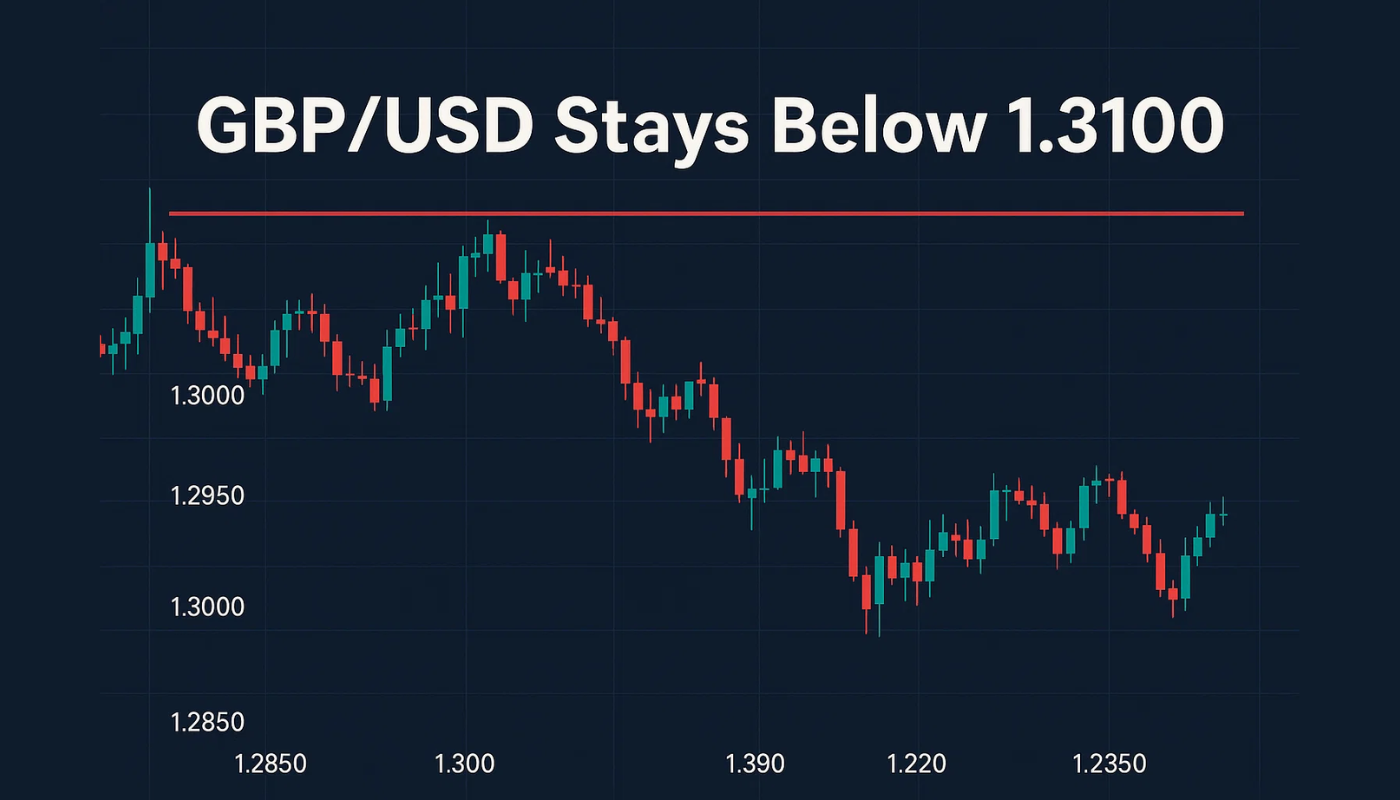
The British pound remained under pressure Friday, trading below 1.3100 after weak U.K. retail sales and mixed PMI results signaled slowing domestic momentum. The subdued tone followed Thursday’s volatile session, leaving GBP/USD confined to the lower end of its weekly range as investors looked ahead to U.S. PMI readings later in the day.
The pair attempted to build modest upward momentum for the second consecutive session as the U.S. dollar retreated from its strongest level since late May. But the improvement proved limited, with softer U.K. macro indicators acting as a natural cap on gains.
U.K. retail sales fell 1.1% in October, the first monthly decline since May, reflecting budget uncertainty ahead of next week’s fiscal announcement. Signals of easing inflation have reinforced expectations that the Bank of England may cut rates in December, creating additional headwinds for the pound.
Key Levels Define Short-Term Trading
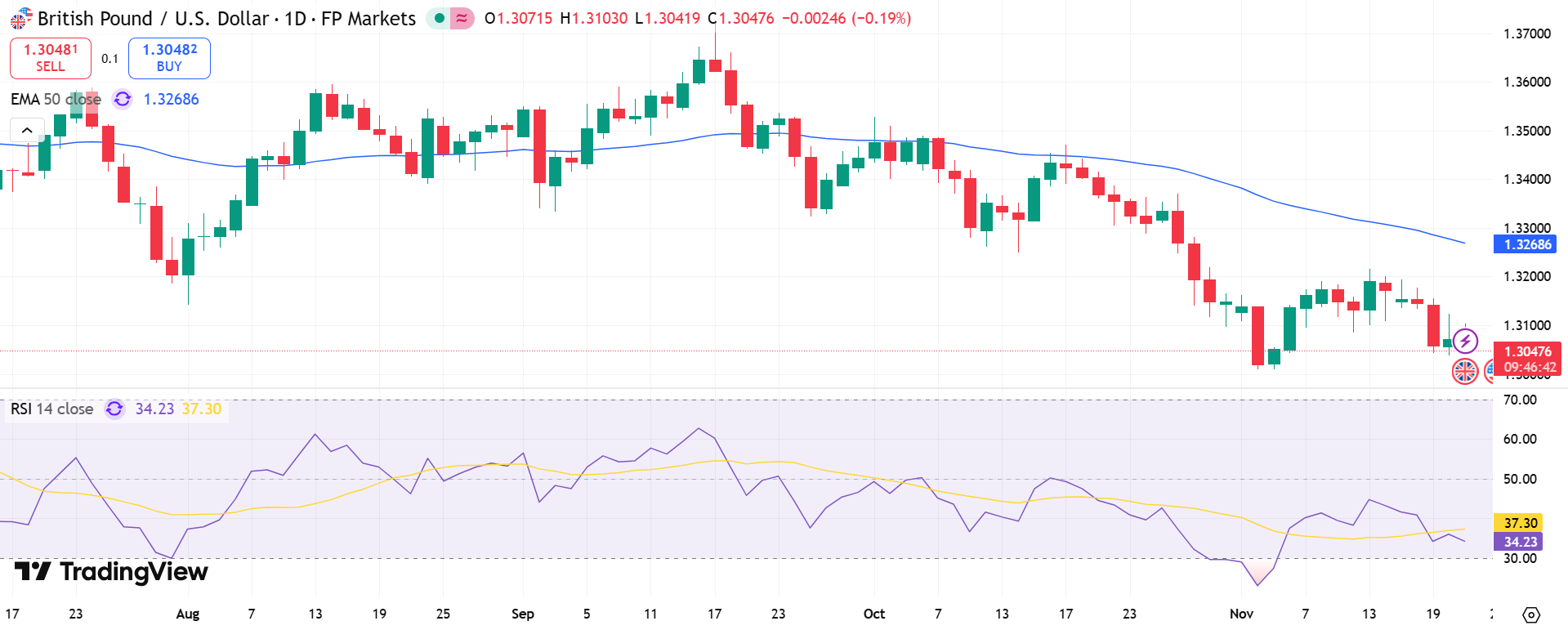
Analysts note that GBP/USD faces several immediate technical barriers. Any rise above 1.3120–1.3125 could stall near 1.3155–1.3160, the upper boundary ofthis week’s range. A sustained breakout would open the path toward the 1.3200 mark and potentially the 200-day SMA near 1.3300.
On the downside, support remains clustered at:
- 1.3040–1.3035: Thursday’s trough
- 1.3000: Key psychological level
- 1.2950: Next structural floor
- Sub-1.2900: Risk if selling accelerates
The currency has held a mildly positive bias, though the broader trend remains vulnerable until stronger economic signals emerge from the U.K.
U.S. Data Drives Fed Expectations
Thursday’s U.S. labor-market data injected fresh volatility into currency markets. The Nonfarm Payrolls report showed 119,000 jobs added in September, well above expectations of 50,000. Although the unemployment rate rose slightly to 4.4%, wage growth held firm at 3.8% YoY, reinforcing concerns about sticky inflation.
Minutes from the October FOMC meeting revealed policymakers were divided on the path forward. Several officials warned that additional rate cuts could threaten inflation-control efforts. Markets are now pricing in roughly a 35% chance of a December rate cut, down from higher levels earlier in the month.
Despite a prolonged U.S. government shutdown slowing economic data releases, the dollar has found support as traders adjust to a potentially slower easing cycle. That recalibration has kept GBP/USD pinned below key resistance levels ahead of Friday’s high-impact U.S. PMI reports.

