

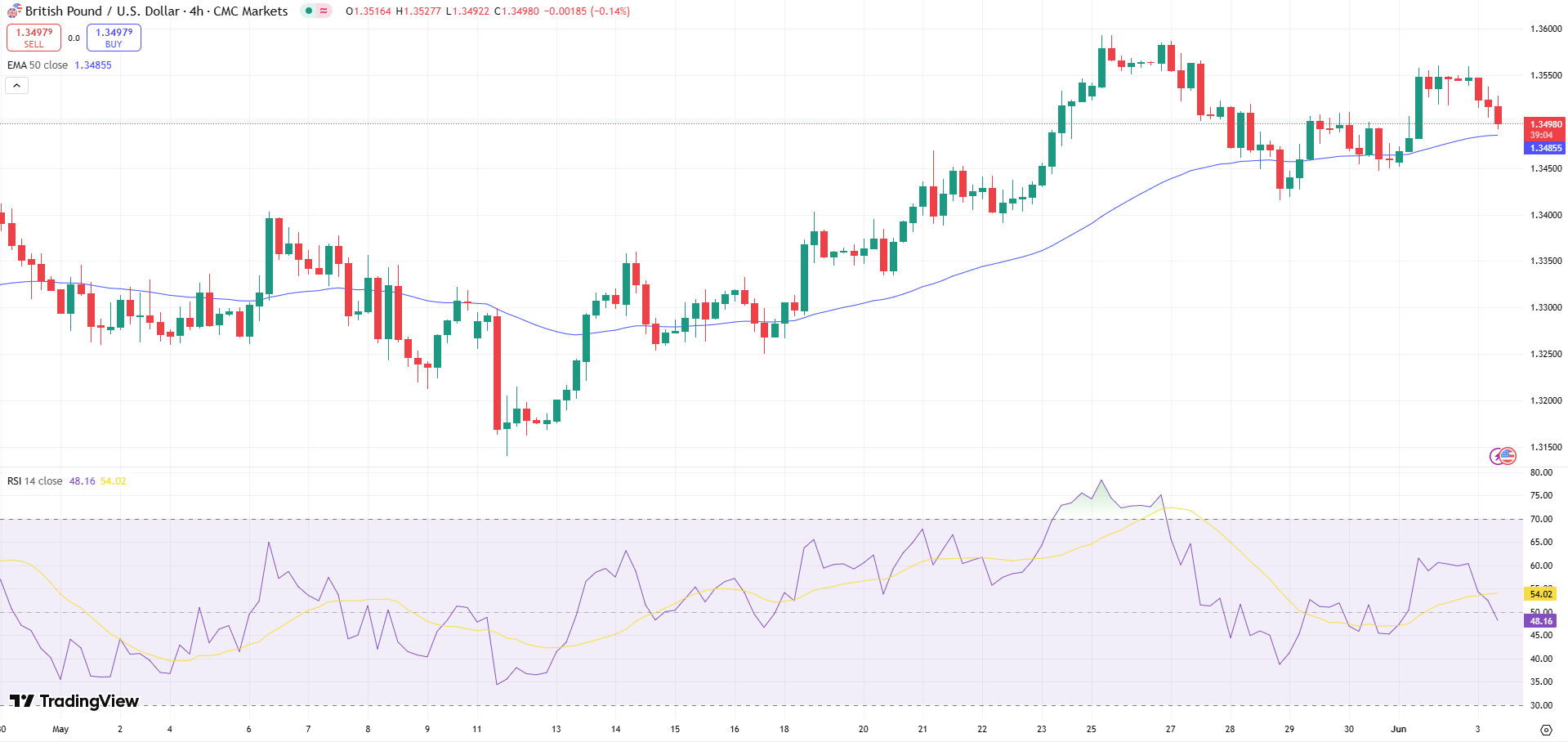
The British pound faced renewed selling pressure Tuesday, with GBP/USD falling toward 1.3500, after Bank of England (BoE) officials offered mixed signals on the future of monetary easing. The remarks came during testimony before the UK Treasury Select Committee, where Governor Andrew Bailey reiterated the central bank’s commitment to a gradual and cautious approach to interest rate cuts.
Bailey said the BoE had observed no significant inflationary surprises and signaled that easing, when it begins, will be carefully managed. However, his colleagues voiced diverging views.
- Swati Dhingra, an external policymaker, warned that maintaining overly tight monetary conditions may curb consumer demand and discourage business investment.
- Catherine Mann struck a more conservative tone, emphasizing the persistence of high services inflation, which she views as inconsistent with a return to the 2% CPI target.
The conflicting statements left markets uncertain, keeping sterling rangebound and vulnerable to downside risks.
U.S. Labor Data Could Move the Needle
Investor focus now turns to the U.S. JOLTS Job Openings report for April, due later today. Analysts anticipate a figure near 7.7 million, which could provide short-term direction for the dollar and, by extension, the GBP/USD pair.
Potential outcomes:
- Above 7.7M: Strengthens USD, weighing further on GBP/USD
- Below 7M: Weakens USD, creating rebound potential for the pound
The dollar’s recent performance has been weighed down by increasing bets that the Federal Reserve will begin cutting rates by September, especially as core PCE inflation eased to 2.5% in April, down from 2.7%.
Trade Tensions Add a Layer of Complexity
Meanwhile, geopolitical and trade developments are adding to investor caution. President Donald Trump has pledged to double tariffs on imported steel to 50%, a move announced during a speech to union workers.
The announcement follows renewed U.S.-China trade friction, with Beijing denying U.S. allegations of breaching prior trade agreements.
Ongoing tensions across:
- Europe’s tariff response
- Middle East conflicts
- Ukraine-Russia escalations
…continue to bolster safe-haven demand, particularly for the U.S. dollar and yen.
For now, GBP/USD traders will be watching both macroeconomic prints and central bank commentary closely. As long as the BoE remains noncommittal and global risk sentiment stays fragile, GBP/USD is unlikely to see sustained upside above 1.3550.

