

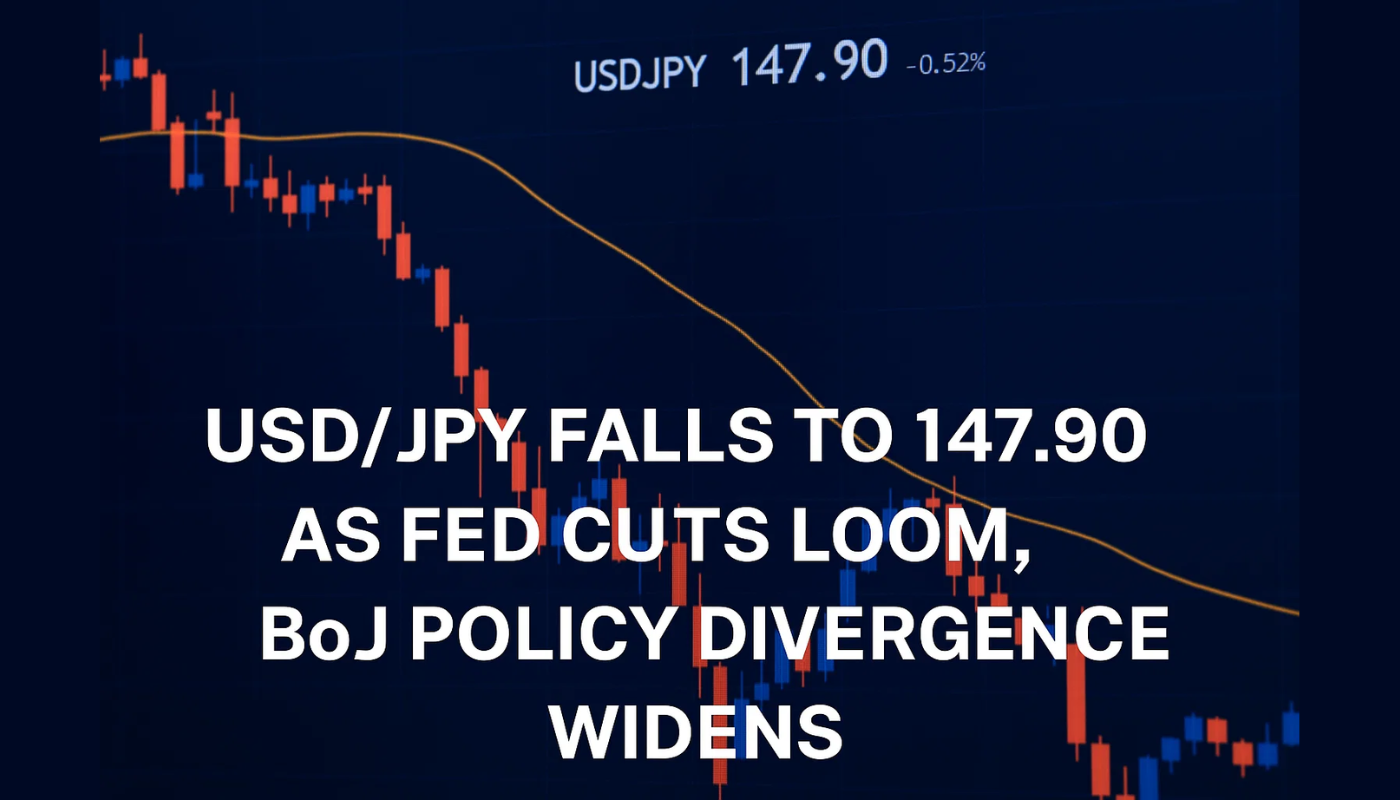
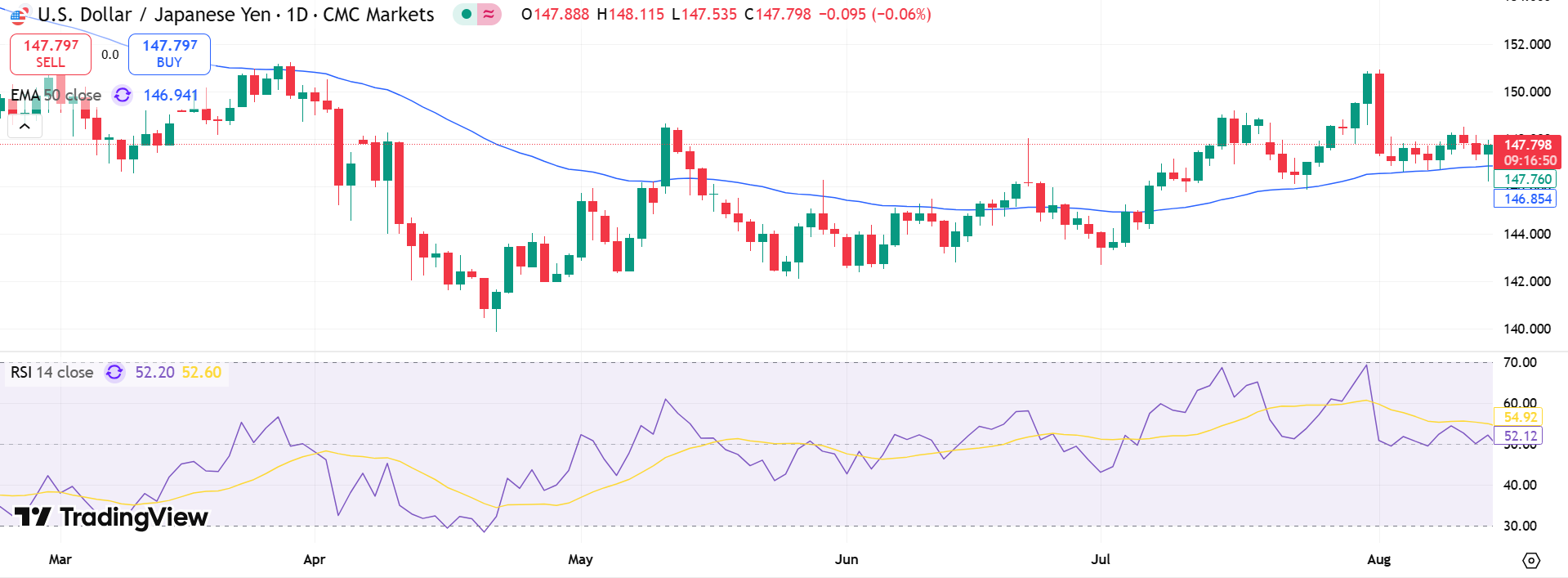
The dollar-yen pair slipped below the 148.00 threshold on Tuesday, pressured by diverging expectations for the Federal Reserve and the Bank of Japan. At the start of European trading, USD/JPY traded around 147.90, extending a range-bound trend that has persisted for nearly two weeks.
The move reflects both technical and fundamental pressures. On the charts, the pair failed to hold above the 23.6% Fibonacci retracement level, with resistance reinforced near the 148.00 handle and the 200-period SMA. Analysts warn that without a decisive break, the pair will likely consolidate further before making a directional move.
Support lies at the 147.10–147.00 zone, with a deeper slide potentially retesting last week’s multi-week low near 146.20. A break below 146.00 could trigger further losses toward 145.40–145.00, a key psychological barrier.
Fed Outlook Dampens Dollar Momentum
Attention now turns to the Federal Reserve’s Jackson Hole Symposium, where Chair Jerome Powell will speak Friday. Traders are cautiously positioned ahead of the event, given shifting expectations for September’s policy decision.
- Rate cut odds: Markets now price an 85% chance of a 25-basis-point cut, scaling back earlier bets on a larger reduction.
- Inflation signals: U.S. producer price data and revised inflation forecasts point to sticky price pressures.
- Consumer sentiment: The University of Michigan index fell to 58.6 in July, its lowest in months, underscoring weak household confidence.
The combination of higher inflation expectations and softer consumer outlook has left the Fed balancing growth concerns with inflation risks. For the dollar, this mixed picture has limited upside momentum.
BoJ Holds Cautious but Hawkish Tone
Meanwhile, Japanese policy dynamics add another layer of complexity. Recent GDP and industrial output data beat expectations, fueling speculation that the Bank of Japan could tighten policy further this year. The BoJ also upgraded its inflation forecast, keeping the door open to an additional hike by year-end.
Still, domestic political uncertainty following the ruling Liberal Democratic Party’s election setback may slow policy normalization. At the same time, tariff-related economic headwinds from the U.S. remain a concern for Japanese exporters.
Despite this, investors view the BoJ-Fed divergence as yen-supportive in the near term. Unless Powell signals a decisive pivot toward aggressive easing, the yen is likely to find steady demand.

