


The Japanese yen slid to a fresh weekly low against the U.S. dollar during Thursday’s Asian session, with USD/JPY hovering near the 158 level as investors rotated away from traditional safe havens. Improved global risk sentiment followed U.S. President Donald Trump’s reversal on Greenland-related tariff threats, easing geopolitical anxiety that had previously supported the yen.
A softer yen also reflects pressure from Japan’s bond market. Long-dated Japanese government bond (JGB) yields have climbed sharply in recent sessions, signaling investor unease over fiscal sustainability as Prime Minister Sanae Takaichi promotes expansionary spending and tax measures. Rising yields typically support a currency, but in Japan’s case they have raised concerns about debt dynamics, limiting the yen’s appeal.
Despite the weakness, losses have been contained by expectations that Japanese authorities may step in if depreciation accelerates too quickly, a factor that continues to temper speculative selling.
Technical signals show limited momentum
From a technical perspective, USD/JPY remains capped below its 100-period simple moving average near 158.2, keeping the short-term bias mildly bearish. Momentum indicators point to indecision rather than a strong trend, suggesting traders are reluctant to take aggressive positions ahead of key event risks.
Current technical conditions include:
- 100-period SMA: Acting as immediate resistance around 158.2
- RSI near 48: Neutral, offering little directional conviction
- MACD near zero: Flat momentum with no clear crossover signal
- Key retracement levels: Resistance clustered between 158.2 and 158.4
As long as the pair trades below this resistance zone, rebounds are likely to face selling interest. A sustained break above it could open room for a corrective move higher, while failure to reclaim the level keeps downside pressure intact.
BoJ outlook and US data in focus
Fundamental attention is now squarely on central banks and macro data. The Bank of Japan is widely expected to keep its policy rate unchanged after raising it to 0.75% last month, the highest level in three decades. However, inflation dynamics suggest policy normalization is not finished. Official data show Japanese inflation has averaged above the BoJ’s 2% target for four consecutive years, and a recent BoJ survey found households expect prices to keep rising.
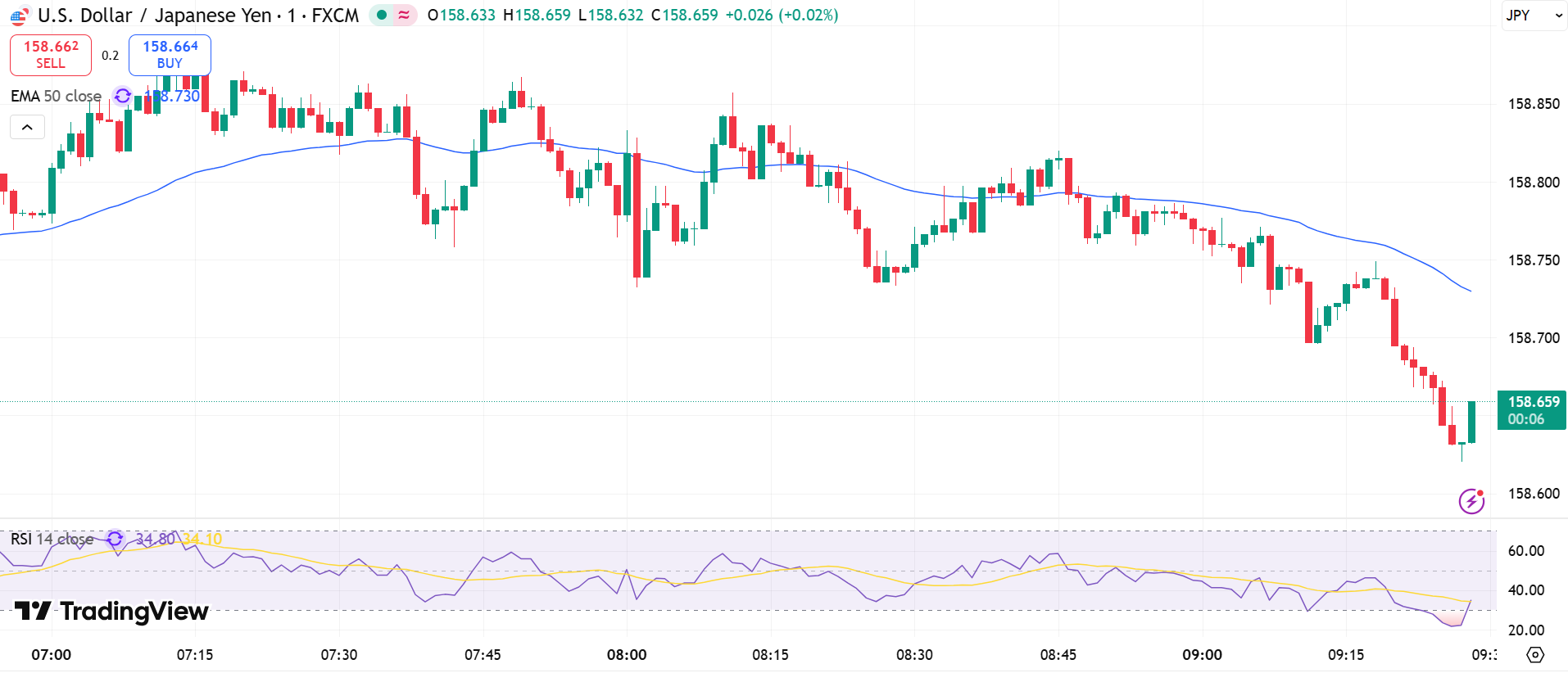
Reuters has reported that some policymakers see scope for another rate hike as early as April, particularly if a weaker yen fuels imported inflation. Still, political uncertainty looms after Prime Minister Takaichi called a snap election for February, adding another layer of risk to Japan’s fiscal outlook.
On the U.S. side, the dollar remains under pressure amid renewed trade concerns and growing debate over the Federal Reserve’s rate-cut path. Traders are closely watching:
- US PCE inflation data for clues on easing timing
- Final Q3 GDP figures for growth momentum
- BoJ Governor Ueda’s remarks for signals on the next hike
Together, these events are likely to determine whether USD/JPY extends its range-bound trade or breaks decisively in the days ahead.

